Rugby History: Origins, Evolution, and Key Moments That Shaped the Game
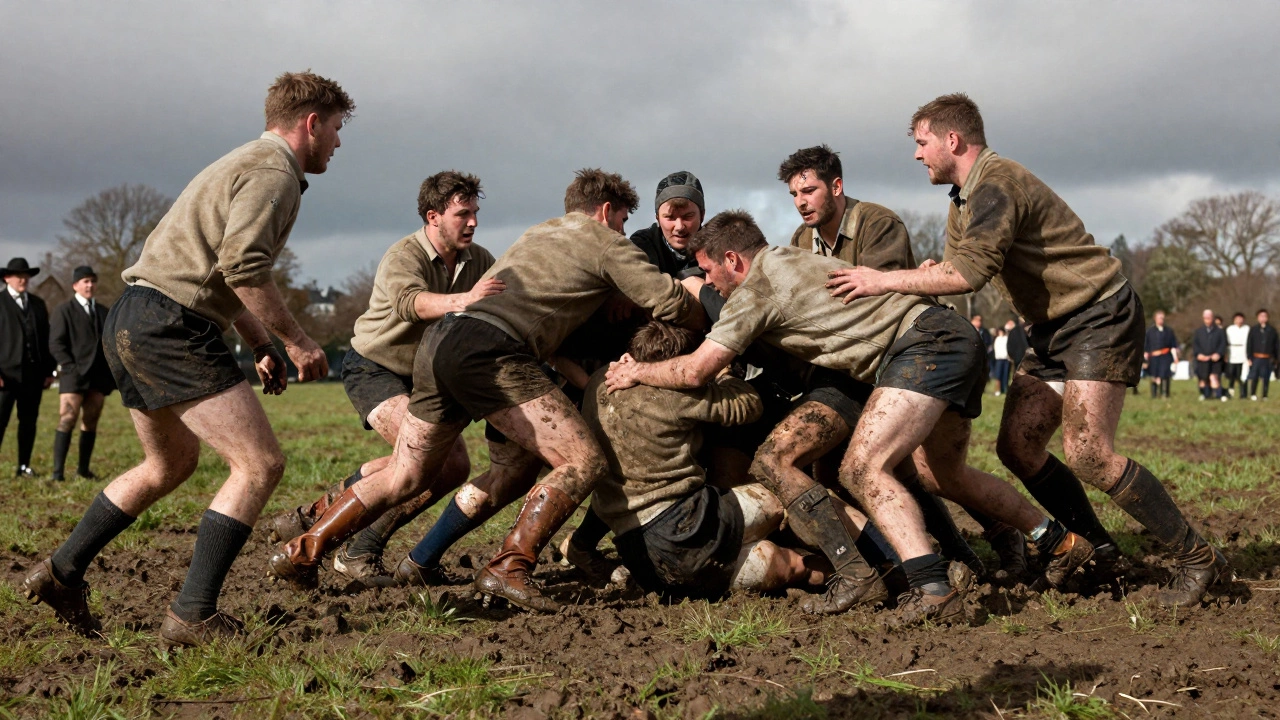
When you think of rugby history, the story of a 19th-century English schoolboy picking up a football and running with it, sparking a sport that split into two global codes. Also known as rugby football, it’s not just about tackles and tries—it’s about class, culture, and a century of division and unity. The game didn’t start in a professional stadium. It began in 1823 at Rugby School in Warwickshire, where William Webb Ellis supposedly grabbed the ball during a football match and ran with it. Whether he really did it or not, the story stuck—and so did the sport.
By the 1870s, rugby was growing fast, but cracks were forming. The northern clubs, made up of working-class players, wanted compensation for missed work when playing. The southern elite, who ran the Rugby Football Union, said no. In 1895, 22 clubs broke away and formed the Rugby League, a faster, professional version of the game with 13 players and fewer stoppages. This split created two distinct sports: Rugby Union, the traditional 15-a-side game with amateur roots and global tournaments like the Rugby World Cup. And Rugby League, the more physical, high-tempo game that dominates in northern England, Australia, and parts of New Zealand. The two aren’t just different rules—they’re different cultures, different fanbases, even different slang.
What makes rugby history so compelling isn’t just the rules—it’s how it spread. British soldiers and sailors took it to New Zealand, South Africa, and Fiji. In New Zealand, the All Blacks turned rugby into national identity. In South Africa, it became a symbol of reconciliation after apartheid. In Australia, the rivalry between league and union still shapes sports TV schedules. And in places like Japan and Argentina, rugby’s growth is fueled by passion, not tradition.
You’ll find traces of this history in every post below—from how Aussies call their games, to what a "jackal" means in a breakdown, to why a "try" isn’t called a touchdown. These aren’t random facts. They’re pieces of a larger story: how a schoolyard rule change became a global phenomenon, fractured into two, and still thrives because of the people who play, watch, and live it.