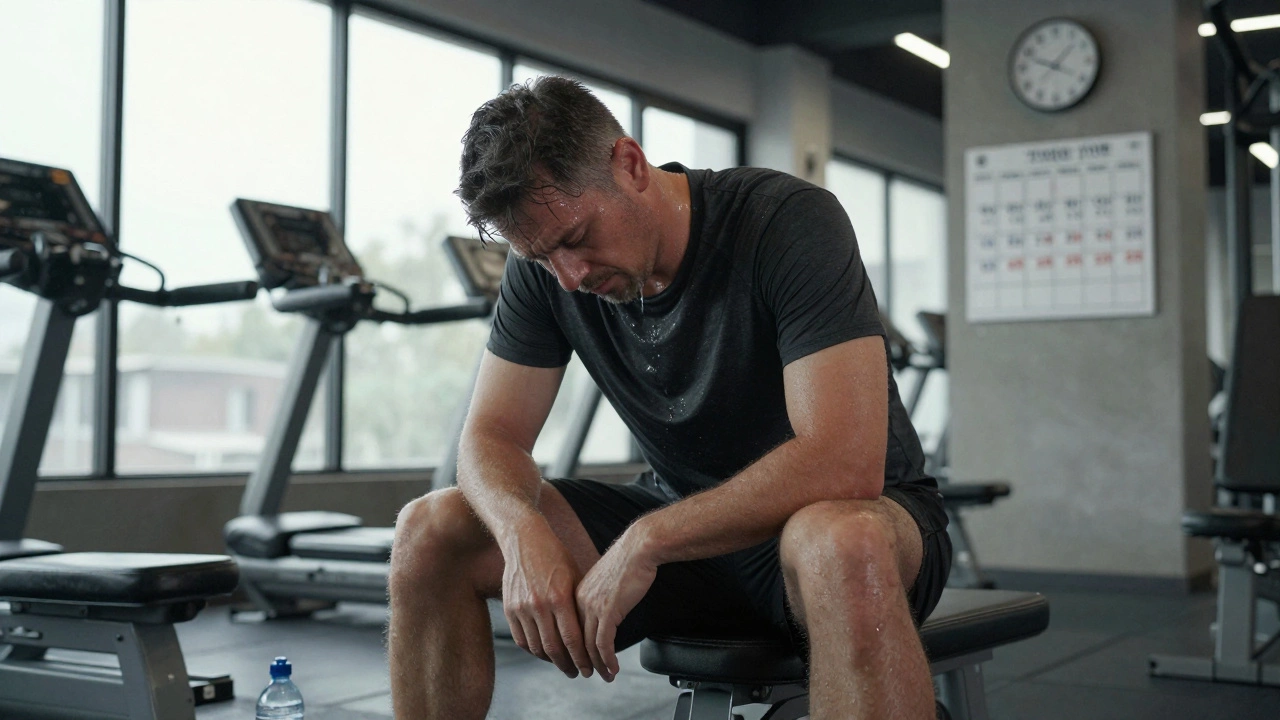
Overtraining Signs: How to Spot When You're Pushing Too Hard
When your body is screaming for rest but you keep pushing, you’re not being tough—you’re risking overtraining, a state where training stress outpaces recovery, leading to physical and mental decline. Also known as overtraining syndrome, it doesn’t show up as a single symptom—it creeps in through fatigue, irritability, and performance that just won’t improve no matter how hard you try. This isn’t about skipping a workout. It’s about your body losing its ability to bounce back, even with sleep and food.
People think more training equals better results, but the truth is, your gains happen when you rest, not when you lift. If you’ve been hitting the gym six days a week for months and your lifts are stuck or getting worse, that’s not a plateau—it’s a warning. Same goes for runners who feel exhausted before their morning jog, or cyclists who can’t climb hills they used to crush. These aren’t bad days. They’re overtraining signs, clear signals that your central nervous system is burned out. Your heart rate stays high at rest. You sleep poorly. You get sick more often. Your motivation vanishes. You stop caring about goals you once chased. These aren’t just "feeling off"—they’re your body shutting down to protect itself.
And it’s not just about strength or running. If you’re into rugby, golf, or even daily HIIT, overtraining doesn’t care what sport you play. It shows up the same way: your body can’t recover. You might think you’re being disciplined, but you’re actually sabotaging progress. Recovery isn’t lazy—it’s part of the training. The best athletes know when to back off. The smart ones listen before they break.
Below, you’ll find real stories and science-backed insights from people who ignored the signs—and those who caught them early. You’ll see what recovery really looks like, how to track your own stress levels, and how to get back on track without losing momentum. No fluff. No guesswork. Just what works.