Why Is 0 Called Love in Tennis? The Real Story Behind the Score
 Dec, 11 2025
Tennis Score Converter
How Tennis Scoring Works
Tennis uses a unique scoring system with terms like 'love' (0), 'fifteen' (1), 'thirty' (2), and 'forty' (3). This tool converts standard numbers to traditional tennis scoring terms.
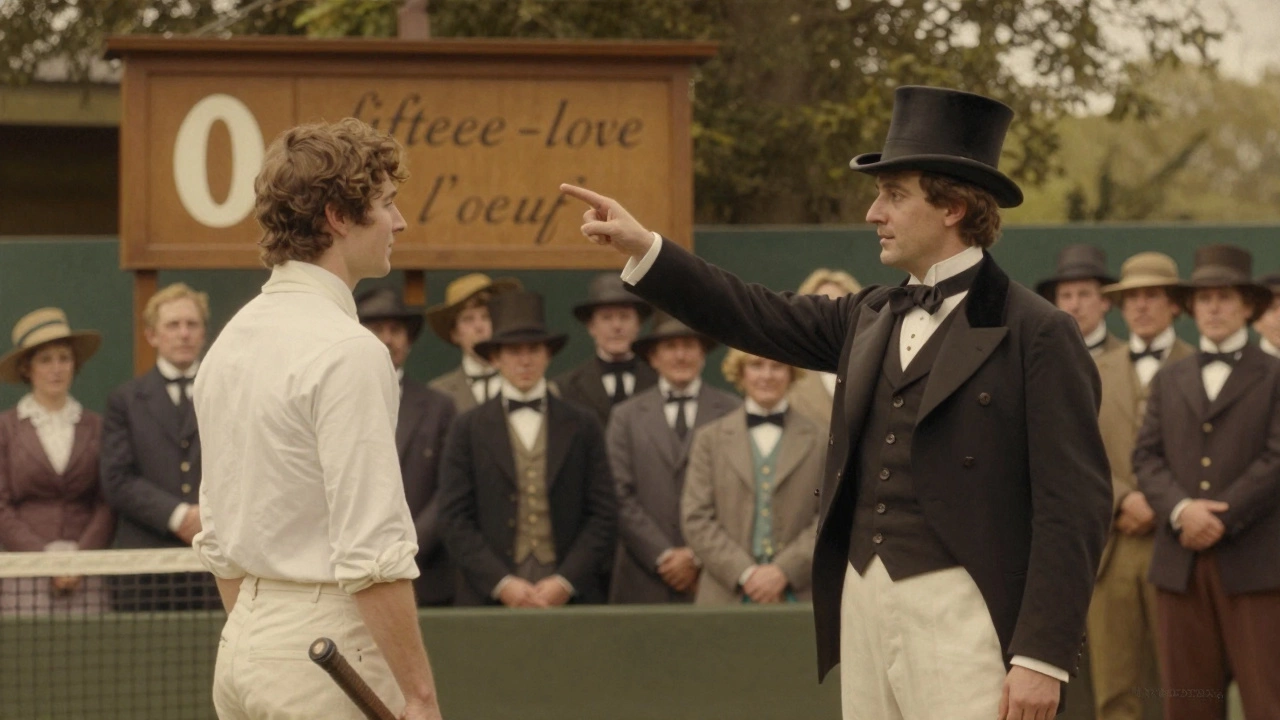
The term 'love' comes from the French word 'l'oeuf' (egg), which looks like a zero. When French players said 'l'oeuf' for zero, English speakers misheard it as 'love'.
Ever watched a tennis match and heard the score called out as ‘fifteen-love’ and wondered why zero is called ‘love’? It’s not because the player doesn’t care-it’s got nothing to do with romance. The word ‘love’ in tennis scoring is one of the sport’s oldest and most puzzling quirks, and its origin isn’t obvious at all. If you’ve ever been confused by this, you’re not alone. Even seasoned players sometimes pause before saying it out loud. But there’s a solid, centuries-old reason behind it-and it’s not what you think.
The Tennis Scoring System Is Ancient
Tennis scoring doesn’t follow a normal 1-2-3 pattern. Instead, it goes: 0 (love), 15, 30, 40, game. That weird jump from 30 to 40? It’s leftover from a time when tennis was played with clocks. In 16th-century France, where real tennis (the precursor to modern lawn tennis) was popular, matches were timed. The scoreboard was a clock face, with each point moving the hand a quarter turn: 15, 30, 45. But over time, 45 got shortened to 40-probably because saying ‘forty-five’ was too long for quick calls during fast rallies. That’s why we still say 40 today, even though it breaks the pattern.But where does ‘love’ come from? That’s the real mystery.
Love Isn’t About Emotion-It’s About French
The most widely accepted theory traces ‘love’ back to the French word ‘l’oeuf,’ which means ‘egg.’ Why does that matter? Because an egg looks like a zero. When French players called a score of zero, they’d say ‘l’oeuf’-pronounced like ‘luhf.’ When tennis spread to England in the 1800s, English speakers heard ‘l’oeuf’ and turned it into ‘love.’ It wasn’t a romantic gesture. It was a mistranslation that stuck.There’s no evidence that ‘love’ was ever used to mean ‘nothing’ in French at the time. But ‘l’oeuf’ as a symbol for zero was common in French games, including early forms of tennis. Imagine a French court in 1600: a player wins a point, the score moves from ‘l’oeuf’ to ‘quinze.’ An English tourist hears it, writes it down as ‘love,’ and the term spreads through British tennis clubs. By the time lawn tennis was formalized in the 1870s, ‘love’ was already in the rulebooks.
Other Theories? They Don’t Hold Up
Some people claim ‘love’ comes from the idea that playing for ‘love’ means playing for fun, not money-so if you have zero points, you’re playing for love. But that’s backwards. The term ‘love’ in tennis predates the phrase ‘playing for love’ by centuries. Tennis was already a professional sport in France long before the idea of amateur ‘love’ play became popular in Victorian England.Another theory says ‘love’ is short for ‘l’oeuvre’ (the work), meaning you’re putting in effort but scoring nothing. That’s creative, but there’s zero historical record supporting it. Linguists and tennis historians agree: ‘l’oeuf’ is the only explanation with documented ties to the period and language.
It’s Not Just Love-Other Odd Terms Too
The tennis scoring system is full of oddities. ‘Deuce’ comes from the French ‘à deux,’ meaning ‘at two’-when both players have 40, they’re tied at two points away from winning. ‘Advantage’ follows deuce, meaning one player now has the upper hand. And ‘game set match’? That phrase was standardized in the 19th century to signal the end of a full contest.Even the term ‘fault’ has roots in old French law, meaning a breach of rules. The whole scoring system feels like a relic from a time when language, sport, and daily life were deeply tied together. No other major sport uses this system. Baseball counts runs. Soccer counts goals. Tennis? It counts in French eggs.
Why Does It Still Exist?
You’d think modern tennis would simplify things. After all, casual players struggle with the scoring. But tradition holds strong. Tennis federations around the world-whether in Australia, France, or Japan-still use ‘love’ in official broadcasts and rulebooks. Why? Because changing it would break continuity. The game’s history is part of its identity.Imagine if basketball switched from ‘points’ to ‘lumens’ because someone thought it sounded cooler. It would confuse everyone. Tennis has kept its scoring because it’s part of the sport’s charm. It’s not efficient, but it’s unique. And that’s why fans love it-even if they don’t understand why zero is called love.

How It Feels to Say It
If you’ve ever stood on the baseline and heard your opponent’s score called ‘love,’ you know it sounds strange. But say it enough times, and it becomes second nature. At local clubs in Sydney, you’ll hear older players say it with pride, like they’re keeping a secret alive. Younger players might roll their eyes-but they still say it. Because in tennis, you don’t change the rules. You learn them.There’s a ritual to it. The umpire calls ‘fifteen-love’ with a crisp tone. The crowd doesn’t laugh. They nod. It’s part of the rhythm. It’s like a language only tennis players truly speak. And once you know it, you’re part of the club.
Love Is Still Zero-No Matter What
So next time you hear ‘love-all’ at the start of a match, remember: it’s not about affection. It’s about an egg. A French egg. A centuries-old mistranslation that became a global standard. And it’s still here, because tennis doesn’t rush to change. It honors its past.That’s why, even in 2025, when Novak Djokovic wins his 23rd Grand Slam, the score is still called ‘love.’ Not ‘zero.’ Not ‘nil.’ Not ‘nothing.’ Love. Because history doesn’t delete itself. It just gets better with time.
Why is zero called love in tennis?
Zero is called ‘love’ in tennis because it comes from the French word ‘l’oeuf,’ meaning ‘egg,’ which looks like a zero. When English speakers adopted tennis from France in the 1800s, they misheard ‘l’oeuf’ as ‘love,’ and the term stuck. It has nothing to do with romance.
Is ‘love’ used in other sports?
No, ‘love’ as a term for zero is unique to tennis. Other sports use ‘zero,’ ‘nil,’ ‘duck,’ or ‘nothing.’ Even badminton and squash, which share some history with tennis, don’t use ‘love.’ It’s a tennis-only quirk.
Why does tennis use 15, 30, 40 instead of 1, 2, 3?
Tennis scoring comes from a clock face used in 16th-century French real tennis. Each point moved the hand 15 minutes: 15, 30, 45. Over time, 45 became 40 for easier pronunciation during fast play. The system stuck even after clocks were replaced with scoreboards.
Do professional players ever get confused by ‘love’?
No. Professional players learn the scoring system from childhood. Saying ‘love’ is as natural as saying ‘deuce’ or ‘advantage.’ Even new players on the tour pick it up quickly because it’s part of the culture. Confusion usually only happens with casual fans.
Has anyone tried to change ‘love’ to ‘zero’?
There have been occasional jokes and proposals, especially in youth leagues trying to make tennis easier for kids. But no major organization has ever changed it. The International Tennis Federation (ITF) still lists ‘love’ as the official term in its rulebook. Tradition outweighs convenience.