What is UFC Called? Understanding MMA, Octagon Rules, and How It Differs from Boxing
 May, 10 2026
Boxing vs. UFC Comparison Tool
Boxing
Traditional Combat Sport
- Arena: Square Ring with Ropes
- Strikes: Fists Only
- Grappling: Not Allowed
- Gloves: 10-12 oz
- Rounds: Up to 12 (Title Fights)
UFC / MMA
Mixed Martial Arts
- Arena: Octagon with Fencing
- Strikes: Fists, Kicks, Elbows, Knees
- Grappling: Takedowns, Submissions, Ground Control
- Gloves: 4 oz
- Rounds: 5 Rounds (Main Events)
Scenario Simulator: Which Sport Wins?
Select a scenario below to see which sport's fighter would have the advantage based on typical skill sets.
When you hear someone shout about the UFC, which stands for Ultimate Fighting Championship, you might wonder what exactly they are talking about. Is it just another name for boxing? No. The confusion often stems from how mainstream combat sports have evolved over the last two decades. While boxing focuses strictly on punches, the UFC represents a much broader spectrum of combat. So, what is the UFC actually called? Technically, it is a promotion company, but the sport itself is known as Mixed Martial Arts (MMA). This distinction matters because the rules, training methods, and safety protocols differ significantly from traditional boxing.
The Core Identity: Mixed Martial Arts
To understand the UFC, you first need to understand the sport it hosts. The UFC is not a sport; it is a brand. Think of it like the NBA versus basketball. The NBA promotes basketball games, while the UFC promotes Mixed Martial Arts events. MMA is a full-contact combat sport that allows both striking and grappling techniques, fought either standing or on the ground, under a modified version of the Marquise rules used in most professional competitions worldwide.
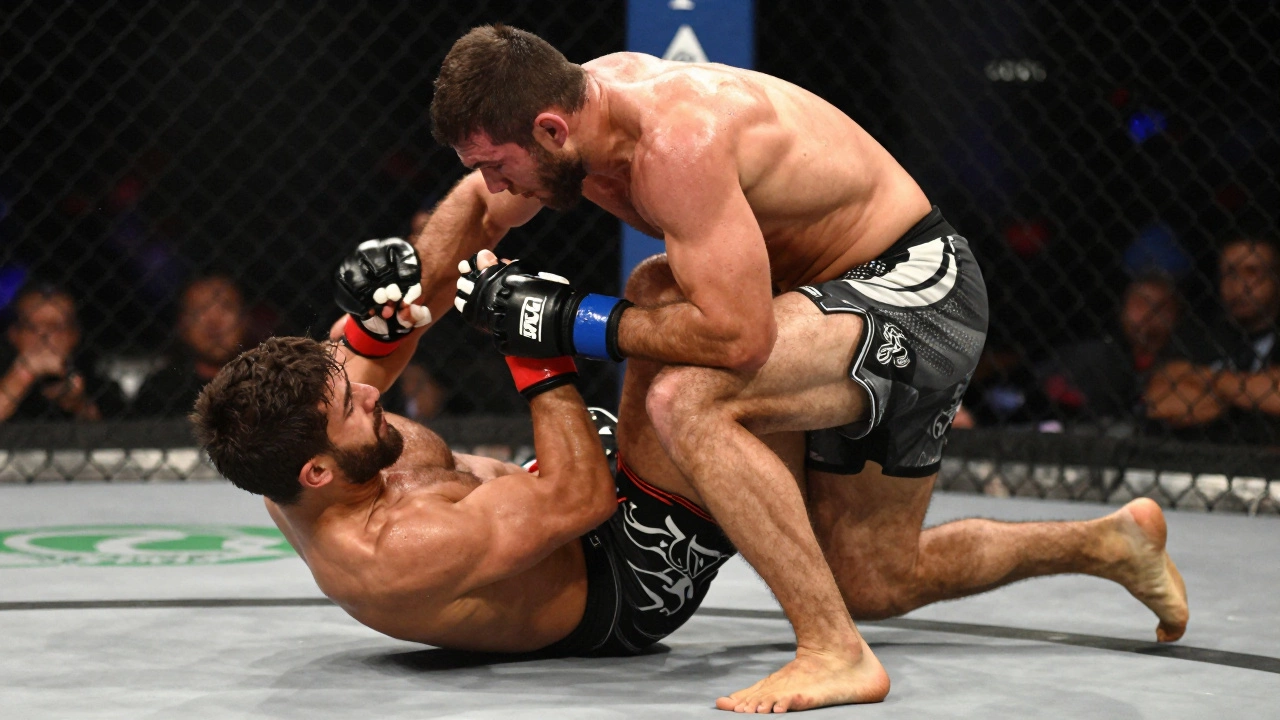
In an MMA fight, athletes use a combination of disciplines. You will see Boxing for stand-up punching, Muay Thai for elbows and kicks, Wrestling for takedowns and control, and Brazilian Jiu-Jitsu (BJJ) for submissions and ground fighting. A pure boxer would likely struggle in the UFC because they do not train for takedowns or leg kicks. Conversely, a wrestler needs to develop their striking game to compete at the highest level. This hybrid nature is why the term "mixed" is so crucial.
Why the Confusion with Boxing?
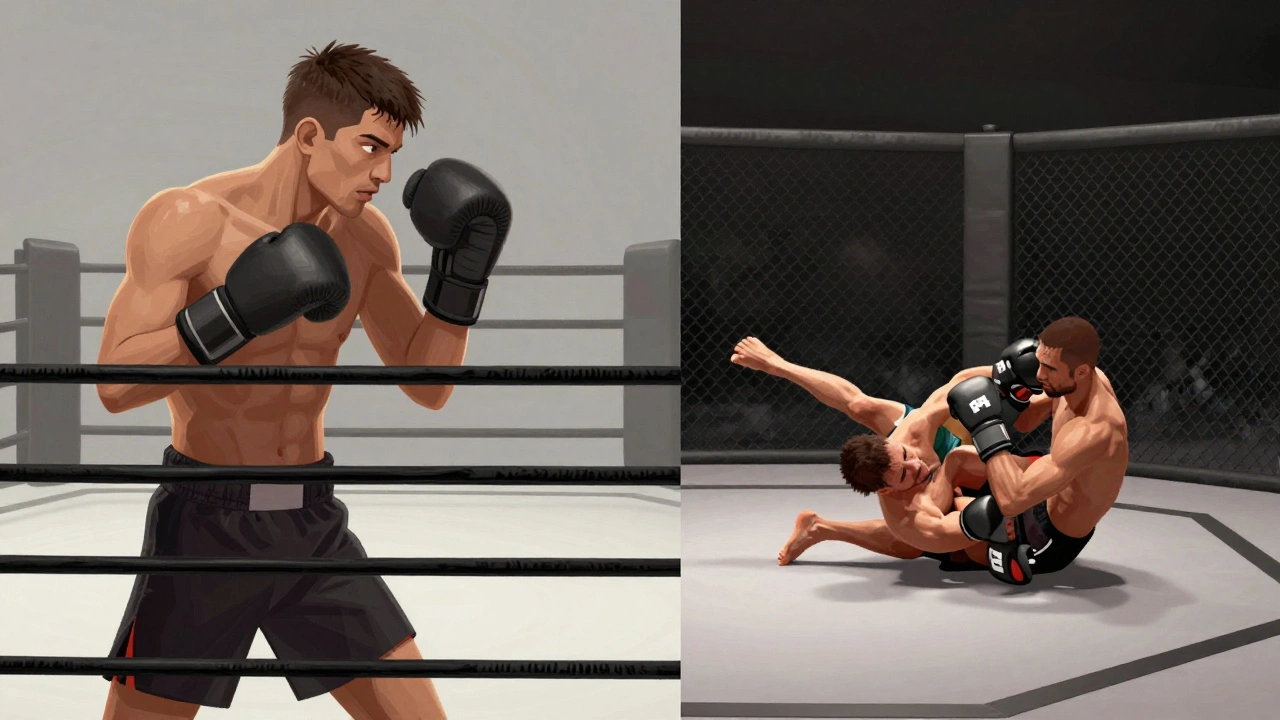
If you look at the existing categories on this site, you’ll see Boxing listed separately. There is a reason for that. Boxing matches take place in a square ring with four corners, and fighters wear large gloves. They can only score points or win by knockout using their fists. If a boxer tries to kick or grapple, they get disqualified immediately.
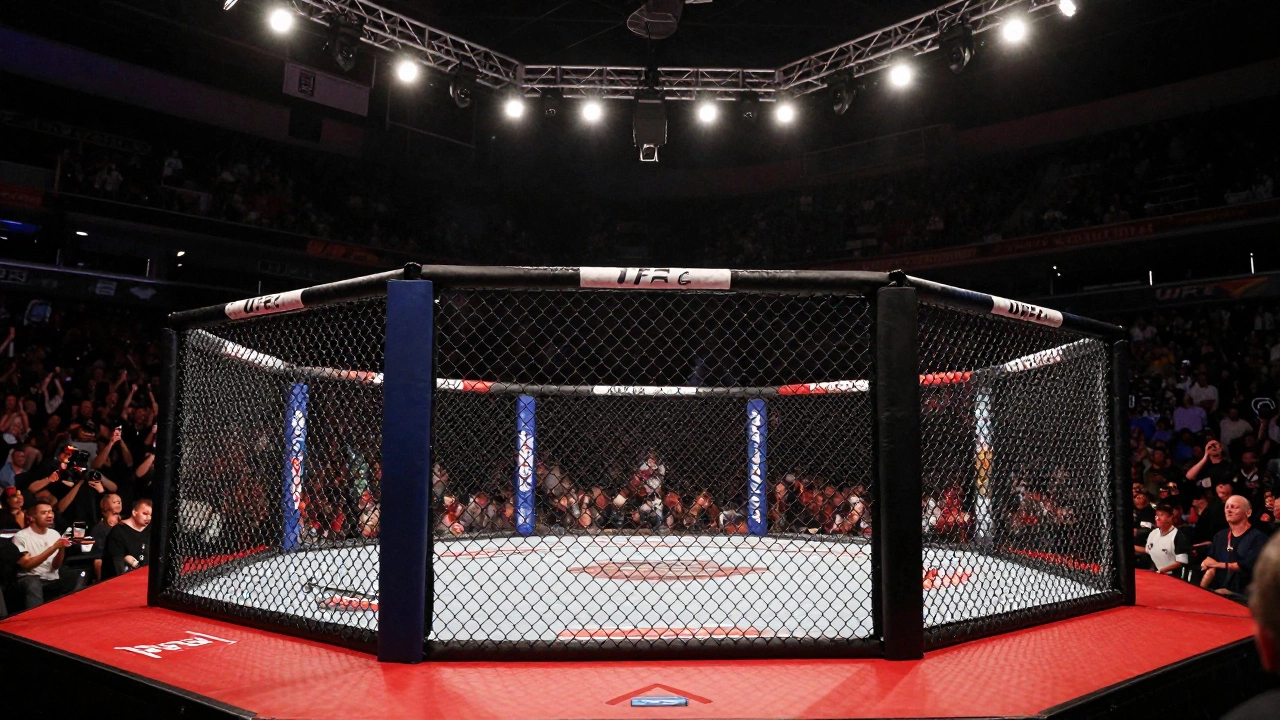
The UFC, however, takes place in an eight-sided enclosure known as the Octagon. This design was originally chosen to prevent fighters from getting stuck in the ropes, which happens frequently in boxing rings. In the Octagon, there are no ropes-only chain-link fencing. This changes the dynamics of the fight entirely. Fighters cannot lean against the fence for support, forcing them to maintain better balance and defensive posture even when backed into a corner. The smaller gloves in MMA (4 ounces compared to 10-12 ounces in boxing) also allow for more hand injuries but enable faster grappling transitions.
| Feature | Boxing | UFC / MMA |
|---|---|---|
| Arena | Square Ring with Ropes | Octagon with Fencing |
| Allowed Strikes | Fists Only | Fists, Kicks, Elbows, Knees |
| Grappling | Not Allowed | Takedowns, Submissions, Ground Control |
| Glove Size | 10-12 oz | 4 oz |
| Rounds | Up to 12 (Title Fights) | 5 Rounds (Main Events) |
The Evolution of the Name
In the early days, during the late 1990s, the UFC was controversially referred to as "human cockfighting" by critics due to its lack of weight classes and minimal rules. Back then, it was essentially a free-for-all where wrestlers could choke out boxers without much resistance. Today, the landscape has changed dramatically. The Unified Rules of Mixed Martial Arts were adopted to standardize the sport across different commissions, including the California State Athletic Commission and the Nevada State Athletic Commission.
This regulation brought legitimacy. Now, when people ask "what is UFC called," they are often looking for validation that it is a safe, regulated sport. It is governed by athletic commissions in each state or country where it operates. These commissions enforce strict drug testing, medical checks, and rule adherence. For instance, eye pokes, groin strikes, and headbutts are illegal. Referees can stop fights instantly if a fighter is taking excessive damage without intelligently defending themselves. This level of oversight is similar to boxing but applies to a wider range of physical interactions.
Weight Classes and Structure
One of the biggest misconceptions is that MMA fighters are just bigger than boxers. In reality, the weight classes are quite specific and closely monitored. The UFC features eleven weight divisions, ranging from Strawweight (up to 115 lbs) to Heavyweight (over 205 lbs). Each division requires a fighter to weigh in within a narrow margin before the official scale event.
For example, a Middleweight fighter must weigh between 186 and 205 pounds. If they miss weight, they face penalties such as losing purse money or being disqualified from title contention. This structure ensures fair competition. In boxing, weight cuts can be extreme and sometimes dangerous, but MMA organizations have implemented stricter hydration tests in some regions to protect athlete health. The goal is to ensure that the skill set determines the winner, not just who can dehydrate the most effectively.
Training for the Octagon
If you decide to train for the UFC, your routine will look nothing like a traditional boxing camp. You won’t just hit the heavy bag for three hours a day. Instead, your week might include:
- Striking Sessions: Working on Muay Thai clinch work, kick defense, and boxing combinations.
- Grappling Drills: Sparring in Brazilian Jiu-Jitsu to practice escapes and submission setups.
- Wrestling Conditioning: Building the core strength needed to shoot for takedowns and defend against them.
- MMA-Specific Sparring: Putting it all together in controlled environments where partners switch between striking and grappling.
This holistic approach means that UFC fighters often have lower body fat percentages and higher cardiovascular endurance than many other combat athletes. They need to be able to sprint, wrestle, and strike simultaneously. It is a unique physical demand that separates them from specialists in single-discipline sports.
Cultural Impact and Global Reach
The UFC has grown from a niche curiosity to a global powerhouse. With headquarters in Las Vegas, Nevada, the organization broadcasts events worldwide via ESPN and its own streaming platform, UFC Fight Pass. This accessibility has introduced millions of fans to the intricacies of MMA. Fans no longer just watch for knockouts; they analyze footwork, cage positioning, and submission chains.
In Sydney, where I live, the local MMA community is vibrant. Gyms offer introductory classes that teach basic self-defense alongside competitive techniques. The appeal lies in the authenticity of the sport. Unlike scripted entertainment, every outcome is uncertain. This unpredictability keeps viewers engaged and drives the growth of the industry. As the sport continues to evolve, the line between boxing and MMA may blur further, but the core identity of the UFC remains rooted in the versatility of Mixed Martial Arts.
Is UFC the same as boxing?
No, UFC is not the same as boxing. UFC promotes Mixed Martial Arts (MMA), which includes striking (punches, kicks, elbows, knees) and grappling (takedowns, submissions). Boxing only allows punches with the fists. Additionally, UFC fights occur in an Octagon, while boxing matches happen in a square ring.
What does UFC stand for?
UFC stands for Ultimate Fighting Championship. It is the premier organization for professional mixed martial arts competitions globally.
Why is the UFC arena called an Octagon?
The UFC arena is called an Octagon because it has eight sides. This shape was designed to reduce the likelihood of fighters getting trapped in the corners or leaning on ropes, allowing for more continuous action and safer movement patterns.
Can a boxer compete in the UFC?
A pure boxer can compete in the UFC, but they would need to cross-train in wrestling, Muay Thai, and Brazilian Jiu-Jitsu to be successful. Without these skills, they are vulnerable to takedowns and submissions, which are common in MMA.
Are UFC fights regulated?
Yes, UFC fights are strictly regulated by state and national athletic commissions. They follow the Unified Rules of Mixed Martial Arts, which include weight classes, prohibited moves, mandatory medical exams, and drug testing protocols.