What Is Tougher: Rugby League or Rugby Union?
 Feb, 12 2026
Rugby Toughness Calculator
Your Selection
Comparison
Key Metrics
Toughness Assessment
Relative Toughness Score
Scale: 0 (Easiest) - 100 (Most Demanding)
Why League Is Tougher: While union features more force per impact (scrum collisions), league's 37% more tackles with 15-20s recovery creates relentless physical strain. Players experience 40% higher muscle soreness due to zero recovery time between impacts.
When you watch rugby league or rugby union, you see two versions of the same raw, brutal sport. Both are played with a ball, tackled with full force, and require athletes who refuse to back down. But which one is truly tougher? It’s not just about who hits harder-it’s about how often, how long, and how much your body has to keep going. And the answer might surprise you.
Rugby Union: The Marathon of Contact
Rugby union is 80 minutes of nonstop, high-intensity collisions. With 15 players on each side, the game moves slower, but every tackle, ruck, and maul demands maximum effort. Players are expected to cover more ground, often running 5 to 7 kilometers per match. That’s more than a 5K run, but with full-body impacts every 10 to 15 seconds.
The rules mean more stoppages. After a tackle, there’s a ruck-where 5 to 8 players from each team pile in to contest possession. These aren’t gentle shoves. They’re full-body collisions that compress spines, twist knees, and grind down joints. The average rugby union player experiences 20 to 30 tackles per game, and nearly half of them involve being on the ground under pressure.
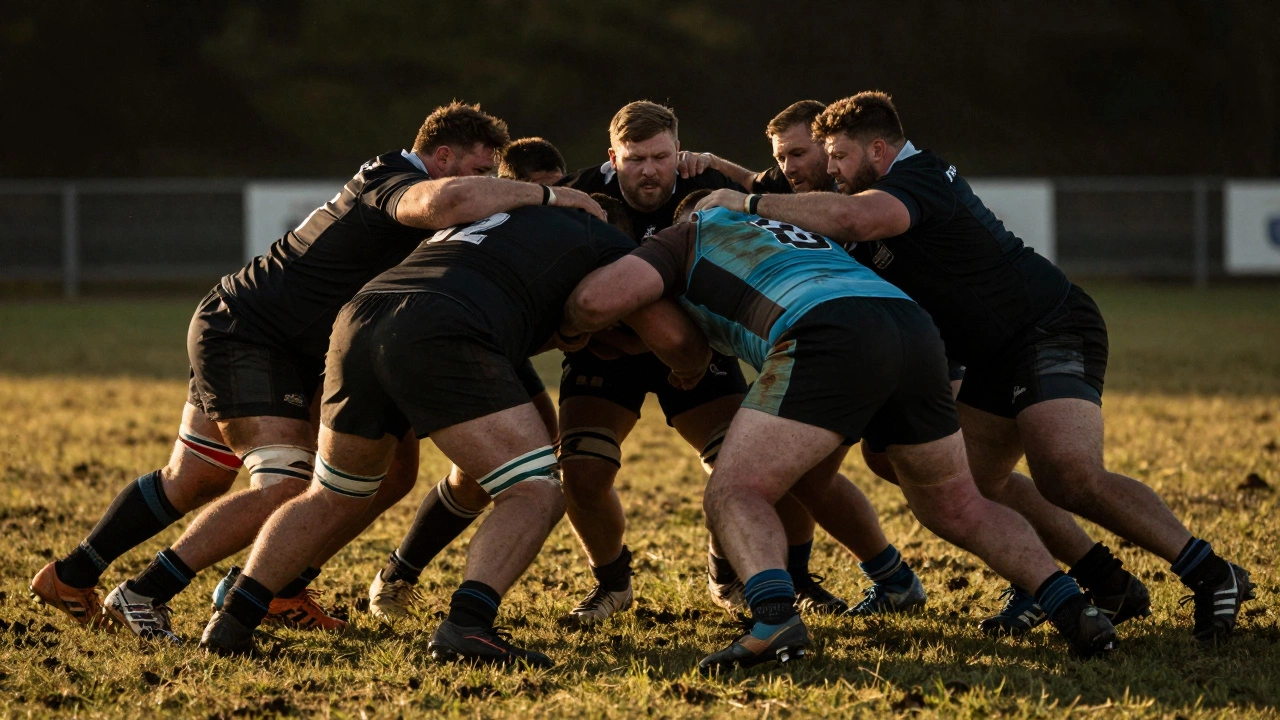
Then there’s the scrum. Eight massive men, locked together, pushing with 1,000 pounds of force or more. One misstep, one slip, and you’re either crushed or thrown backward. Scrummages happen 5 to 10 times per match. That’s 5 to 10 full-body explosions of force, repeated over 80 minutes. No other sport asks you to do that.
Rugby League: The Sprint with No Breaks
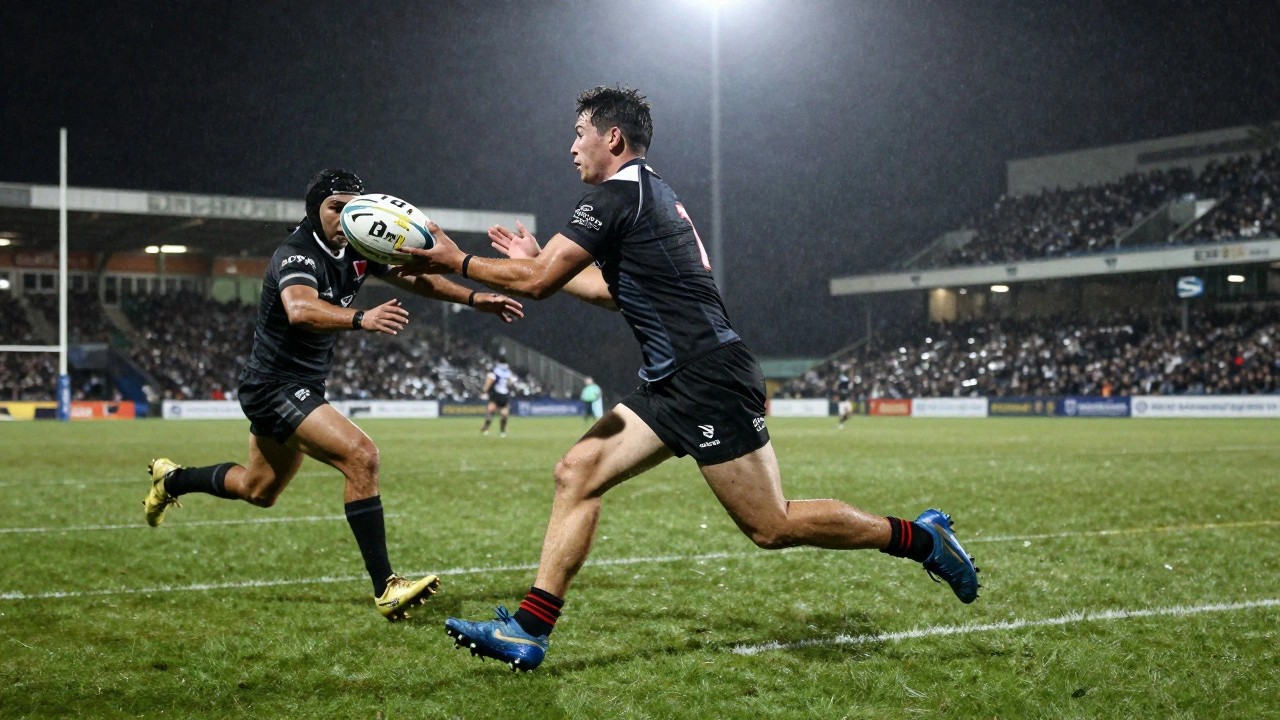
Rugby league has 13 players per side and plays 80 minutes too-but it’s a different kind of grind. The game moves faster. After a tackle, the ball goes back into play in under 10 seconds. No ruck. No maul. Just a quick play-the-ball and another sprint downfield. That means fewer stoppages, more continuous action.
Players in league cover less distance per game-around 4 to 5 kilometers-but they do it at a higher intensity. The average player makes 30 to 40 tackles per match, often with less recovery time. And because there are fewer players, each one is more exposed. You’re not just tackling-you’re being tackled every single set.
League doesn’t have scrums. That might sound easier, but it trades one kind of punishment for another. Without scrums, the game relies more on open-field collisions. Big hits come from all angles, and there’s no time to brace. You get hit, get up, and get hit again. Within minutes, your body is already screaming. And you’ve got 70 more minutes to go.
Who Gets Hit More?
Let’s talk numbers. A 2024 study from the Australian Institute of Sport tracked over 1,200 professional players across both codes. The findings were clear: rugby league players experience 37% more tackles per game than union players. That’s not just a little more-it’s nearly 10 extra impacts per player, every single match.
But it’s not just about quantity. It’s about repetition. In league, you’re hitting or being hit every 15 to 20 seconds. In union, you get a few seconds of recovery between rucks and scrums. That small window matters. Your muscles don’t fully reset. Your nervous system doesn’t reset. You’re operating on borrowed energy.
And when you look at injury rates, league has higher rates of shoulder and knee injuries. Union has more neck and spine injuries, mostly from scrums. But league? It’s the constant, grinding wear. A league player’s average career lasts 4.2 years. A union player’s? 5.8 years. That gap isn’t about skill. It’s about how much your body can take.
Recovery Is the Real Test
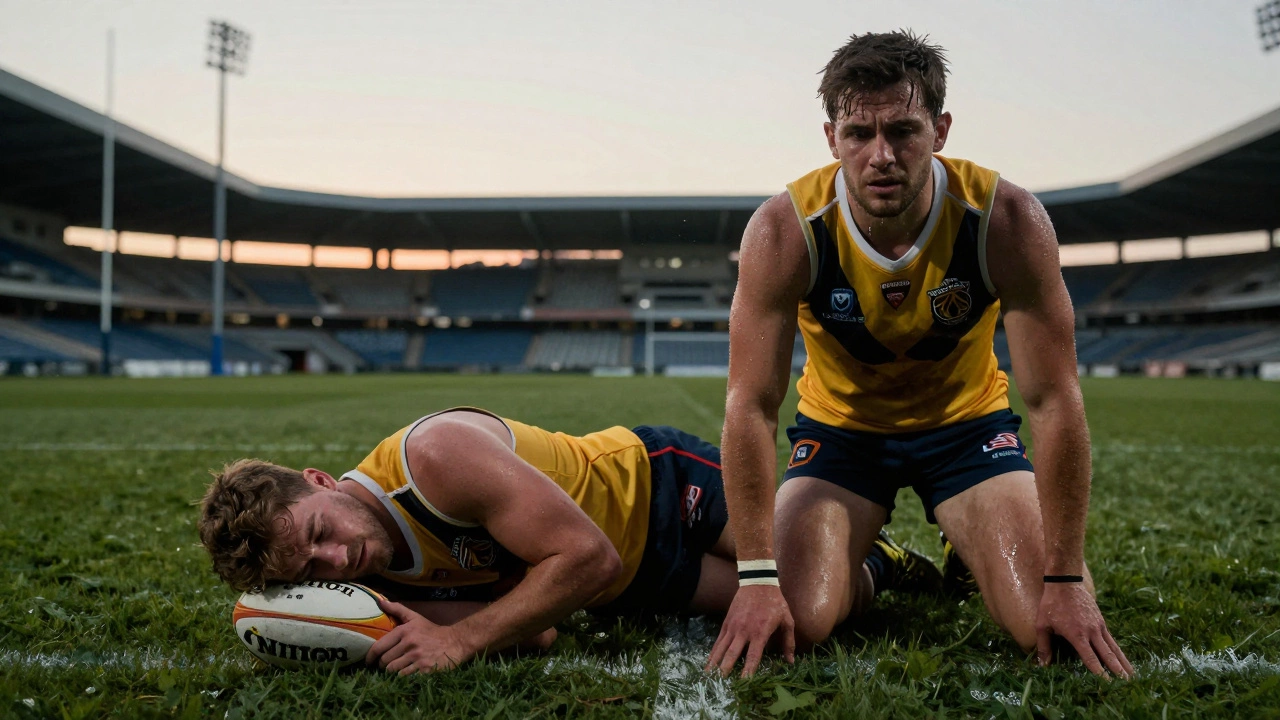
One thing both codes share: recovery is brutal. After a league match, players report muscle soreness levels 40% higher than after union matches. Why? Because league doesn’t give you time to cool down. You’re hit, you get up, you’re hit again. Your body never gets a chance to recover between impacts.
Union players get more rest between phases. But they also carry more weight. The average union forward weighs 115 kg. The average league forward? 102 kg. That extra 13 kg means more force on joints during tackles, scrums, and rucks. Union forwards are essentially human battering rams, pushing and pulling against opponents of similar size, repeatedly.
And then there’s the mental toll. League players say they feel more mentally exhausted. “You’re not just physically drained,” said former NRL player Liam Johnson. “You’re mentally drained because you know the next tackle is coming in 12 seconds. There’s no time to think. Just react.”
What About the Rules?
Rugby union has more complex rules. Offsides, knock-ons, forward passes, lineouts, penalties-it’s a maze. That means more stoppages, more referee decisions, more time for players to catch their breath. League? Simpler. Fewer rules. Fewer interruptions. The game flows. And because it flows, the physical demand never drops.
Union has 22 players on the field at once, but only 15 are active. League has 26, but 13 are always in motion. That’s a 40% increase in players in constant contact. That’s not just a difference in numbers-it’s a difference in how the body is used.
So Which Is Tougher?
If toughness means how many times you’re hit, league wins. If it means how much force you generate in a single moment, union wins. But if toughness means how long your body can keep going under relentless pressure, league takes it.
Rugby league is like running a sprint every 15 seconds for 80 minutes. Rugby union is like climbing a mountain with a 40-pound pack, stopping every 3 minutes to push a boulder. Both are brutal. But league doesn’t let you rest. Not even for a second.
Professional athletes in both codes train for years to survive the physical demands. But if you asked a league player and a union player to switch codes for a season, most league players would say they could handle union. Most union players? They’d say league would break them.
Bottom Line
Rugby union is physically demanding. It’s intense, technical, and exhausting. But rugby league is relentless. It doesn’t give you time to recover. It doesn’t give you time to think. It just keeps coming. And in the end, that’s what makes it tougher.
Is rugby league more dangerous than rugby union?
Both sports carry high injury risks, but the types differ. Rugby union has more neck, spine, and shoulder injuries due to scrums and rucks. Rugby league has higher rates of knee and shoulder injuries because of constant, high-frequency tackles with less recovery time. A 2024 study found league players had 23% more concussions per 1,000 player-hours than union players, largely due to the pace and lack of stoppages.
Do rugby league players get paid more than union players?
In top-tier leagues, yes-rugby league players in the NRL typically earn more on average than union players in the Six Nations or Rugby Championship. The NRL’s average salary is around $350,000 USD per year, while top union players in Europe average $250,000-$300,000. But this varies widely by country and level. In the U.S. and Canada, union players often earn less than league players due to fewer professional opportunities.
Can a rugby union player switch to league easily?
It’s possible, but not easy. Union players often struggle with the pace and lack of stoppages in league. They’re used to slower phases and more structure. League requires constant movement, quick decision-making, and the ability to tackle repeatedly with minimal recovery. Many union players who switch to league find their fitness levels aren’t enough-they need to train differently. Some successful switches include Sonny Bill Williams and Israel Folau, but they’re exceptions.
Which code has more global participation?
Rugby union has far more global participation. It’s played in over 120 countries, with strong grassroots programs in places like Japan, Argentina, and Fiji. Rugby league is dominant in Australia, New Zealand, England, and parts of Papua New Guinea, but has limited presence elsewhere. The Rugby World Cup draws 10x more viewers than the Rugby League World Cup.
Why doesn’t rugby league have scrums?
Rugby league removed scrums in 1972 to speed up the game and reduce stoppages. The idea was to make it more exciting and easier to follow. Instead of scrums, the play-the-ball was introduced-after a tackle, the player simply puts the ball on the ground and rolls it back with their foot. It’s faster, less technical, and reduces injury risk from scrum collapses. This change helped league become more popular in Australia and the UK.