What Is the Biggest Sport in the World? The Real Answer Behind the Numbers
 Jan, 26 2026
Global Sport Participation Calculator
Calculate how football (soccer) compares to other major sports in terms of global participation. Football has over 270 million players worldwide, making it the undisputed biggest sport.
Why Football Dominates
The Real Reason
Football requires only a ball and open space. No expensive gear, no specialized facilities, no membership fees. This accessibility makes it the only sport playable in every country and every community worldwide.
When you hear the phrase "biggest sport in the world," your mind might jump to the loudest games, the flashiest stars, or the most expensive leagues. But size isn’t about noise-it’s about numbers. Who plays? Who watches? Who shows up every weekend, in every town, on every continent? The answer isn’t close. It’s not even a contest.
Football (Soccer) Is the Only Real Answer
More than 4 billion people around the world follow football. That’s more than half of the entire planet. FIFA, the sport’s global governing body, estimates that over 270 million people play organized football-players, referees, coaches-all of them. That’s more than the entire population of the United States, Canada, and Australia combined.
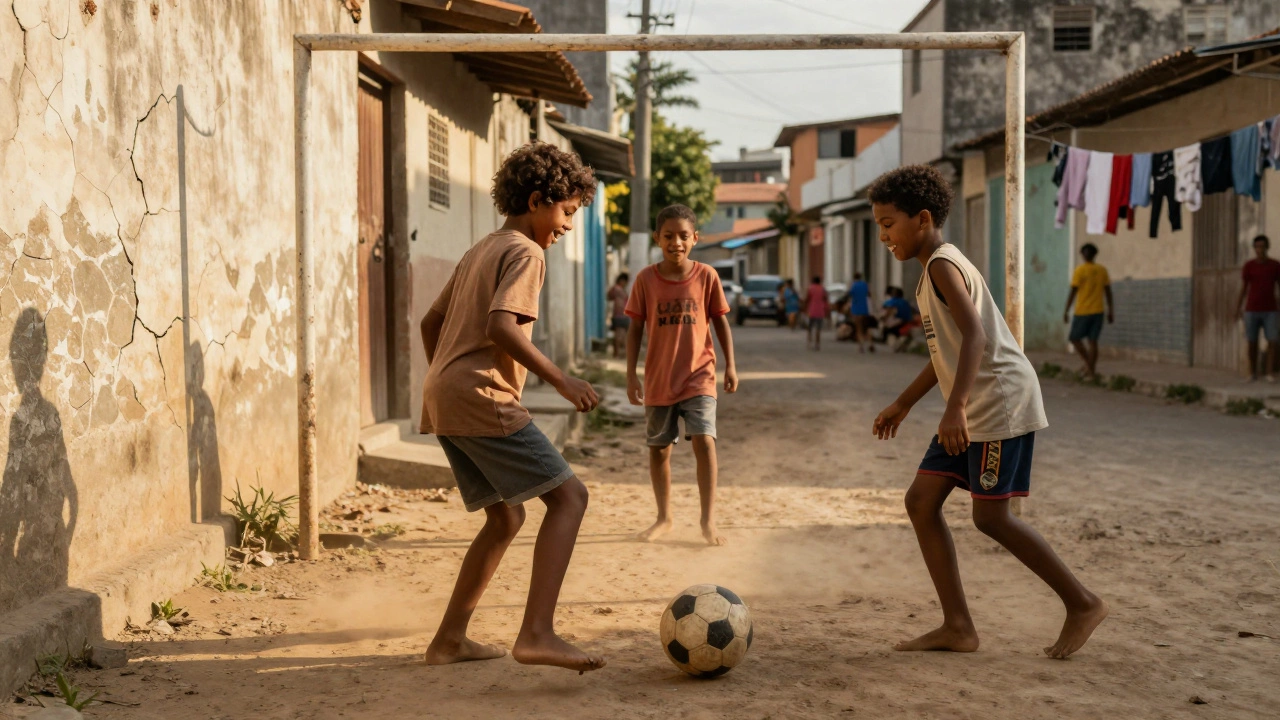
It’s not just about the World Cup. That tournament draws 5 billion viewers every four years, but the real heartbeat of football is what happens every weekend. In Brazil, kids play barefoot on dusty streets. In Nigeria, matches are held on cracked concrete pitches with goals made of jackets. In India, families gather to watch the Indian Super League even though cricket dominates headlines. In rural Indonesia, villages organize tournaments that last for weeks. Football doesn’t need stadiums. It needs a ball and a patch of ground.
Compare that to rugby. Rugby has passion. It has history. It has fierce loyalty-especially in places like New Zealand, South Africa, Wales, and parts of Australia. But rugby’s total player count? Around 8 million globally. That’s less than 3% of football’s player base. The Rugby World Cup gets about 2.5 billion viewers-impressive, but less than half of football’s World Cup numbers.
Why Football Dominates Where Others Can’t
Football wins because it’s simple. You don’t need expensive gear. No helmets. No pads. No special shoes. A ball, a shirt, and some open space are all you need. A child in a slum in Manila can play just as well as a kid in a suburb of Manchester. There’s no barrier to entry. No membership fee. No club requirement. No gatekeeper.
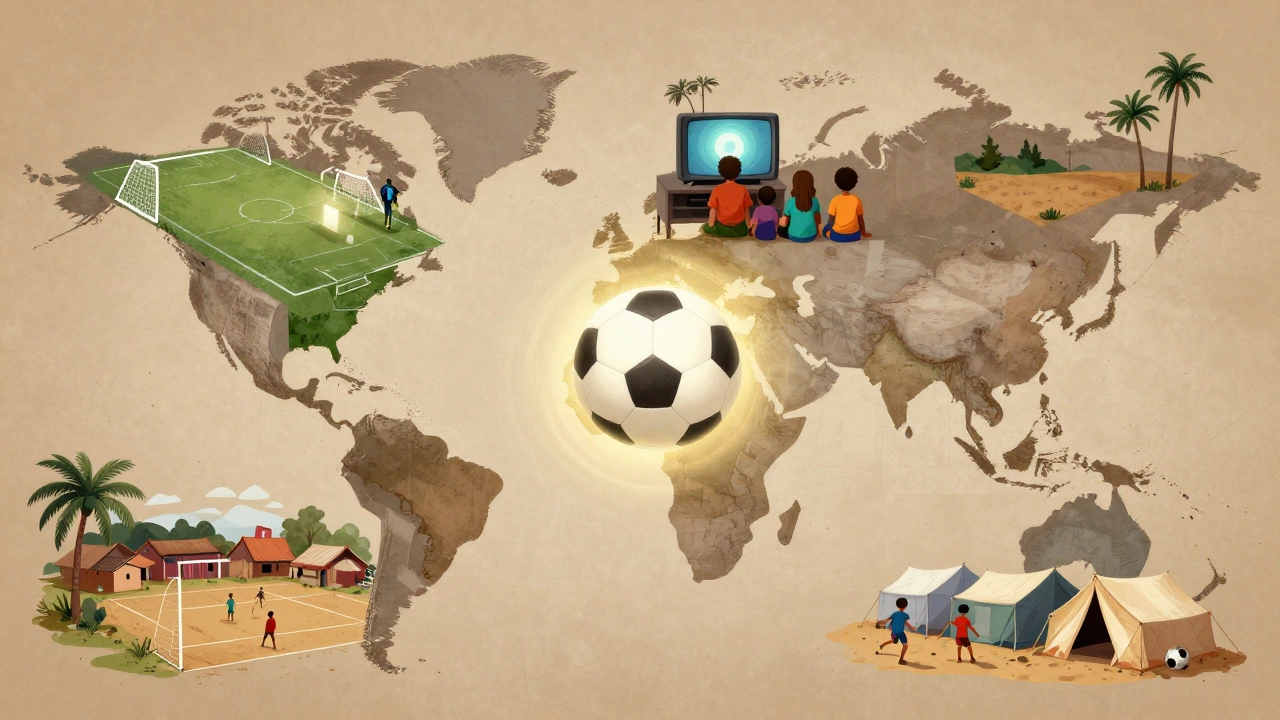
Other sports require infrastructure. Tennis needs courts. Basketball needs hoops and hard floors. Cricket needs a pitch and specific equipment. Rugby needs scrums, tackling gear, and a lot of space. Football? A wall, a tree, or a stack of jackets can be a goal. That’s why it thrives in places where money is tight and resources are scarce.
It’s also the most accessible sport for girls and women. Women’s football has exploded in the last 15 years. In 2023, the FIFA Women’s World Cup set a new record for attendance and viewership. More than 1.1 billion people watched at least part of the tournament. That’s more than the total population of Europe. In countries like England, Australia, and Japan, girls’ youth football programs are growing faster than boys’.
What About Other Sports? The Real Rankings
Let’s put this in perspective. Here’s how the top five sports stack up by total participants:
- Football (soccer): 270+ million players
- Cricket: 2.5 billion fans, but only about 100 million active players (mostly in South Asia and Commonwealth nations)
- Basketball: 450 million fans, 45 million players (mostly in the U.S., China, and the Philippines)
- Field Hockey: 35 million players (popular in India, Pakistan, Netherlands, Australia)
- Rugby: 8 million players (concentrated in 15-20 countries)
Even cricket, which has more fans than football, doesn’t come close in actual participation. Most cricket players are concentrated in just a few countries. Football? It’s played in every single country recognized by the United Nations.
Rugby’s Place in the Global Picture
Rugby is not small. It’s not insignificant. It’s a sport with deep roots, brutal physicality, and culture that runs deeper than any trophy. In New Zealand, rugby is part of the national identity. In Wales, a win over England feels like a revolution. In Japan, rugby’s growth after hosting the 2019 World Cup was historic.
But here’s the truth: rugby’s appeal is regional, not global. It thrives where it’s been nurtured for generations. It doesn’t spread easily. It needs structure, coaching, and time. Football spreads like wildfire. You don’t need a coach to kick a ball. You just need to want to.
That’s why you’ll find a football pitch in every refugee camp, every village school, every urban housing block. You won’t find a rugby pitch in most of them.
It’s Not About Money or Media
Some people think the biggest sport is the one with the most TV deals. The NFL makes more money than any other league. The Premier League has the most expensive broadcasts. But money doesn’t equal participation. The NFL has about 1.5 million registered players in the U.S. and maybe 10,000 outside it. That’s nothing compared to the 20 million kids in Brazil playing five-a-side football every afternoon.
Media attention doesn’t define size. It just highlights what’s already big. Football’s global reach isn’t because ESPN or Sky Sports pushed it. It’s because people chose it. Every day. In every language. Without permission.
What Does This Mean for Fans and Players?
If you love rugby, you’re part of a proud, tight-knit community. You’re right to feel that way. But if you’re trying to understand the world of sport, you can’t ignore the scale of football. It’s not just the most popular sport-it’s the most universal. It’s the only one that connects a child in Lagos to a teenager in Seoul to a grandfather in Buenos Aires.
That’s why the biggest sport isn’t the loudest. It’s the one that doesn’t need to be loud. It just needs a ball. And a dream.
Is rugby the biggest sport in the world?
No, rugby is not the biggest sport in the world. While rugby has a passionate global following, especially in countries like New Zealand, South Africa, and Wales, it has around 8 million active players worldwide. Football (soccer) has over 270 million players, making it by far the largest sport in terms of participation and viewership.
Why is football the biggest sport in the world?
Football is the biggest sport because it requires almost no equipment-just a ball and some open space. It’s affordable, easy to learn, and playable by people of all ages and backgrounds. Unlike sports that need courts, pads, or specialized gear, football can be played in slums, villages, refugee camps, and city streets. That accessibility has allowed it to spread everywhere.
How many people play football worldwide?
According to FIFA, over 270 million people play organized football globally. This includes players, referees, and coaches across more than 200 countries. When you add informal players-kids kicking a ball in backyards and streets-the number likely exceeds 400 million.
Does cricket have more fans than football?
Cricket has a massive fan base, especially in India, Pakistan, Australia, and England, with around 2.5 billion people following the sport. But fan numbers don’t equal participation. Only about 100 million people actively play cricket, compared to over 270 million who play football. Football wins on both participation and global reach.
Is women’s football growing faster than men’s?
In many countries, yes. Women’s football is growing faster than men’s in places like England, Australia, the U.S., and Japan. The 2023 FIFA Women’s World Cup drew over 1.1 billion viewers and set attendance records. More girls are joining youth teams than ever before, and investment in women’s leagues is rising rapidly worldwide.
If you’ve ever kicked a ball in the park, watched a match with friends, or cheered for a team you didn’t even support-you’ve experienced the real power of football. It doesn’t need permission to exist. It just needs you.