What Is the Best Beginner Yoga Class for Total Newcomers?
 Jan, 15 2026
If you’ve ever walked into a yoga studio and felt completely lost, you’re not alone. Most people who start yoga don’t know where to begin-what style to pick, what to wear, or even if they’re supposed to be flexible to start. The good news? You don’t need to be flexible. You don’t need special gear. And you definitely don’t need to be perfect. The best beginner yoga class is the one that meets you where you are.
What Makes a Yoga Class Truly Beginner-Friendly?
A great beginner yoga class doesn’t assume you know anything. It doesn’t throw out Sanskrit terms without explanation. It doesn’t rush through poses or expect you to hold a plank for a full minute on day one. Instead, it focuses on three things: safety, clarity, and pacing.
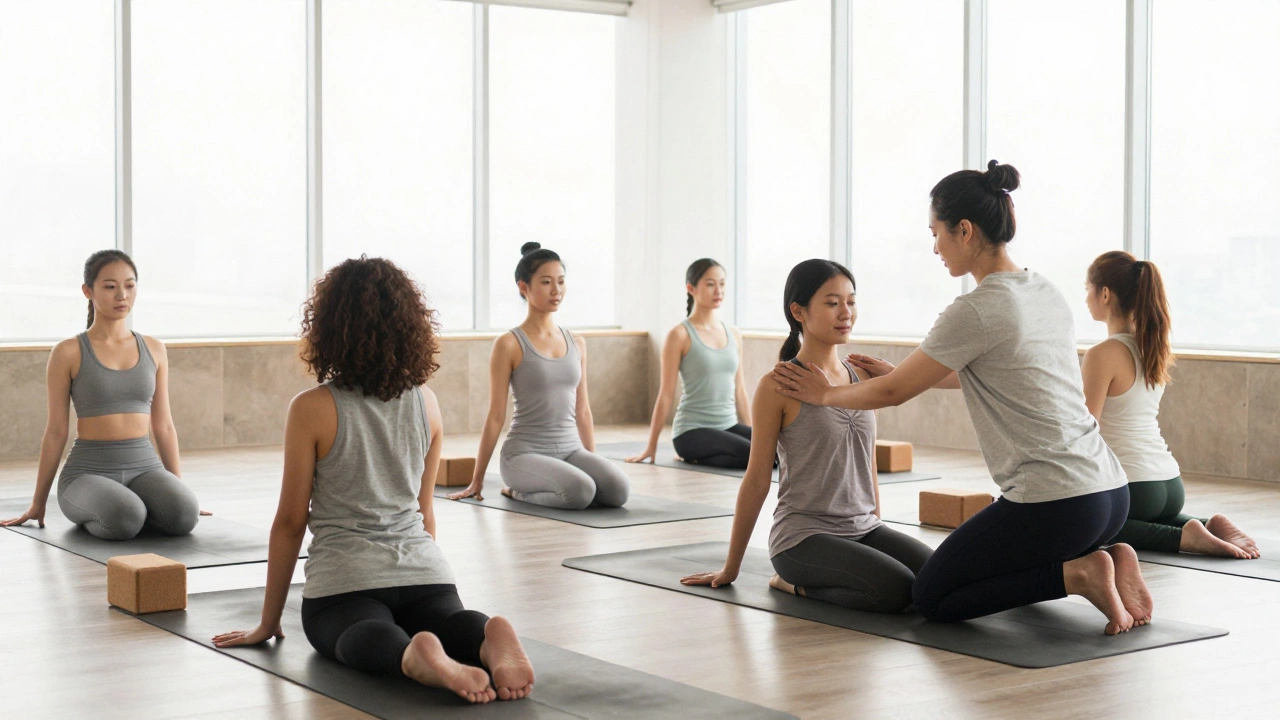
Look for classes labeled beginner, foundations, or intro to yoga. These are designed for people who’ve never rolled out a mat before. Instructors in these classes will break down each pose step by step. They’ll show you how to use blocks, straps, or even a chair to support your body. They’ll remind you it’s okay to rest. And they’ll never make you feel like you’re falling behind.
Many studios offer a free first class. Take advantage of that. Try two or three different ones. The right class doesn’t feel like a test-it feels like a welcome.
Which Yoga Style Is Best for Absolute Beginners?
There are dozens of yoga styles, but not all are made for newcomers. Here’s what actually works for people starting out:
- Hatha Yoga - Slow, gentle, and focused on basic poses and breathing. This is the gold standard for beginners. Most classes last 60-75 minutes and give you time to learn alignment without pressure.
- Yin Yoga - A quiet, meditative style where poses are held for 3-5 minutes. Great if you’re stressed, stiff, or just want to relax. Not high-energy, but perfect for learning body awareness.
- Restorative Yoga - Uses lots of props (bolsters, blankets, pillows) to help your body fully relax. Ideal if you’re recovering from injury, dealing with anxiety, or just need to slow down.
Avoid Vinyasa, Ashtanga, or Power Yoga when you’re starting out. These are fast-paced, physically demanding, and often assume you already know how to transition between poses. You’ll get hurt-or overwhelmed-trying to keep up.
What to Look for in a Teacher
The instructor matters more than the studio. A good beginner teacher doesn’t just demonstrate poses-they explain why they matter.
Watch for these signs:
- They offer modifications for every pose. Not just one or two-they give options for tight hips, sore knees, or weak wrists.
- They walk around the room and give gentle, hands-on adjustments-only if you’re comfortable with it.
- They say things like, “If this doesn’t feel right, come out of it,” or “Your breath is your guide.”
- They don’t make you feel bad for being slow or needing help.
Bad signs? Instructors who say things like, “You should be able to do this by now,” or who do a full 90-minute flow without stopping to explain anything. Run from those.
Where to Find the Right Class
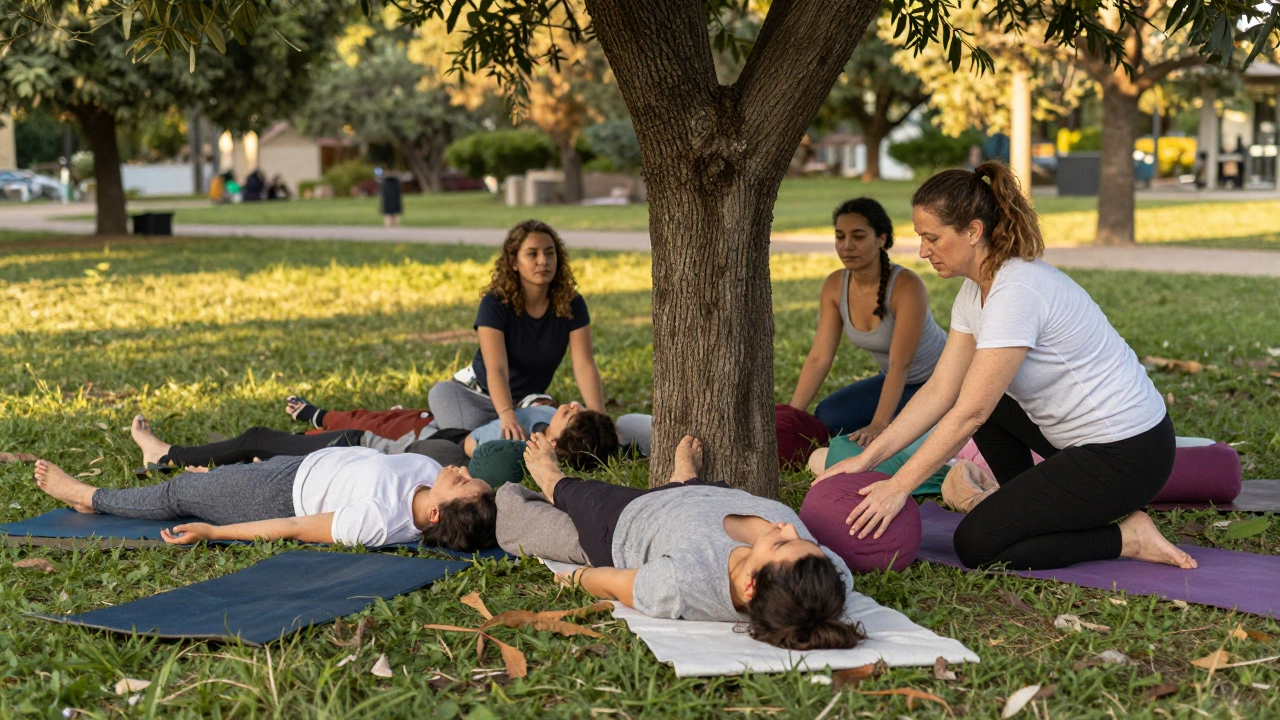
You don’t need a fancy studio. In fact, many of the best beginner classes are offered in community centers, libraries, or even local parks.
In Sydney, places like Yoga with Adriene (free on YouTube), Yoga Australia (certified studio directory), and local council-run fitness programs offer affordable or free beginner sessions. Look for classes labeled “no experience needed.”
Online options work too-if you’re shy or have a tight schedule. But make sure the instructor is certified (RYT-200 or higher) and the class is clearly marked as beginner-friendly. Avoid videos with flashy music, rapid cuts, and no verbal cues.
What to Bring (and What Not to Worry About)
You don’t need to buy anything before your first class. Seriously.
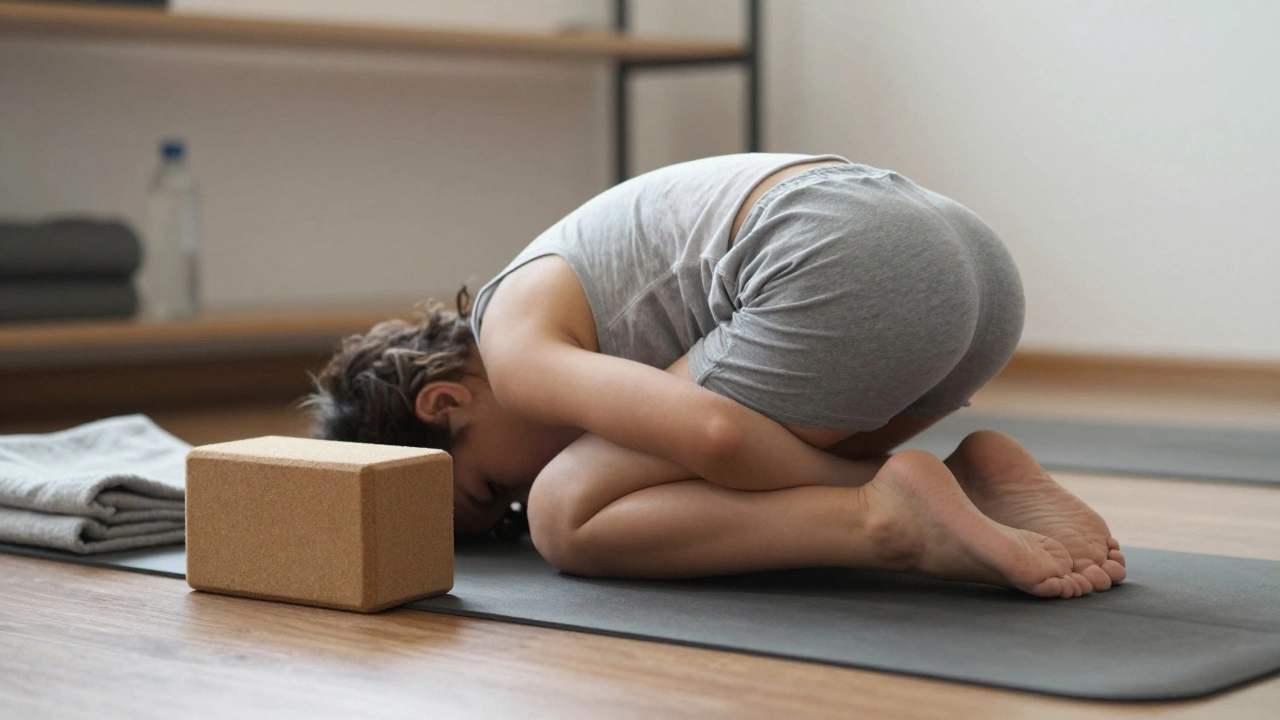
- Mat - Most studios lend them. If you buy one later, pick a basic non-slip mat (under $50).
- Clothes - Wear something loose or stretchy. No need for leggings or branded gear. Sweatpants and a t-shirt are fine.
- Water - Bring a bottle. But don’t chug it during class. Sip slowly.
- Nothing else - No candles, no crystals, no special socks. Just show up.
Leave your ego at the door. If you can’t touch your toes? Good. You’re exactly where you need to be.
What to Expect in Your First Class
Here’s what actually happens in a real beginner yoga class:
- You arrive 10 minutes early to sign in and get set up.
- The teacher greets you by name and asks if you’re new. They’ll probably give you a block and a strap.
- You start seated, learning how to breathe deeply-not hyperventilate.
- You move slowly through poses like Cat-Cow, Child’s Pose, and Mountain Pose. Each one is explained with simple cues: “Roll your shoulders back,” “Press your palms into the floor.”
- There are breaks. Lots of them. You’re not expected to stay perfect.
- The class ends with 5-10 minutes of lying still, breathing. This part is often the most powerful.
Don’t expect to sweat buckets. Don’t expect to feel “transformed.” You might feel a little sore the next day. That’s normal. What you’ll feel more than anything? Calmer. Clearer. Like you just gave yourself a quiet gift.
How Often Should You Practice as a Beginner?
Consistency beats intensity. Two 30-minute sessions a week are better than one 90-minute marathon.
Start with one class a week. Then add another if it feels good. If you miss a week? No guilt. Yoga isn’t a chore-it’s a practice. You come back because you want to, not because you have to.
Some people start seeing real changes-less back pain, better sleep, less stress-in as little as three weeks. Others take longer. That’s okay. Yoga doesn’t work on a timeline. It works on presence.
Common Beginner Mistakes (And How to Avoid Them)
Here’s what most new yogis do wrong-and how to fix it:
- Trying to look like the person next to you - Everyone’s body is different. Your hamstrings might be tight. That’s fine. Focus on your own breath, not their pose.
- Holding your breath - If you’re gasping or holding air, you’re pushing too hard. Breathe in through your nose, out through your mouth. If you can’t breathe, you’re doing it wrong.
- Skipping rest - Child’s Pose isn’t a punishment. It’s a reset. Use it often.
- Expecting instant results - You won’t be able to do a handstand in a month. That’s not the goal. The goal is to feel more at home in your own body.
The biggest mistake? Quitting too soon. Most people give up after two or three classes because they think they’re “bad” at yoga. But yoga isn’t about being good. It’s about showing up.
When to Move On
After 6-8 weeks, you might feel ready to try something new. That’s great. But don’t jump into advanced classes just because you can touch your toes now.
Instead, look for a “beginner to intermediate” class. Or stick with Hatha but try a longer session. Or add a weekly Yin class for balance. The key is progression-not pressure.
Remember: even experienced yogis go back to beginner classes every few months. It’s not a step down. It’s a reset.
Do I need to be flexible to start yoga?
No. Yoga isn’t about touching your toes-it’s about becoming aware of your body. Many people start yoga because they’re stiff. The practice helps you become more flexible over time, but you don’t need to be flexible to begin.
Can I do yoga if I’m overweight or have joint pain?
Yes. Yoga is adaptable. Chairs, blocks, and straps are tools, not signs of weakness. Many people with arthritis, back pain, or mobility issues find yoga one of the safest ways to move. Look for gentle or chair yoga classes specifically designed for these needs.
How much does a beginner yoga class cost?
In Sydney, drop-in classes usually cost $15-$25. Many studios offer a free first class. Community centers and libraries often run classes for $5-$10. Online options like YouTube are free. You don’t need to spend money to start.
What’s the best time of day to do yoga as a beginner?
Morning helps set a calm tone for the day. Evening helps you unwind. But the best time is whenever you can show up consistently. Even 10 minutes before bed counts. Don’t wait for the perfect time-just start.
Is yoga a workout or just stretching?
It’s both. Beginner yoga isn’t intense cardio, but it builds strength-especially in your core, shoulders, and legs. It also improves balance and posture. Over time, you’ll notice you stand taller, sit better, and move with more ease. That’s fitness, too.
Next Steps
Ready to start? Here’s your simple plan:
- Search for “beginner yoga class near me” or check your local council’s community calendar.
- Book a free or low-cost first class.
- Wear comfortable clothes. Bring water. Show up 10 minutes early.
- Let the instructor know you’re new.
- Don’t compare yourself to anyone. Just breathe.
You don’t need to be ready. You just need to show up. That’s all yoga ever asks for.