What Is the 2-2-2 Rule in Gym Workouts?
 Mar, 9 2026
2-2-2 Weight Progression Calculator
Weight Progression Calculator
Calculate your next weight increment based on the 2-2-2 strength training rule
How It Works
The 2-2-2 rule requires you to progress weight when you can complete 2 sets of 2 reps with perfect form. This calculator shows you the proper increment based on your current max.
Ever walked into the gym, picked up a weight, and just started lifting without a plan? You’re not alone. But if you’ve heard about the 2-2-2 rule and wondered if it’s just another fitness myth, here’s the truth: it’s a simple, science-backed structure that helps beginners and even experienced lifters build strength without burning out.
What Exactly Is the 2-2-2 Rule?
The 2-2-2 rule is a workout formula that breaks down your strength training into three clear parts: 2 sets, 2 reps, 2 exercises per muscle group per session. That’s it. No complex charts. No confusing variables. Just a clean, repeatable system.
It’s not about going heavy every time. It’s about consistency. Think of it like brushing your teeth-you don’t need to scrub for 10 minutes every day. You just need to do it right, every day. The 2-2-2 rule gives your body a steady, manageable stimulus to grow stronger without overloading your nervous system.
Why This Rule Works
Most people think more reps and more sets mean more gains. But research from the Journal of Strength and Conditioning Research shows that for building strength, even low-volume training can be effective-especially when done consistently. A 2024 meta-analysis found that subjects doing 2 sets of 2-4 reps, 2-3 times a week, improved strength just as much as those doing higher volumes, with far less fatigue and injury risk.
The magic of the 2-2-2 rule lies in its balance:
- 2 sets = Enough to trigger muscle adaptation without exhaustion
- 2 reps = Heavy enough to build neural strength, light enough to maintain form
- 2 exercises = Covers the major movement patterns without overtraining
This structure avoids the common mistake of doing 5 exercises for chest, 4 for back, and 6 for legs in one session. That’s not training-that’s chaos. The 2-2-2 rule cuts the noise.
How to Apply the 2-2-2 Rule
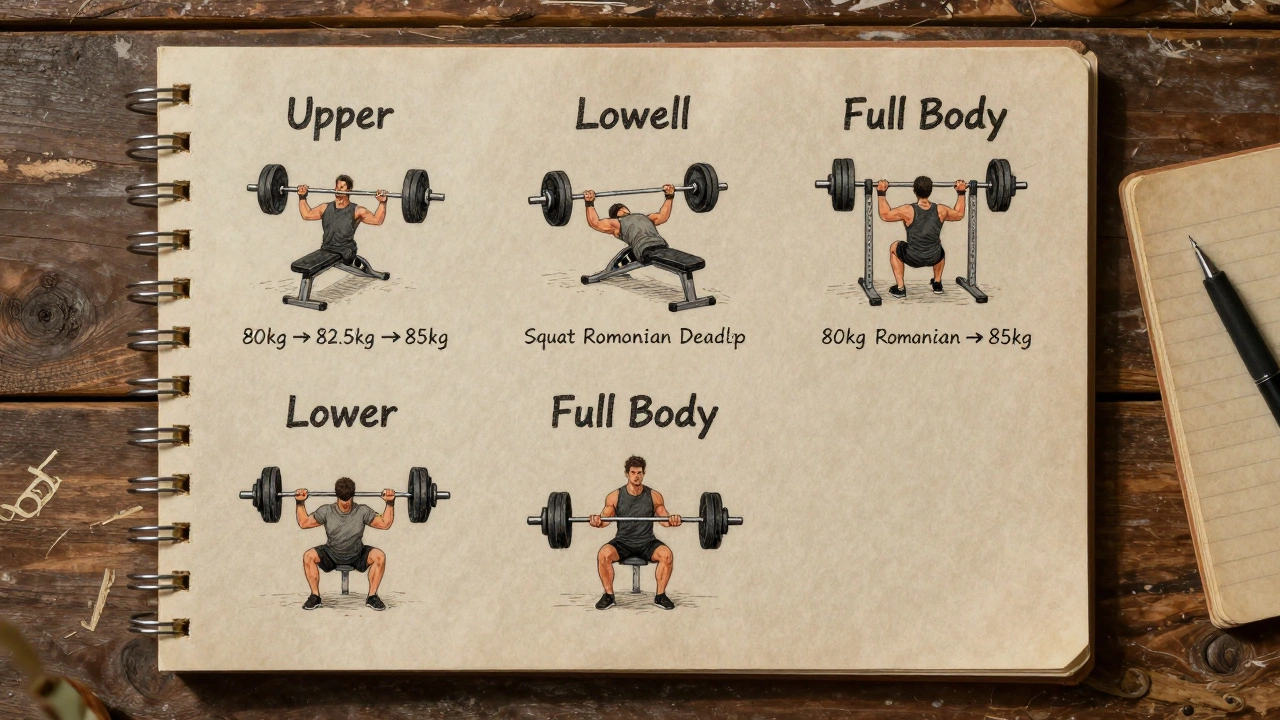
Let’s say you’re working out on Monday (upper body), Wednesday (lower body), and Friday (full body). Here’s how it looks:
Upper Body Day
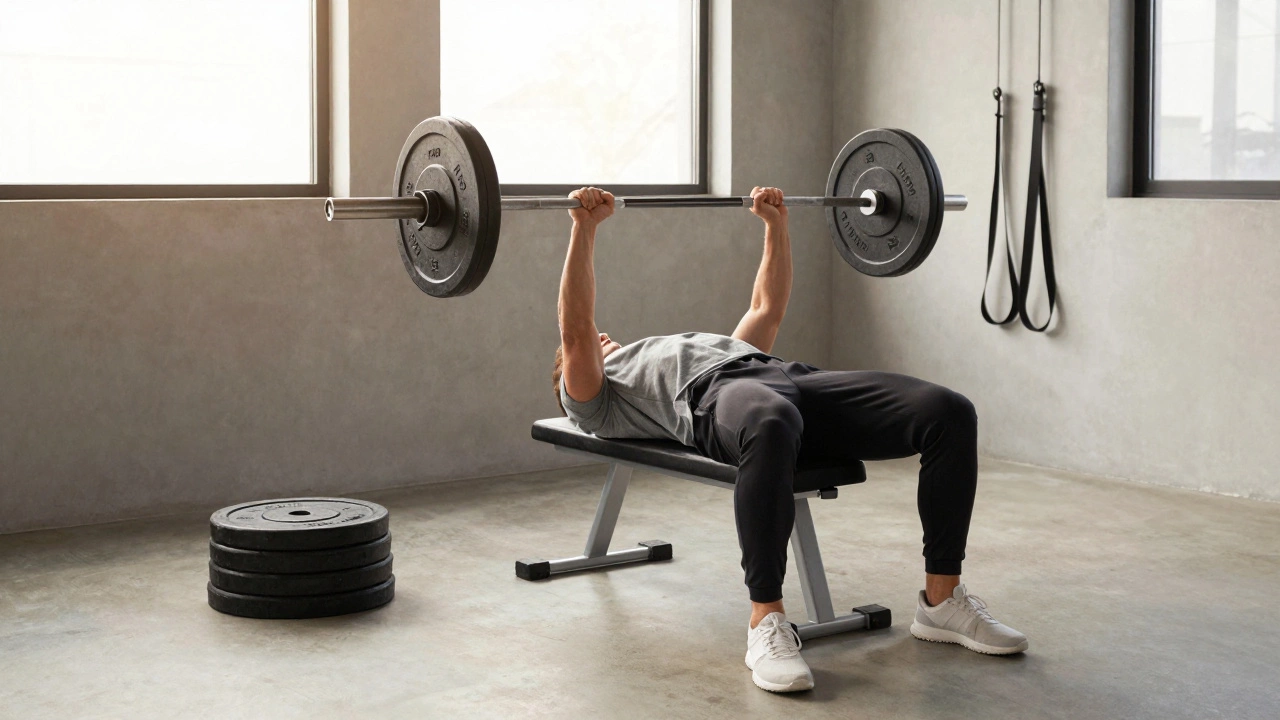
- Bench Press - 2 sets of 2 reps
- Barbell Row - 2 sets of 2 reps
That’s it. You’re done. No drop sets. No supersets. Just two compound lifts, heavy, controlled, with 2-3 minutes rest between sets.
Lower Body Day
- Barbell Back Squat - 2 sets of 2 reps
- Romanian Deadlift - 2 sets of 2 reps
Again, simple. No leg press. No calf raises. Just two lifts that build real strength.
Full Body Day
- Overhead Press - 2 sets of 2 reps
- Deadlift - 2 sets of 2 reps
You’re hitting push, pull, hinge, and squat patterns-all in one session. This keeps your body balanced and prevents muscle imbalances that come from over-focusing on one area.
Why 2 Reps? Isn’t That Too Low?
Most people think you need 8-12 reps to build muscle. That’s true for hypertrophy. But strength isn’t about muscle size-it’s about nervous system adaptation. Two reps forces you to lift heavier. That trains your brain to recruit more muscle fibers, improve joint stability, and boost connective tissue strength.
Think of it like learning to ride a bike. You don’t practice by pedaling slowly for hours. You practice by pushing hard, balancing, and recovering. Two reps is your “push hard” moment. You’re not trying to fatigue your muscles-you’re trying to teach your body how to move heavier loads.
Studies show that low-rep, high-load training (like 2-4 reps) improves bone density and tendon strength better than higher-rep work. That’s why powerlifters and Olympic weightlifters use these numbers.
What to Do When You Get Stronger
The 2-2-2 rule isn’t a dead end. It’s a launchpad. When you can do 2 sets of 2 reps with perfect form on a given lift, you don’t add more reps. You add weight.
For example:
- Week 1: Bench Press 80 kg for 2x2
- Week 2: 82.5 kg for 2x2
- Week 3: 85 kg for 2x2
That’s progress. No need to jump to 3 sets or 5 reps. Keep the structure. Just get stronger within it.
If you hit 2x2 at 90% of your max for three weeks in a row, you can switch to 3x2 for one week to test volume. Then go back to 2x2. That’s the only variation you need.
Who Benefits Most From This Rule?
Anyone who’s tired of endless gym sessions. Anyone who’s been told to do 10 sets of 10 reps and ended up sore for a week. The 2-2-2 rule is perfect for:
- Beginners who feel overwhelmed by complex programs
- People with busy schedules (30-minute workouts max)
- Those recovering from injury or overtraining
- Older lifters who need joint-friendly training
- Strength athletes who want to maintain power without burnout
It’s not for bodybuilders trying to get huge arms. But if you want to get stronger, move better, and stay injury-free, this is one of the most underrated systems out there.

Common Mistakes People Make
Even with a simple rule, people mess it up. Here’s what not to do:
- Doing more than 2 exercises → You’re diluting your focus. Stick to the plan.
- Going too heavy too fast → If you can’t do 2 reps with perfect form, the weight’s too heavy. Build technique first.
- Skipping warm-ups → 5-10 minutes of mobility and light sets before you lift. Your joints will thank you.
- Training every day → This rule works because you rest. Give your body 48 hours between sessions.
- Ignoring recovery → Sleep, protein, hydration. The 2-2-2 rule isn’t magic. Recovery does the healing.
Real Results: A Case Study
A 38-year-old office worker in Sydney started the 2-2-2 rule in January 2026. He trained three times a week, never more than 35 minutes. He didn’t change his diet. He just followed the rule.
By February, he’d increased his bench press from 60 kg to 75 kg. His squat went from 70 kg to 85 kg. He lost 2 kg of fat-not because he dieted, but because he moved more weight. His lower back pain disappeared. He stopped skipping workouts.
He didn’t get jacked. But he got stronger. And that’s what matters.
Final Thought: Less Is More
The fitness industry sells you complexity. More supplements. More exercises. More gear. But real strength comes from consistency, not chaos.
The 2-2-2 rule strips away the noise. It’s not glamorous. But it works. And in a world full of overcomplicated programs, sometimes the simplest system is the one that lasts.
Is the 2-2-2 rule only for beginners?
No. While it’s ideal for beginners because it’s simple and low-risk, experienced lifters use it as a maintenance phase or deload strategy. Powerlifters often cycle back to 2-2-2 between heavy training blocks to rebuild strength without burning out. It’s not a starter program-it’s a sustainable one.
Can I do cardio with the 2-2-2 rule?
Absolutely. The 2-2-2 rule is for strength training only. You can add 1-2 short cardio sessions per week-like brisk walking, cycling, or rowing-for 20-30 minutes. Just don’t do it right before or after your strength session. Let your body recover properly.
What if I can’t do 2 reps with heavy weight?
Start lighter. Focus on perfect form. Use a weight where you can do 2 reps with control, no jerking, no momentum. If you’re struggling with 2 reps, you’re not weak-you’re untrained. Strength builds over time. Stick with the rule, even if the weight is small. Consistency beats intensity every time.
How long should I rest between sets?
Rest 2 to 3 minutes between sets. This isn’t a conditioning workout. You’re lifting heavy, so your nervous system needs time to reset. Short rests will hurt your performance. Longer rests (up to 4 minutes) are fine if you’re going for max effort.
Can I use machines instead of barbells?
You can, but barbells and free weights are better. They force your body to stabilize, engage more muscles, and build functional strength. Machines are okay if you’re rehabbing an injury or don’t have access to barbells. But aim to transition to free weights as soon as you can.