What Is Sports Footwear? A Simple Guide to Understanding Athletic Shoes
 Dec, 25 2025
Sports Footwear Selector
Select your activity to find the ideal sports footwear for your needs.
Key Features:
Why it matters:
Sports footwear isn’t just shoes you wear to play. It’s engineered gear designed to protect your body, boost performance, and match the exact demands of a sport. If you’ve ever slipped on a court, felt blisters after a run, or wondered why your soccer cleats look nothing like your gym sneakers, you’re seeing the difference sports footwear makes.
What Exactly Counts as Sports Footwear?
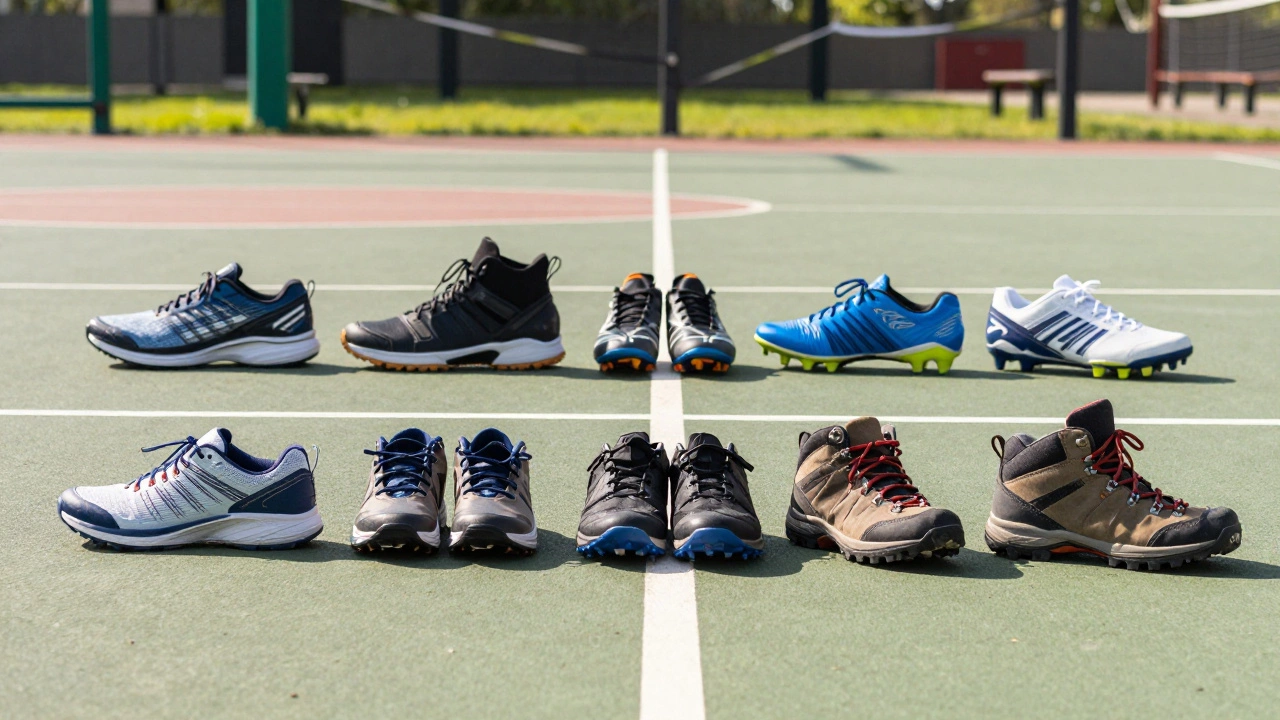
Sports footwear includes any shoe built specifically for physical activity - not casual walking or fashion. That means running shoes, basketball sneakers, cleats for soccer or football, hiking boots, tennis court shoes, cycling cleats, and even specialized weightlifting shoes. They’re not interchangeable. Wearing running shoes to play tennis can lead to ankle rolls. Wearing flat sneakers to lift weights? You’ll lose stability.
Each type has a unique structure. Running shoes have thick, cushioned midsoles to absorb impact. Basketball shoes have high tops to support ankles during jumps. Soccer cleats have studs to grip grass. Each design solves a physical problem.
Why Can’t You Just Wear Any Shoe?
Think of your feet as the foundation of your whole body. If the foundation shifts, everything above it suffers. Wearing the wrong shoe changes how you move - your stride, your balance, your joint alignment.
A 2023 study from the Australian Institute of Sport found that athletes using mismatched footwear had a 34% higher risk of overuse injuries like plantar fasciitis, shin splints, and stress fractures. That’s not a small number. It’s the difference between training hard and sitting out for weeks.
It’s not just about comfort. It’s about physics. Running shoes are built to let your foot roll forward smoothly. Tennis shoes are built to stop and change direction fast. One shoe can’t do both.
Key Parts of Sports Footwear and What They Do
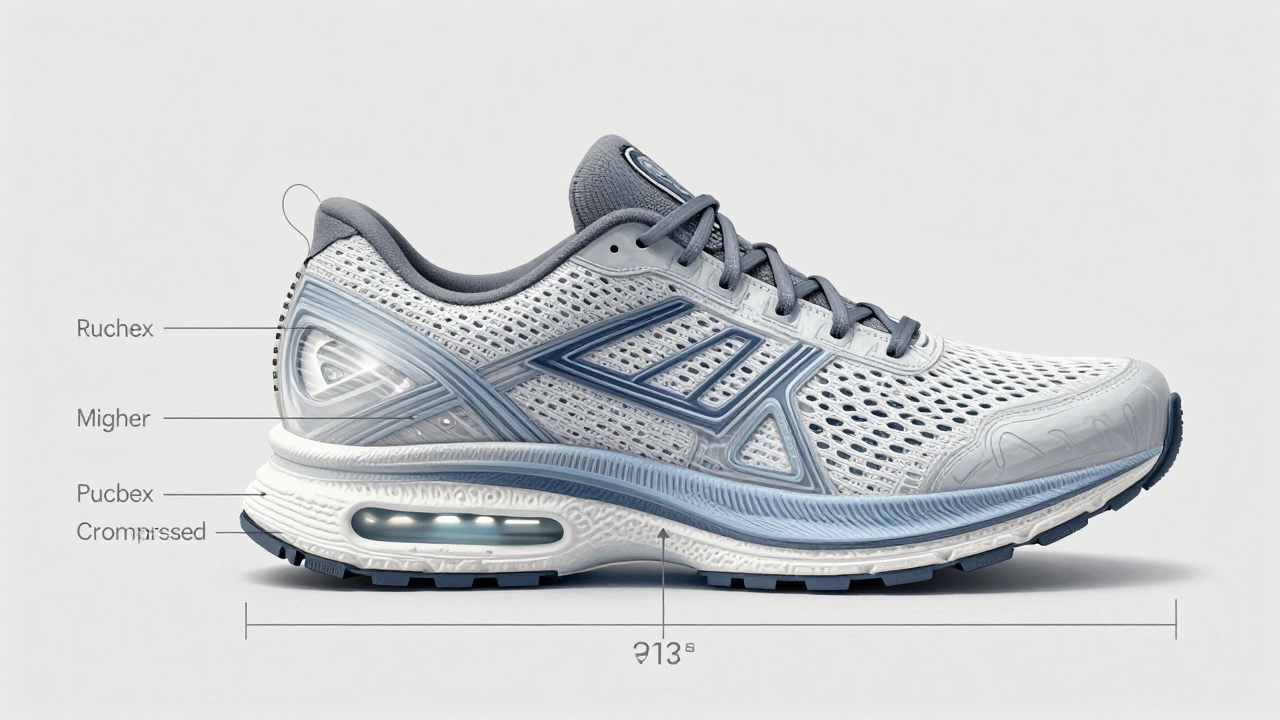
Every pair of sports footwear has three main layers:
- Outsole: The bottom layer that touches the ground. Made of rubber or synthetic compounds. Cleats have spikes; running shoes have wavy patterns for grip and flex.
- Midsole: The cushioning layer. Usually foam - EVA, PU, or newer materials like Pebax or Zoom Air. This is where shock absorption happens. Thicker midsoles = more cushioning, thinner = more ground feel.
- Upper: The part that wraps your foot. Made of mesh, knit, or synthetic leather. Breathable for running, supportive for basketball, tight for cycling.
Some shoes add extra features: heel counters for stability, arch supports for flat feet, rocker soles for smoother toe-off. These aren’t marketing fluff - they’re functional.
How Sports Footwear Differs by Activity
Let’s break down a few common types:
- Running shoes: Light, cushioned, flexible. Designed for forward motion. Look for a slight heel-to-toe drop (8-12mm) to encourage natural stride.
- Basketball shoes: Heavy-duty soles, high ankle support, sticky rubber outsoles. Built to handle sudden stops and jumps. Many have extra padding around the ankle.
- Soccer cleats: Low-cut for agility, studs (blades or conical) for traction on grass or turf. No cushioning - you need to feel the ball.
- Tennis shoes: Wide base, durable rubber outsoles that resist side-to-side sliding. Reinforced toe area from frequent dragging.
- Weightlifting shoes: Hard, flat soles (no cushion), elevated heel (0.5-1 inch) to help with squat depth and stability.
- Hiking boots: Stiff soles, ankle support, waterproof membranes. Built for uneven terrain and heavy loads.
There’s no such thing as a ‘universal sports shoe.’ If you’re doing multiple sports, you need multiple pairs. Trying to stretch one pair across activities will cost you in performance - and safety.
How to Choose the Right Pair
Here’s what actually matters when buying:
- Know your sport: Don’t buy running shoes for volleyball. Match the shoe to the movement.
- Get fitted: Feet swell during activity. Try shoes in the afternoon. Walk or jog in them if possible. Leave a thumb’s width of space at the toe.
- Match your foot type: Flat feet? Look for motion control. High arches? Need more cushion. Neutral? Most shoes will work.
- Replace them: Running shoes wear out after 500-800 kilometers. Look for worn-out soles, flattened midsoles, or new aches. Don’t wait until they fall apart.
Brands matter less than function. Nike, Adidas, Asics, New Balance, Saucony - they all make good shoes. But only one fits your feet and sport.
Common Mistakes People Make
Most people pick shoes based on color, price, or what their friend uses. That’s risky.
- Buying too big: You think extra space helps. It doesn’t. It causes blisters and instability.
- Ignoring wear patterns: If the sole is worn on the outside, you’re overpronating. If it’s worn inside, you might need arch support.
- Keeping old shoes for ‘light’ use: Even if you only wear them once a week, the foam breaks down. Cushioning doesn’t bounce back.
- Thinking expensive = better: A $200 running shoe won’t help if it’s not built for your stride. A $80 pair that fits right will outperform it.
What’s New in Sports Footwear (2025)
Technology is moving fast. In 2025, you’ll see:
- Recycled materials making up 70%+ of new shoes - brands like Allbirds and Adidas are leading this.
- 3D-printed midsoles that adapt to your foot pressure in real time.
- Smart insoles that track your stride, foot strike, and pressure points - synced to apps for injury prevention.
- Lighter, more breathable uppers using woven fabrics instead of synthetic leather.
But the core idea hasn’t changed: the shoe must serve the sport. Tech just makes it smarter and more personalized.
Final Thought: Your Feet Are Your Foundation
Sports footwear isn’t an accessory. It’s safety gear. Like a helmet in football or pads in hockey, your shoes protect your body from damage while letting you move at your best. Ignoring them is like ignoring your seatbelt.
Whether you’re a weekend jogger, a weekend warrior, or a competitive athlete - your shoes make the difference between feeling great and feeling broken. Choose them like your performance depends on it. Because it does.
Is sports footwear the same as athletic shoes?
Yes, they’re the same thing. "Sports footwear" and "athletic shoes" are used interchangeably. Both refer to shoes designed for physical activity, not everyday walking or fashion.
Can I use running shoes for the gym?
For light cardio or treadmills, maybe. But for weightlifting, HIIT, or lateral movements, running shoes aren’t ideal. Their cushioning makes you unstable during squats or lunges. Flat-soled training shoes or weightlifting shoes give you better control and ground connection.
How often should I replace my sports footwear?
Most running shoes last 500-800 kilometers. For other sports, replace them when the sole is worn flat, the midsole feels hard, or you start getting new aches. If you train 3-4 times a week, that’s usually every 6-12 months.
Do I need custom insoles with sports footwear?
Only if you have specific foot issues like flat feet, high arches, or chronic pain. Most people do fine with the insoles that come with the shoe. Custom insoles are for people who’ve tried multiple shoes and still have discomfort - they’re not a must-have for everyone.
Are expensive sports shoes worth it?
Not always. A $200 shoe isn’t better than a $100 one if it doesn’t fit your foot or sport. Focus on fit, function, and how it feels when you move. The most expensive shoe in the store might be the worst choice for you.
Next time you lace up, ask yourself: does this shoe match what I’m about to do? If the answer isn’t clear, it’s time to rethink your gear.