What Does 7 7 7 Mean in the Gym? The Complete Guide to This Viral Workout
 May, 11 2026
7-7-7 Workout Planner
Select your current fitness level to generate the perfect 7-7-7 integration strategy.
Beginner
New to exercise or returning after a long break.
Intermediate
Active regularly, looking for intensity boosts.
Advanced
Experienced athlete seeking metabolic conditioning.
Why Everyone Is Talking About the 7-7-7 Workout
You’ve probably seen it on social media. A video of someone doing seven push-ups, followed by seven squats, then seven lunges, and finally seven planks. They look exhausted but triumphant. The caption usually says something like "Day 1 of the 7-7-7 Challenge." If you’re wondering what all the fuss is about, you aren’t alone. The 7-7-7 workout has taken over fitness feeds because it’s simple, requires zero equipment, and promises a full-body burn in under five minutes.
But does it actually work? Or is it just another viral trend that burns out faster than your motivation? Let’s break down exactly what this routine entails, who it’s for, and how to do it without injuring yourself. We’ll also look at why this specific combination of movements makes sense from a biomechanical perspective and whether you should add it to your regular training schedule.
The Anatomy of the 7-7-7 Routine
At its core, the 7-7-7 workout is a high-intensity circuit based on repetition rather than time. Unlike traditional HIIT (High-Intensity Interval Training) where you might sprint for 30 seconds and rest for 30, this method focuses on completing a fixed number of reps with minimal rest. The name comes directly from the structure: seven repetitions of four distinct exercises performed back-to-back.
| Exercise | Muscle Groups Targeted | Primary Benefit |
|---|---|---|
| Push-ups | Chest, shoulders, triceps, core | Upper body pushing strength |
| Squats | Quadriceps, glutes, hamstrings | Lower body power and stability |
| Lunges | Quads, glutes, calves, balance | Unilateral leg strength |
| Plank | Abs, lower back, shoulders | Core stability and endurance |
The beauty of this sequence lies in its symmetry. You hit the upper body push pattern, the lower body bilateral pattern, the lower body unilateral pattern, and finally an isometric hold for the core. It covers every major muscle group in the human body. By keeping the rep count low at seven, the workout remains accessible to beginners while still challenging enough for intermediate lifters if they increase the speed or reduce rest times.
How to Execute the Workout Properly
Form matters more than speed here. Because you are chaining these movements together, fatigue sets in quickly. When you get tired, your form tends to slip, which increases injury risk. Here is how to perform each move correctly within the context of the circuit.
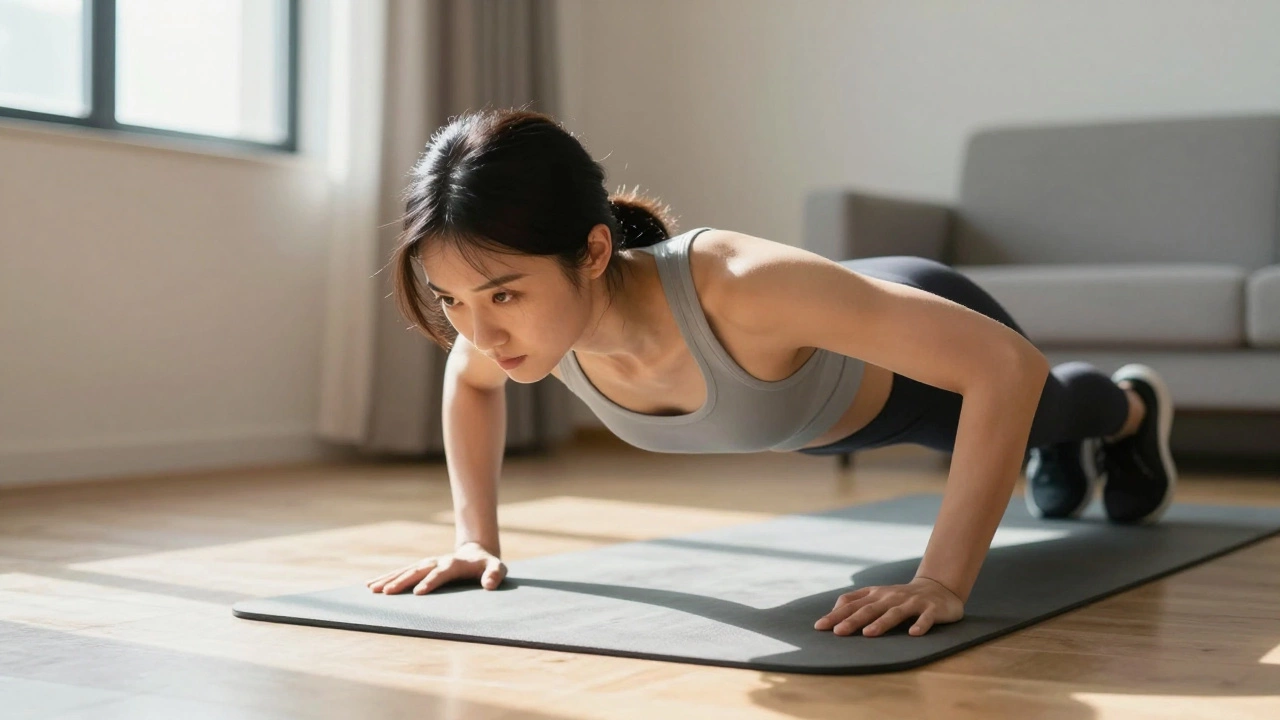
- Push-ups: Keep your body in a straight line from head to heels. Lower your chest until it nearly touches the floor. Push back up explosively. If standard push-ups are too hard, drop your knees to the ground. If they are too easy, elevate your feet on a bench.
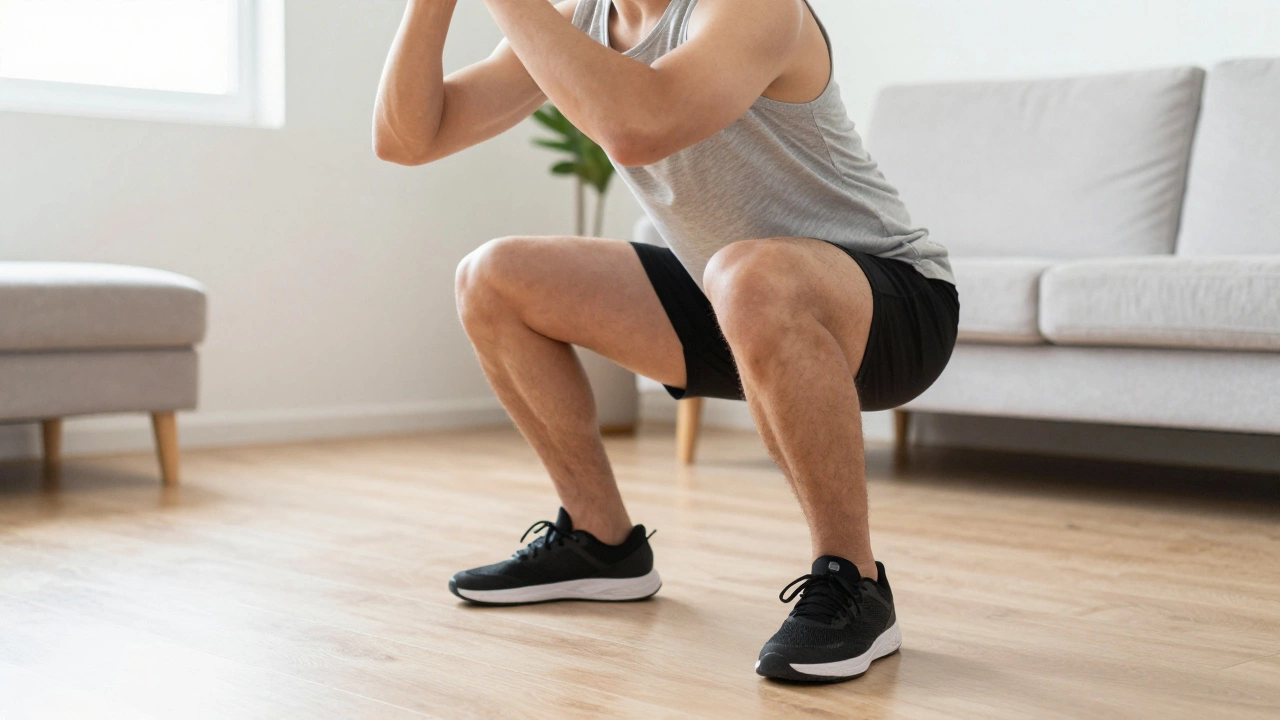
- Squats: Stand with feet shoulder-width apart. Lower your hips as if sitting into a chair. Keep your chest up and knees tracking over your toes. Go as deep as your mobility allows without rounding your lower back.
- Lunges: Step forward with one leg, lowering your hips until both knees are bent at approximately a 90-degree angle. Ensure your front knee doesn’t extend past your toes. Alternate legs for each of the seven reps, or do seven on one side then switch if you prefer unilateral focus.
- Plank: Hold a static position on your forearms and toes. Engage your glutes and abs to prevent your hips from sagging or hiking up. Aim for quality tension rather than just holding the position loosely.
Most people interpret the "7-7-7" as doing one round of these four exercises. However, many variations suggest repeating the entire circuit multiple times. A common progression is to aim for three to five total rounds. Rest only when necessary between rounds. This creates a metabolic demand that spikes your heart rate and improves cardiovascular endurance alongside muscular strength.
Who Should Try This Workout?
The 7-7-7 routine isn’t for everyone, but it fits perfectly into several specific lifestyles. It is ideal for busy professionals who don’t have time for a full hour at the gym. Students living in small apartments with no equipment will find it invaluable. Travelers staying in hotels can use it to maintain their fitness routine without needing a gym membership.
It is also excellent for beginners who feel intimidated by complex weightlifting programs. The simplicity reduces decision fatigue. You don’t need to plan sets, reps, or rest periods. You just show up and do the work. For intermediate athletes, it serves as a great warm-up or a finisher after a main lifting session. Using it as a cool-down helps flush out lactic acid and keeps the heart rate elevated for fat oxidation.
However, if you are an advanced powerlifter or bodybuilder looking to maximize hypertrophy or strength peaks, this workout alone won’t suffice. It lacks progressive overload mechanisms found in heavy resistance training. You cannot easily add more weight to a push-up or squat in the same way you add plates to a barbell. Therefore, it should be viewed as a supplementary tool rather than a primary driver of long-term muscle growth.
Benefits Beyond Muscle Building
While building lean muscle is a clear benefit, the 7-7-7 workout offers other physiological advantages. First, it improves muscular endurance. Performing repeated bodyweight movements trains your muscles to resist fatigue over time. This translates to better performance in daily activities like carrying groceries, climbing stairs, or playing sports.
Second, it enhances joint health. Bodyweight exercises promote natural movement patterns that strengthen the connective tissues around your joints. Squats and lunges improve hip and knee mobility. Push-ups reinforce shoulder stability. Planks build a resilient core that supports your spine during heavier lifts later in life.
Third, there is a psychological component. Completing a challenge, even a small one, releases dopamine. This boost in mood and confidence can motivate you to tackle other tasks in your day. The consistency required to stick with the challenge builds discipline. Many users report feeling a sense of accomplishment simply for showing up and finishing the circuit, regardless of how they felt physically.

Common Mistakes to Avoid
Even simple workouts come with pitfalls. One major error is sacrificing form for speed. Rushing through seven push-ups with a sagging midsection defeats the purpose and strains your lower back. Slow down. Control the eccentric phase of each movement. Quality always trumps quantity in functional fitness.
Another mistake is ignoring pain. Discomfort from muscle fatigue is normal; sharp pain in joints is not. If your shoulders click during push-ups or your knees hurt during squats, stop immediately. Assess your alignment. Often, adjusting foot position or range of motion resolves the issue. Don’t push through structural pain.
Finally, don’t treat it as a magic bullet. Doing 7-7-7 once a week won’t transform your physique. Consistency is key. Aim to incorporate it into your routine three to four times a week. Combine it with proper nutrition and adequate sleep. Recovery is where the actual adaptation happens. Without rest, your body breaks down rather than builds up.
Variations to Keep It Fresh
As you get stronger, the standard 7-7-7 may become too easy. To keep progressing, you need to manipulate intensity. Here are a few ways to level up the challenge without adding external weights.
- Decrease Rest Time: Perform the circuit with zero rest between exercises. This turns it into a true high-intensity interval session.
- Increase Reps: Move from 7-7-7 to 10-10-10 or even 15-15-15. Gradually increasing volume forces your muscles to adapt.
- Add Tempo: Slow down the descent. Take three seconds to lower yourself into a squat and one second to explode up. Time under tension increases significantly.
- Change Variations: Swap standard push-ups for diamond push-ups to target triceps harder. Replace squats with jump squats for added plyometric power. Use single-leg lunges instead of alternating lunges to challenge balance.
These modifications ensure that the workout continues to provide a stimulus for growth. Plateaus happen when the body adapts to the current load. By changing variables, you keep your nervous system guessing and your muscles growing.
Integrating 7-7-7 Into Your Weekly Schedule
How often should you do this? It depends on your overall activity level. If you are sedentary, start with two days a week. Allow at least one day of rest between sessions. As your endurance improves, move to three or four days. You can pair it with other activities. Do the 7-7-7 before a run to activate your legs. Use it after yoga to add some strength conditioning. The flexibility of the routine makes it highly adaptable.
Consider tracking your progress. Note how fast you complete each round. Measure your plank hold time. Seeing tangible improvements in speed or endurance provides positive reinforcement. It proves that consistent effort yields results. This data-driven approach keeps you engaged and motivated over the long term.
Is the 7-7-7 workout good for weight loss?
Yes, it can contribute to weight loss. The circuit elevates your heart rate and burns calories. More importantly, it builds lean muscle mass, which increases your resting metabolic rate. However, weight loss is primarily driven by a caloric deficit. Use the workout as part of a broader strategy that includes balanced nutrition and sufficient daily movement.
Can I do the 7-7-7 workout every day?
You can, but it is not recommended for beginners. Daily high-intensity training can lead to overuse injuries and central nervous system fatigue. Start with three to four days a week. Listen to your body. If you feel persistent soreness or joint pain, take extra rest days. Active recovery, like walking or light stretching, is beneficial on off-days.
Do I need any equipment for this workout?
No equipment is required. The entire routine uses your body weight. You just need enough floor space to lie down for push-ups and planks. A yoga mat can provide cushioning for comfort, but it is optional. This makes the 7-7-7 workout highly portable and accessible anywhere.
How long does one round of 7-7-7 take?
For most people, one round takes between 60 to 90 seconds. This depends on your fitness level and how quickly you transition between exercises. If you include rest periods between exercises, it could take longer. The goal is to maintain a steady pace without rushing excessively.
Is the 7-7-7 workout suitable for seniors?
It can be, with modifications. Seniors should focus on controlled movements and reduced range of motion if needed. Wall push-ups instead of floor push-ups and chair-assisted squats are safer alternatives. Always consult with a healthcare provider before starting a new exercise regimen, especially if you have pre-existing conditions.