What Does 5 5 Mean in Gym? Explained for Lifters
 Nov, 30 2025
5x5 Strength Calculator
Calculate Your 5x5 Program
Enter your one-rep max to determine proper starting weight and weekly progression for the 5x5 strength program.
Ever walked into a gym and heard someone say, 5 5? Or seen it scribbled on a whiteboard next to a barbell? It’s not a typo. It’s not a secret code. It’s one of the most effective, no-fluff strength programs ever built-and if you’re serious about getting stronger, you need to know what it means.
What 5 5 Actually Means
When people say 5 5 in the gym, they mean five sets of five repetitions. That’s it. Simple. No gimmicks. You pick a weight, do five reps, rest, then do it again-four more times. Most of the time, it’s done with compound lifts: squats, deadlifts, bench presses, overhead presses, and barbell rows.
This isn’t about muscle burn or pump. It’s about building raw strength. The 5x5 method was popularized by strength coaches like Bill Starr in the 1970s and has been used by powerlifters, military personnel, and Olympic athletes ever since. It’s not flashy, but it works-because it forces your nervous system and muscles to adapt to heavy loads over time.
Why 5 Sets of 5?
Why not 10 reps? Or 3 sets? Or 8 reps? Because 5 is the sweet spot.
Three reps is heavy, but doesn’t build much muscle. Ten reps builds muscle, but doesn’t build much strength. Five reps? It’s the Goldilocks zone. Heavy enough to trigger neural adaptations-your brain learns to fire more muscle fibers at once-but not so heavy that you can’t recover or form breaks down.
Five sets give you enough volume to stimulate growth without overloading your recovery. Most people can handle five sets of five with a weight that’s about 75-85% of their one-rep max. That’s heavy, but sustainable. Do this three times a week, and your strength climbs steadily.
How a Real 5x5 Program Looks
Here’s what a typical 5x5 routine looks like for a beginner:
- Monday: Barbell Back Squat (5x5), Bench Press (5x5), Barbell Row (5x5)
- Wednesday: Deadlift (1x5), Overhead Press (5x5), Chin-Ups (3x max)
- Friday: Barbell Back Squat (5x5), Bench Press (5x5), Barbell Row (5x5)
You rest 2-3 minutes between sets. The deadlift is only one set because it’s brutal on your nervous system. Chin-ups are there to balance out the pushing movements. And you don’t do cardio unless you want to-this program isn’t about burning calories.
Each week, you try to add 2.5-5 pounds to the bar on every lift. That’s it. No fancy calculations. No heart rate zones. Just lift heavier, slowly, consistently.

Who It’s For (and Who Should Skip It)
This program is perfect for:
- Beginners who want to get strong fast
- Intermediate lifters stuck in a plateau
- Anyone tired of endless reps with light weights
- People who don’t have hours to spend in the gym
It’s NOT for:
- Those focused on bodybuilding aesthetics (you’ll get strong, but not huge)
- People with joint issues-especially knees or lower back
- Competitive endurance athletes (marathoners, triathletes)
- Anyone who hates tracking progress
If you’re new to lifting, start with just the squat, bench, and row. Master form before adding deadlifts. If you’ve been lifting for a while and feel like you’re spinning your wheels, 5x5 is the reset button your body needs.
Why It Works Better Than Other Programs
Most gym-goers do 3 sets of 10, or 4 sets of 8, or “whatever feels right.” That’s fine for maintenance. But if you want real strength gains, you need structure.
5x5 forces consistency. You can’t wing it. You have to show up, load the bar, and push. Over time, your body adapts. Your tendons thicken. Your bones get denser. Your central nervous system becomes more efficient. That’s what strength really is-not just bigger muscles, but a better-connected system.
Compare that to high-rep, low-weight routines. You might get a pump, but you won’t move heavier weights. You’ll look toned, but you won’t feel powerful. And if you ever need to lift something heavy-like a fallen tree, a heavy box, or a stubborn piece of gym equipment-you’ll be glad you trained with 5x5.
Common Mistakes People Make
Even though 5x5 is simple, people mess it up. Here’s what goes wrong:
- Adding too much weight too fast. If you’re struggling to hit all five reps on the last set, you went too heavy. Back off 5-10 pounds and rebuild.
- Skipping warm-ups. Do 2-3 light sets before your work sets. Your joints aren’t built for max weight cold.
- Ignoring form. A sloppy squat with 5x5 is a one-way ticket to injury. Film yourself or ask someone to check your technique.
- Not eating enough. Strength gains need fuel. Eat protein (1.6-2.2g per kg of body weight), carbs for energy, and enough calories to recover.
- Doing cardio every day. Long runs or HIIT sessions will sabotage recovery. Stick to walking or light cycling if you must.
One guy I trained with in Sydney tried to add 10kg to his squat every week. He hit 100kg in two weeks. Then he couldn’t squat for a month. He didn’t get stronger-he got hurt.
How Long Should You Stick With It?
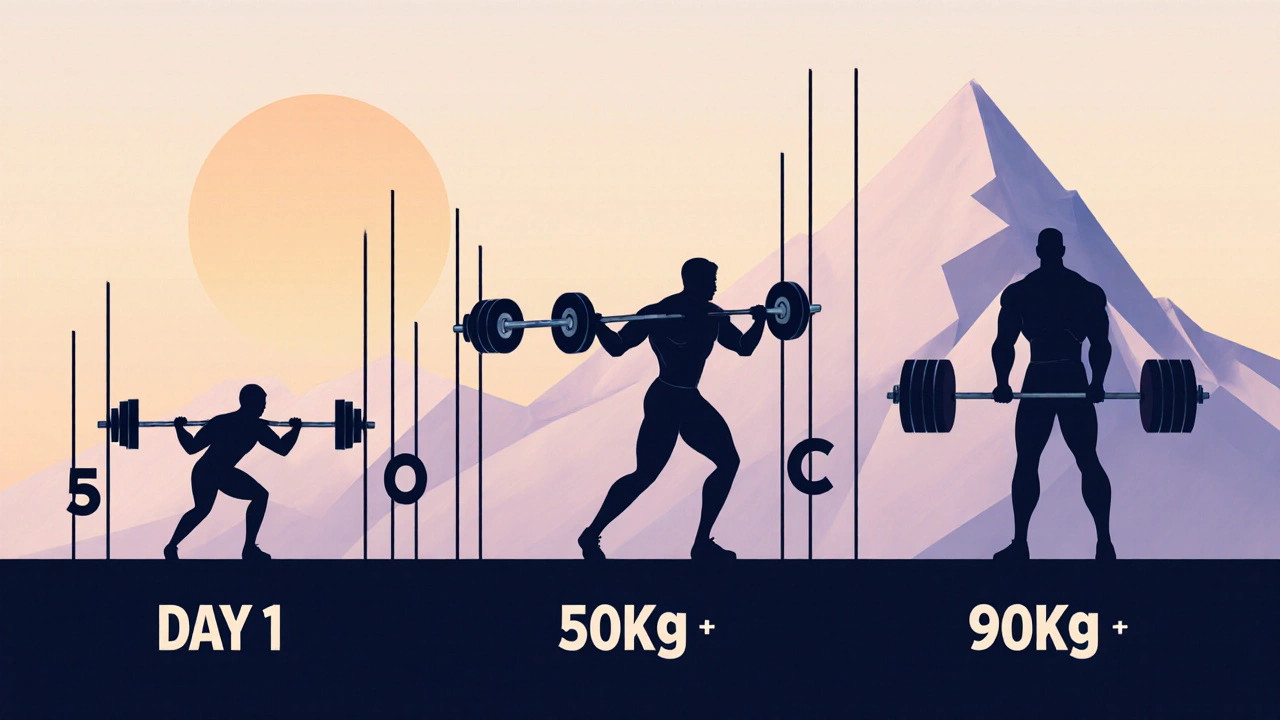
Most people see big gains in the first 8-12 weeks. That’s when your body is most responsive to new stimulus. After that, progress slows. That’s normal.
When you can’t add weight for two straight weeks, it’s time to change. You can:
- Switch to a 3x5 routine with heavier weights
- Move to a 5/3/1 program
- Take a deload week (reduce weight by 40%, keep volume low)
- Transition to a bodybuilding split if you want more muscle size
But don’t quit too early. Many people give up right before they break through. Stick with it for at least 10 weeks. Track your lifts. Take photos. Notice how your clothes fit. Strength isn’t always visible-it’s felt.
Real Results: What People Actually Achieve
Here’s what a typical beginner can expect after 12 weeks on a solid 5x5 program:
- Squat: 50kg → 90-100kg
- Bench Press: 30kg → 60-70kg
- Deadlift: 60kg → 100-110kg
- Overhead Press: 20kg → 40-45kg
These aren’t elite numbers. But they’re life-changing. You’ll carry groceries easier. You’ll climb stairs without gasping. You’ll feel like you’ve unlocked a new version of yourself.
One woman I trained with in Bondi, 48 years old, started at 40kg squat. Twelve weeks later, she hit 85kg. She told me, “I haven’t felt this strong since I was 25.” That’s the power of 5x5.
Final Thought: Strength Is a Skill
5x5 isn’t magic. It’s just smart training. It respects your body’s need to recover. It gives you clear goals. It removes guesswork. And it doesn’t require fancy gear or expensive supplements.
If you want to get stronger, you don’t need more workouts. You need better ones. Five sets of five. Heavy. Consistent. Patient.
Grab the bar. Do the work. Let the numbers speak for themselves.
Is 5x5 good for beginners?
Yes, 5x5 is one of the best programs for beginners because it focuses on compound lifts that build overall strength. It’s simple, structured, and forces you to learn proper form under load. Just start with lighter weights and prioritize technique over weight.
Can I do 5x5 every day?
No. 5x5 is intense and requires recovery. Most programs run it 3 days a week with rest days in between. Training it daily leads to overtraining, joint pain, and stalled progress. Your muscles grow when you rest-not when you lift.
Do I need a spotter for 5x5?
For squats and bench presses, yes-especially when you’re pushing heavier weights. For deadlifts and rows, you don’t need a spotter because you can drop the bar safely. Always use safety bars or power racks when possible.
Can I lose fat while doing 5x5?
Yes, but it’s not the main goal. 5x5 builds muscle, and muscle burns more calories at rest. To lose fat, you need to eat fewer calories than you burn. Combine 5x5 with a slight calorie deficit and you’ll get lean and strong at the same time.
What if I don’t have a barbell?
You can’t do true 5x5 without a barbell. Dumbbells don’t allow the same progressive overload for heavy compound lifts. If you don’t have access to a barbell, join a gym, find a community lift space, or invest in a basic setup. 5x5 requires a barbell-it’s non-negotiable.