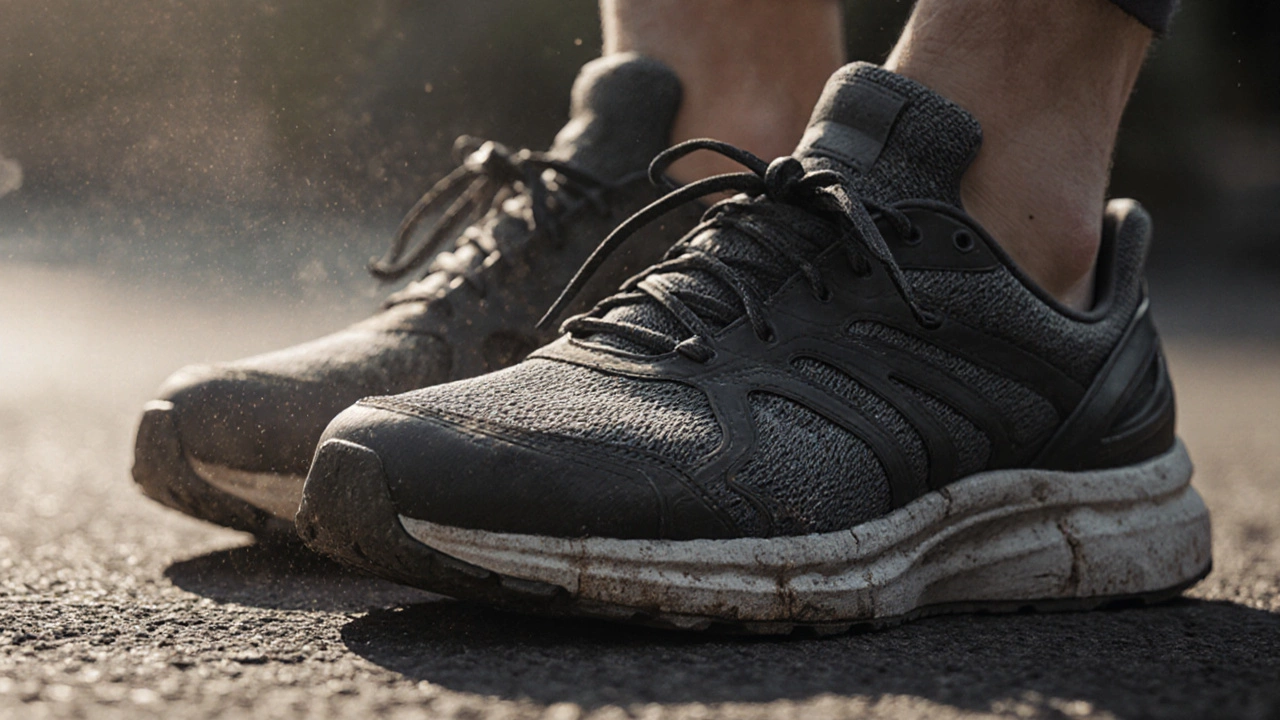
When to Replace Running Shoes: Signs, Science, and Smart Choices
When you’re out there pounding the pavement, your running shoes, the primary piece of equipment that protects your feet, joints, and posture during every stride. Also known as running gear, they’re not just footwear—they’re your first line of defense against injury. But they don’t last forever. Most runners don’t realize their shoes are worn out until their knees start aching or their arches feel like they’re collapsing. That’s too late.
Here’s the hard truth: mileage, the most reliable metric for determining shoe life is the key. If you run 20 miles a week, your shoes are likely done by 300 to 500 miles. That’s about 4 to 6 months. If you’re logging 40 miles a week? Swap them every 3 months. It’s not about how they look on the outside—it’s about what’s happening inside the foam. The midsole, the part that absorbs shock, breaks down long before the outsole wears thin. You won’t see it. You’ll just feel it in your legs.
Other signs your shoes are done? If your feet feel more tired after runs than they used to, if you’re getting new blisters in places you never had them before, or if the heel counter feels loose or squishy—those are red flags. Even if you only run once a week, don’t wait past a year. Foam degrades over time, even if you’re not using it. Moisture, heat, and sitting in your closet all eat away at cushioning. And if you run on concrete or uneven trails? You’ll wear them out faster than someone who sticks to soft paths.
Some runners think buying a size bigger helps—running shoe sizing, a common point of confusion that affects comfort and injury risk—but that’s only part of the story. A shoe that’s too big causes your foot to slide, which creates friction and can lead to black toenails. A shoe that’s too small crushes your toes as your feet swell during a run. The right fit? Your big toe should have a thumb’s width of space, and your heel should stay locked in place with no slipping.
Don’t fall for the myth that expensive shoes last longer. A $150 pair doesn’t outlast a $80 pair if both are made with the same foam. What matters is the brand’s construction, your weight, and your gait. Heavier runners wear out shoes faster. Overpronators put extra stress on the medial side. And if you’ve had a recent injury—especially plantar fasciitis or shin splints—it’s worth checking your shoes before you blame your form.
Keep a log. Write down when you bought each pair and how many miles you’ve run in them. Apps like Strava or Garmin can track it for you. Or just use a notebook. When you hit 400 miles, start looking at new ones. Test them in-store. Walk, jog, even hop in them. Your body knows when something’s off—listen to it.
Replacing your shoes isn’t a luxury. It’s a habit that keeps you running longer. Skip it, and you’re gambling with your knees, hips, and ankles. The right pair won’t make you faster—but the wrong one can make you stop altogether.
Below, you’ll find real stories, science-backed tips, and practical advice from runners who’ve been there. Whether you’re training for your first 5K or logging miles for your 10th marathon, this collection has what you need to keep your feet happy and your strides strong.