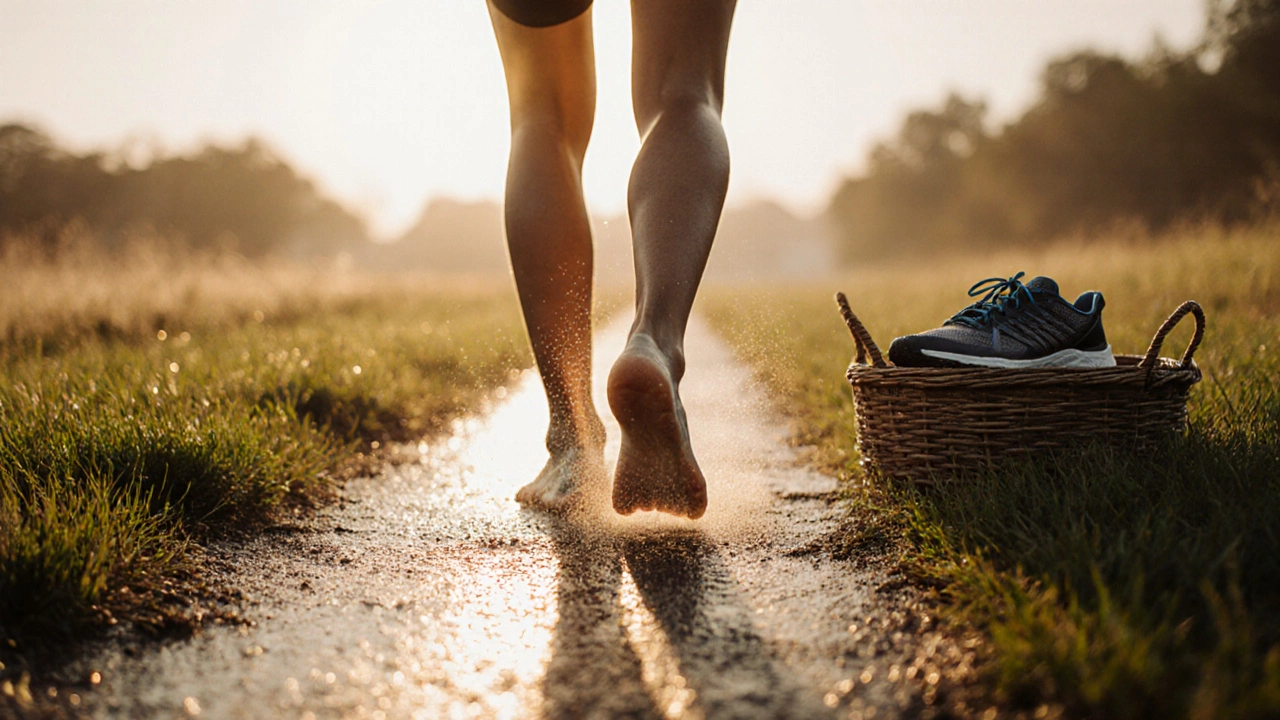
Barefoot Running: What It Is, Why It Matters, and What You Need to Know
When you hear barefoot running, a style of running without traditional shoes, often using minimalist footwear or going completely shoeless. Also known as natural running, it’s not about being tough—it’s about letting your feet do what they were built for. Most of us grew up told that we need thick, cushioned shoes to protect our feet. But what if those shoes are actually changing how we run—and making us more prone to injury?
Minimalist running, a related approach that uses lightweight, low-profile shoes with little to no cushioning is often the middle ground for people testing barefoot running without jumping straight into it. Both styles push you to land more on your midfoot or forefoot, not your heel. That small change reduces the sharp impact your joints take with every step. It’s not magic—it’s biomechanics. Your feet have 26 bones, 33 joints, and over 100 muscles. When you run barefoot, those muscles wake up. They strengthen. They help you absorb shock naturally.
But here’s the catch: you can’t just toss your shoes and start sprinting. Your calves, arches, and tendons need time to adapt. Many people hurt themselves by rushing it. Studies show that runners who transition slowly—over weeks or months—see fewer injuries and better foot strength. That’s why running form, the way your body moves while running, including foot strike, posture, and arm swing matters more than distance or speed when you’re going barefoot. It’s not about how far you run, but how you land.
Some of the posts below tackle related topics you might not expect. Like why buying running shoes a size bigger might actually hurt you—because your feet swell during runs, and tight shoes mess with your natural movement. Or how a 37-year-old beginner can start running safely, which ties into the idea that your body can adapt at any age—if you listen to it. Even the 5x5 strength rule shows up here: strong feet need strong calves and glutes, and those come from smart training, not just running.
You’ll find real stories here—not theory. People who switched to barefoot or minimalist running and stopped getting shin splints. Others who tried it and walked away because their feet weren’t ready. No hype. No promises. Just what works, what doesn’t, and why.
Whether you’re curious about ditching your shoes, dealing with chronic foot pain, or just want to run more efficiently, the articles below give you the facts. No fluff. No marketing. Just what you need to decide if barefoot running is right for you.