Sports Equipment Examples: A Complete Guide by Sport
 May, 4 2026
Sports Equipment Selector Tool
Essential Equipment
Recommended Accessories
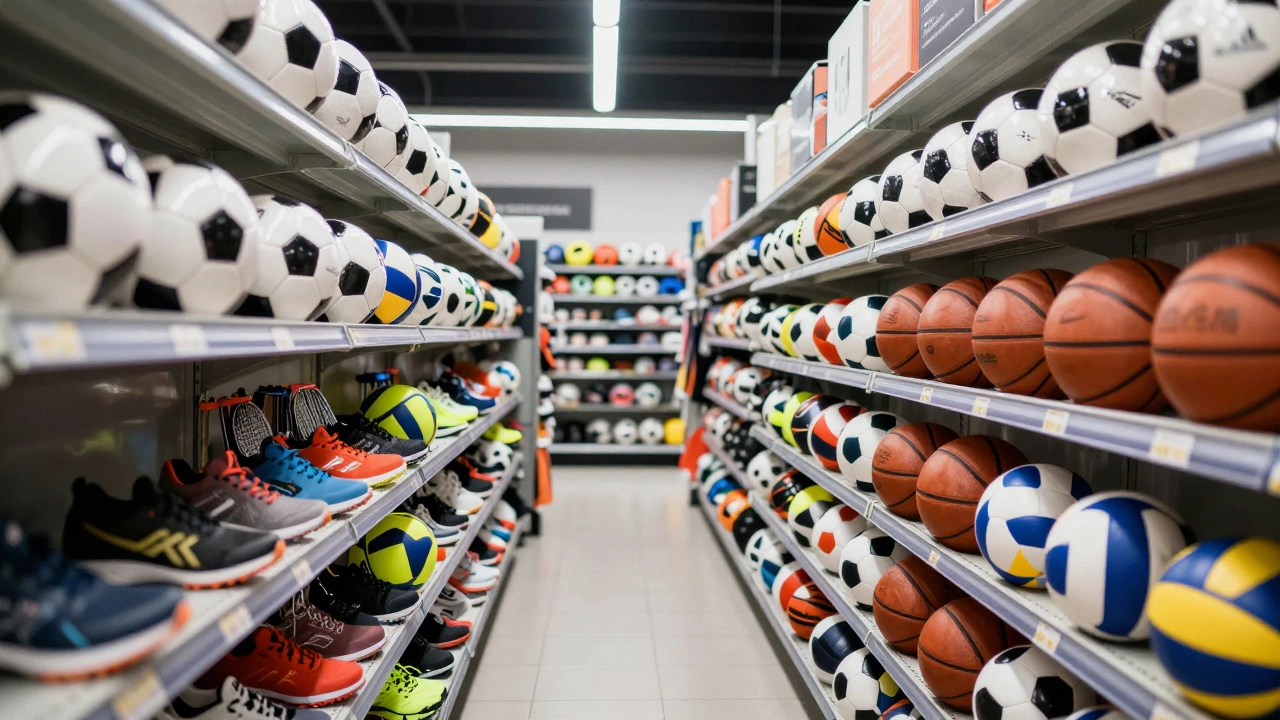
Walking into a sporting goods store can feel like stepping into a maze. You see racks of colorful balls, shelves lined with specialized shoes, and walls covered in rackets, bats, and clubs. If you are new to a sport or just trying to figure out what your kid actually needs for practice, the sheer volume of options is overwhelming. What exactly counts as sports equipment? Is it just the ball? Or does it include the shoes on your feet?
The truth is that sports equipment covers everything from the primary tools used to play the game to the protective gear that keeps you safe. Understanding these examples helps you buy smarter, train better, and avoid wasting money on items you don't need. Let’s break down specific equipment examples across major categories so you know exactly what fits where.
Ball Sports: The Core Tools
When people think of sports equipment, they usually picture the object being thrown, kicked, or hit. These are the primary implements of the game. However, even within ball sports, the equipment varies wildly based on the rules and physics of the activity.
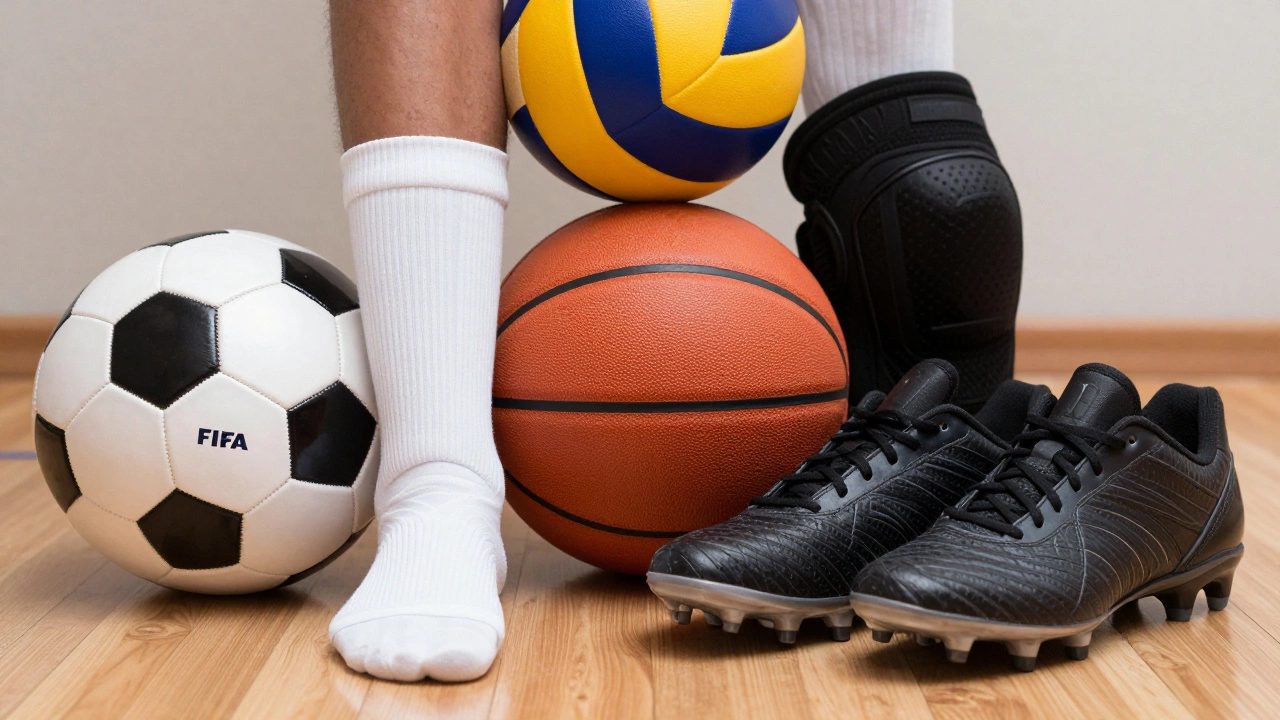
In Soccer, a global sport played with a spherical ball kicked by players, the main equipment is simple but precise. You need a FIFA-approved match ball, which has specific weight and circumference standards. But the player’s essential gear includes shin guards to protect against impacts, cleats for traction on grass, and a goalkeeper who requires specialized gloves and padding. Without shin guards, a simple tackle could end a season.
Basketball, a fast-paced indoor sport involving shooting a ball through a hoop, relies heavily on footwear. While the ball and the hoop are the central objects, the equipment list expands to include high-top sneakers designed for ankle support and court grip. Indoor courts demand rubber-soled shoes to prevent slipping, whereas outdoor concrete courts require durable, flat-soled sneakers to withstand abrasion.
- Soccer: Match ball, shin guards, cleats, goalkeeper gloves.
- Basketball: Basketball, court shoes, knee sleeves (optional).
- Volleyball: Volleyball, indoor court shoes, wristbands, knee pads.
Racket and Bat Sports: Precision Instruments
These sports turn equipment into an extension of the athlete’s body. The choice of racket or bat affects spin, power, and control more than any other factor.
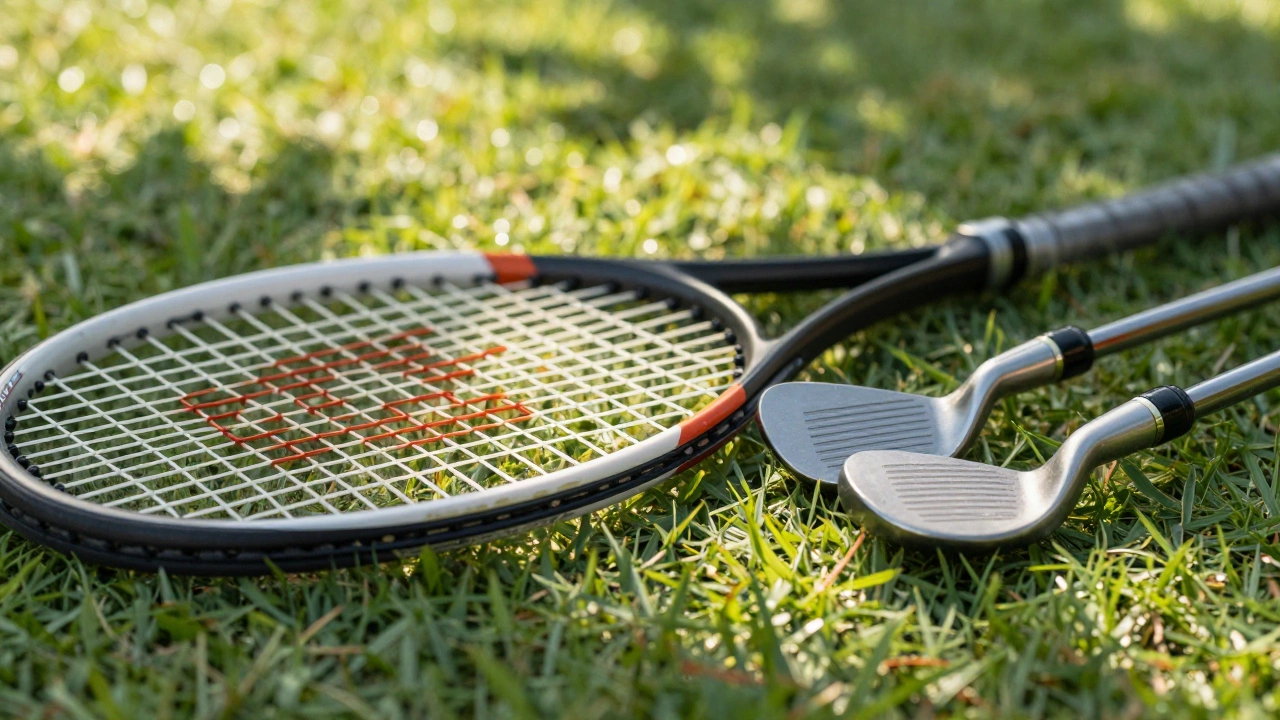
In Tennis, a racket sport played on a rectangular court divided by a net, the tennis racket is the star. Rackets come in different head sizes, weights, and string tensions. A beginner might use a larger head size for a bigger sweet spot, while a pro uses a lighter, stiffer frame for precision. Don’t forget the strings-polyester strings last longer but feel harsher, while natural gut offers superior feel at a higher cost.
Golf, a club-and-ball sport played on a course with holes takes this customization to the extreme. A golfer’s bag contains up to 14 clubs, each serving a distinct purpose. Drivers launch the ball far, irons provide accuracy off the fairway, wedges handle short distances and sand traps, and putters manage the final roll on the green. Golf balls also vary; two-piece balls are durable for beginners, while multi-layer balls offer spin control for advanced players.
| Sport | Primary Tool | Key Attribute | Essential Accessories |
|---|---|---|---|
| Tennis | Tennis Racket | String Tension & Head Size | Court Shoes, Overgrips |
| Golf | Golf Clubs | Loft Angle & Shaft Flex | Golf Balls, Gloves, Bag |
| Badminton | Badminton Racket | Weight & Balance Point | Shuttlecocks, Non-marking Shoes |
Contact and Combat Sports: Safety First
In sports where collision or striking is part of the game, equipment shifts from performance enhancement to injury prevention. Here, the right gear isn’t optional-it’s mandatory.
Boxing, a combat sport involving throwing punches with gloved fists requires heavy boxing gloves for training to protect both the striker’s hands and the partner’s body. Sparring gloves are larger and softer to reduce impact during practice matches. Boxers also wear mouthguards to protect teeth and brain, headgear for sparring safety, and hand wraps to stabilize the wrist and knuckles.
Rugby, a contact team sport played with an oval ball involves tackling and scrummaging. Players wear rugby boots with studs for grip on muddy fields. Unlike American football, rugby does not use hard plastic helmets or shoulder pads, but many players opt for soft-head guards to prevent cauliflower ear and concussions. Mouthguards are universally required to protect against dental injuries and jaw fractures.
- Boxing: Heavy bags, speed bags, boxing gloves, hand wraps, mouthguard, headgear.
- Rugby: Rugby ball, rugby boots, mouthguard, soft head guard (optional), scrum caps.
- Martial Arts: Gi (uniform), belt, shin guards, boxing gloves, kicking pads.
Individual and Endurance Sports: Performance Gear
For athletes racing against the clock or their own limits, equipment focuses on efficiency, aerodynamics, and comfort over long durations.
Cycling, the act of riding a bicycle for sport or recreation demands a bicycle tailored to the terrain. Road bikes are lightweight with thin tires for speed on pavement. Mountain bikes have suspension systems and wide, knobby tires for rough trails. Cyclists also wear helmets, padded shorts to prevent chafing, and cycling shoes that clip into pedals for maximum power transfer. Sunglasses protect eyes from wind and debris, while hydration packs keep riders fueled.
Running, a form of endurance running for fitness or competition seems simple, but the right shoe changes everything. Runners choose shoes based on their foot strike (heel vs. forefoot) and arch type. Long-distance runners may add GPS watches to track pace and heart rate, compression socks to improve blood flow, and reflective vests for visibility in low light.
Swimming, a sport involving moving through water using strokes relies on minimal but critical gear. Swimmers wear swimsuits made of chlorine-resistant fabric to maintain shape and reduce drag. Goggles protect eyes from irritation and improve underwater vision. Caps streamline the head and keep hair out of the face. Kickboards and pull buoys are training aids used to isolate specific muscle groups.
Fitness and Gym Equipment: Building Strength
While not always classified as "team sports," fitness activities rely heavily on equipment to build strength, flexibility, and cardiovascular health. This category bridges the gap between recreational activity and professional athletics.
Home gyms often start with basics like dumbbells and resistance bands. Dumbbells allow for unilateral training, correcting muscle imbalances. Resistance bands provide variable tension, useful for warm-ups and rehabilitation. As intensity increases, users move to barbells, squat racks, and bench presses for compound lifts like squats, deadlifts, and bench presses.
Cardio machines such as treadmills, stationary bikes, and rowing machines offer controlled environments for endurance training. Yoga mats, foam rollers, and stability balls support flexibility and recovery routines. The key here is versatility-fitness equipment should adapt to your goals, whether that’s losing weight, building muscle, or improving mobility.
| Goal | Recommended Equipment | Benefit |
|---|---|---|
| Strength | Dumbbells, Barbells, Squat Rack | Progressive overload, muscle growth |
| Cardio | Treadmill, Rowing Machine, Jump Rope | Heart health, calorie burn |
| Flexibility | Yoga Mat, Foam Roller, Resistance Bands | Recovery, range of motion |
Choosing the Right Equipment: Practical Tips
Buying the most expensive gear doesn’t guarantee better performance. Here is how to make smart choices:
- Match Your Skill Level: Beginners should avoid pro-level equipment. A stiff graphite golf shaft might injure a novice’s back, while a beginner tennis racket with a large head is more forgiving.
- Prioritize Fit: Shoes, gloves, and helmets must fit perfectly. Ill-fitting gear causes blisters, reduced control, and safety risks.
- Check Regulations: Some sports have strict rules about equipment specifications. Ensure your gear meets league standards before purchasing.
- Invest in Durability: For high-use items like running shoes or yoga mats, quality materials last longer and perform better over time.
Understanding sports equipment examples empowers you to train safely and effectively. Whether you are kicking a soccer ball, swinging a golf club, or lifting weights, the right tools make all the difference.
What is the most important piece of sports equipment?
It depends on the sport. In ball games, the ball is essential. In combat sports, protective gear like mouthguards and gloves is critical for safety. For individual sports, proper footwear often has the biggest impact on performance and injury prevention.
Do I need professional-grade equipment to start a new sport?
No. Most sports offer entry-level equipment that is affordable and functional. Start with basic gear and upgrade as you improve and understand your specific needs. Professional gear is often optimized for specific playing styles that beginners haven't developed yet.
How often should I replace my sports equipment?
Replacement frequency varies. Running shoes typically last 300-500 miles. Tennis strings may need restringing every few weeks for frequent players. Helmets should be replaced after any significant impact, even if no damage is visible. Always check manufacturer guidelines for safety-critical gear.
Can I use the same shoes for multiple sports?
Generally, no. Different sports require different support and traction. Running shoes lack lateral stability needed for basketball or tennis. Using the wrong shoes can lead to ankle sprains and reduced performance. Invest in sport-specific footwear for best results.
What equipment do I need for home workouts?
Start with a good quality yoga mat, a set of adjustable dumbbells, and resistance bands. These items take up little space and allow for a wide variety of exercises targeting strength, flexibility, and cardio. Add a jump rope for inexpensive cardiovascular training.