Is 60 Too Old to Learn How to Swim? Here’s What Really Happens
 Jan, 8 2026
Swimming Timeline Calculator
How long will it take to swim your first 25 meters? This calculator estimates your timeline based on the article's research showing that most people over 60 can swim 25 meters in 8-12 lessons (about 4-6 weeks).
Select your current comfort level
Select if you've swum before
Lessons needed:
0
Typical range: 8-12 lessons
At 60, your knees creak, your energy isn’t what it used to be, and maybe you’ve avoided pools since high school gym class. But what if you could stand in water up to your chest, breathe easy, and move without pain? Swimming isn’t just for kids or athletes. It’s one of the safest, most effective ways to stay strong, mobile, and happy after 60-and no, you’re not too old to start.
You’re not behind. You’re just starting.
People think swimming is something you learn young, like riding a bike. But that’s not true. In 2024, a study from the Australian Institute of Sport tracked over 1,200 adults over 60 who took their first swimming lessons. Nearly 80% of them had never swum a full lap before. Some were scared of water. Others had lost confidence after a bad experience decades ago. A few were recovering from hip replacements. None of them thought they could do it. All of them learned.
Age doesn’t erase your ability to learn new motor skills. It just changes how fast you pick them up. At 60, you might need more time to get comfortable with breathing patterns or floating. That’s normal. Your body remembers movement better than you think. Muscle memory doesn’t vanish just because you haven’t used it in 40 years.
Why swimming beats other workouts after 60
Walking is good. Cycling is great. But neither gives you what swimming does: full-body movement with zero impact. At 60, joints are more fragile. Arthritis, past injuries, or just wear and tear can make high-impact exercise painful-or risky. Swimming removes that pressure. The water supports your weight. You move without grinding your hips or knees.
Research from the University of Sydney’s School of Public Health found that adults over 60 who swam three times a week reduced joint pain by 42% over six months. They also improved balance, which cuts fall risk by nearly half. That’s not just fitness. That’s independence.
Swimming also helps your heart. It’s aerobic without being stressful. Your heart rate climbs gently. Blood flow improves. Blood pressure drops. You don’t need to sprint. Just keep moving.
What to expect in your first lesson
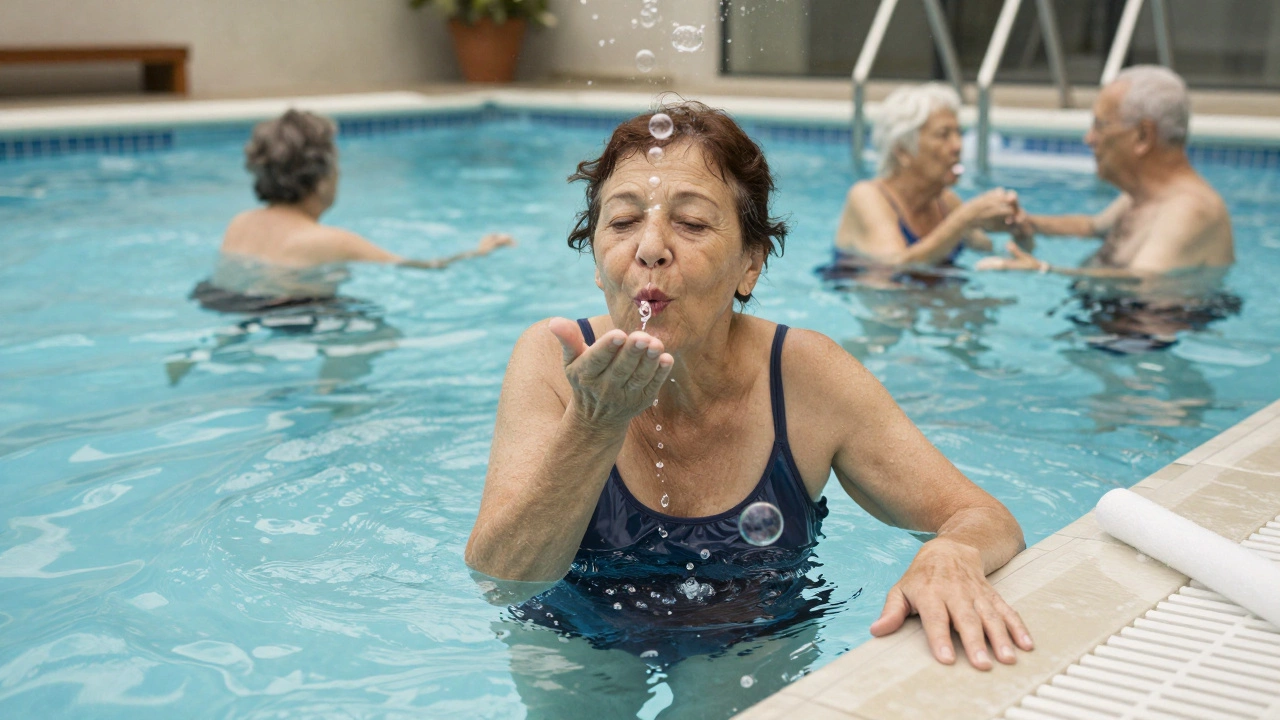
Most adult swimming programs for beginners over 60 start slow. Really slow. You won’t jump into the deep end on day one. You’ll stand in waist-deep water, get used to the feel, and practice blowing bubbles. Sounds simple? It is. But that’s where real progress begins.
Here’s what actually happens in a typical first lesson:
- You’ll warm up with gentle stretches on the pool edge.
- You’ll practice breathing-exhaling underwater, inhaling above. No holding your breath.
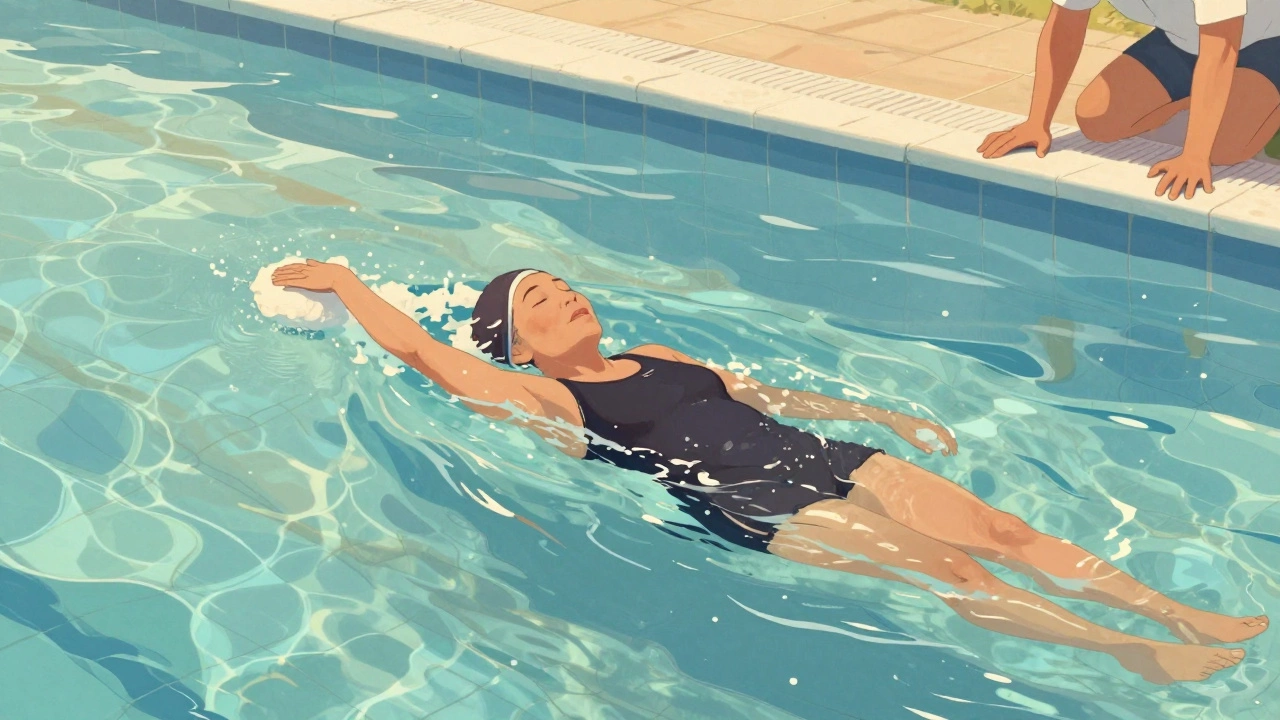
- You’ll learn to float on your back. Instructors use foam noodles or pool buoys if needed.
- You’ll kick while holding the edge or a kickboard. No fancy strokes yet.
- You’ll practice gliding-pushing off and letting your body slide.
There’s no pressure. No clock. No other students watching. Most classes are small, with one instructor for every four students. The focus is on safety and comfort, not speed or technique.
Common fears-and how to beat them
Most people over 60 who hesitate to swim are scared of one thing: water. Not the exercise. Not the effort. The water itself.
Here are the top three fears-and how real people overcame them:
- “I’ll drown.” Instructors use flotation aids from day one. You’re never alone in deep water. Many pools have shallow ends with ramps for easy entry.
- “I can’t hold my breath.” You don’t have to. Swimming teaches you to exhale steadily underwater. You breathe when you turn your head. It’s natural once you practice.
- “I’ll look silly.” Everyone in the class is learning. Some wear goggles. Others wear swim caps. A few use leg bands. No one cares what you look like. They’re too busy learning themselves.
One woman, 67, told her instructor: “I haven’t been in water since I was 12, and I’m terrified.” Her first lesson lasted 15 minutes. She cried. But she came back the next day. Two months later, she swam 25 meters without stopping. She now swims every Tuesday and Friday. She says it’s the best thing she’s done since retiring.
How long does it really take?
There’s no magic number. But most people over 60 can swim 25 meters (one length of a standard pool) in 8 to 12 lessons. That’s about 4 to 6 weeks, if you go once a week. Some take longer. That’s fine.
Progress isn’t about laps. It’s about confidence. The first time you float without holding the wall. The first time you kick without sinking. The first time you breathe without panicking. Those moments matter more than distance.
After 12 weeks, most beginners can swim continuously for 10 to 15 minutes. That’s enough to get real health benefits. You don’t need to be Olympic. You just need to be consistent.
Where to find the right class
Not all swimming lessons are made the same. Look for programs that say “adult beginners” or “senior swimming.” Avoid classes labeled “lap swim” or “competitive stroke training.” Those aren’t for you.
In Australia, most community pools offer adult beginner lessons. Sydney City Council runs free or low-cost classes at 12 locations. Local councils often partner with the Royal Life Saving Society. These programs are designed for people who’ve never swum or haven’t swum in decades.
Ask for:
- Small class sizes (no more than 6 people)
- Instructors trained in adult learning
- Warm water pools (28-30°C is ideal for older adults)
- Easy access-ramps, handrails, non-slip floors
If you’re not sure where to start, call your local pool. Say: “I’m over 60 and have never swum. Do you have a beginner class for adults?” They’ll know exactly what you mean.
What you need to buy (and what you don’t)
You don’t need fancy gear. Just three things:
- A comfortable swimsuit (one that doesn’t ride up or pinch)
- Goggles (to see underwater and avoid chlorine irritation)
- A towel and a robe or cover-up (for warmth after swimming)
Forget kickboards, pull buoys, or fins-those come later. Most pools lend them for free. Don’t spend money upfront. Try a few lessons first.
And if you’re worried about modesty? Many pools offer women-only or senior-only sessions. Some even have private lesson times. Just ask.
The real reward isn’t swimming. It’s living.
Learning to swim at 60 isn’t about becoming a champion. It’s about regaining control. It’s about being able to walk into a hotel pool on vacation without feeling anxious. It’s about playing with grandkids in the shallow end. It’s about knowing you can handle yourself if you slip near water.
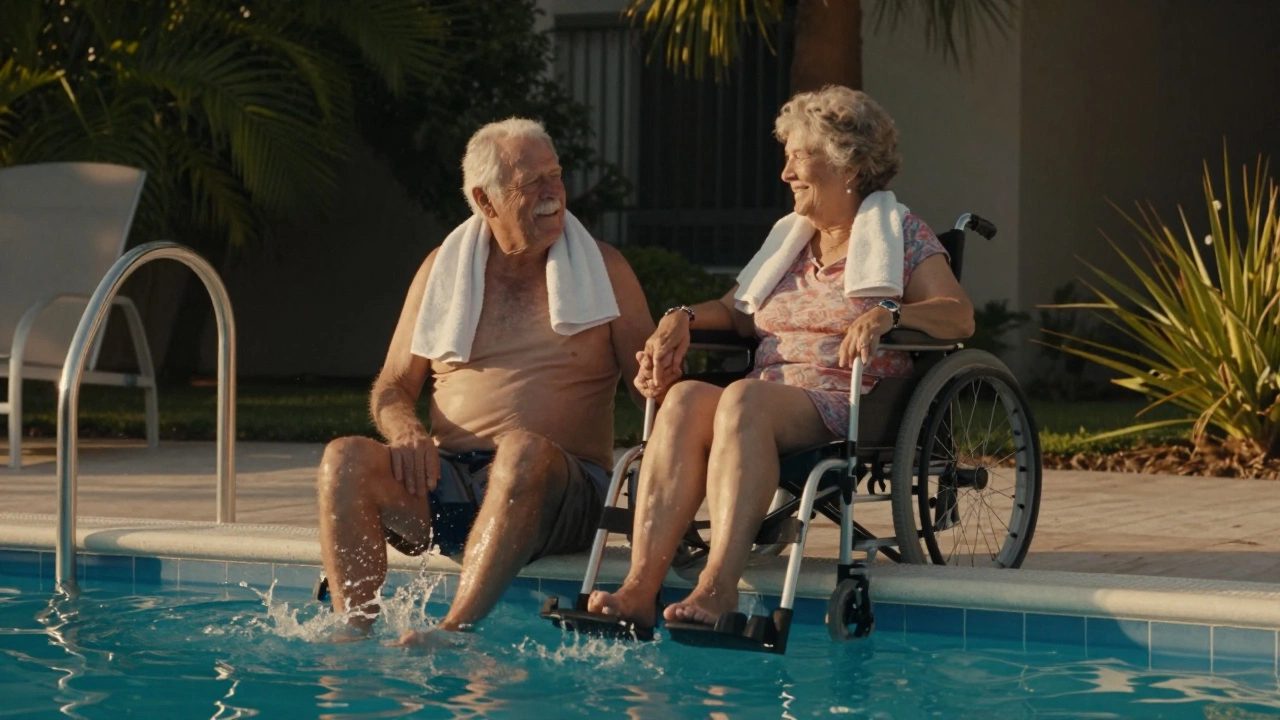
One man, 72, started lessons after his wife had a stroke. He wanted to be strong enough to help her if she fell. After six months, he could swim laps. He also started walking her to the pool every morning. They sit on the edge, splash their feet, and talk. He says it’s the best time of his day.
Swimming at 60 doesn’t just change your body. It changes your mind. You stop thinking, “I’m too old.” You start thinking, “I can still learn.” And that’s the most powerful thing of all.