How Hard Is Yoga for Beginners? A Realistic Guide
 Apr, 30 2026
Yoga Beginner's Path Finder
Answer a few questions to find the best starting point for your yoga journey.
Hatha Yoga
This is a great starting point for you. Focus on slow movements and basic alignment.
Suggested Approach:
Start with 2-3 sessions a week to avoid burnout.
Recommended Gear:
- Yoga Blocks
- Yoga Strap
The truth about your first time on the mat
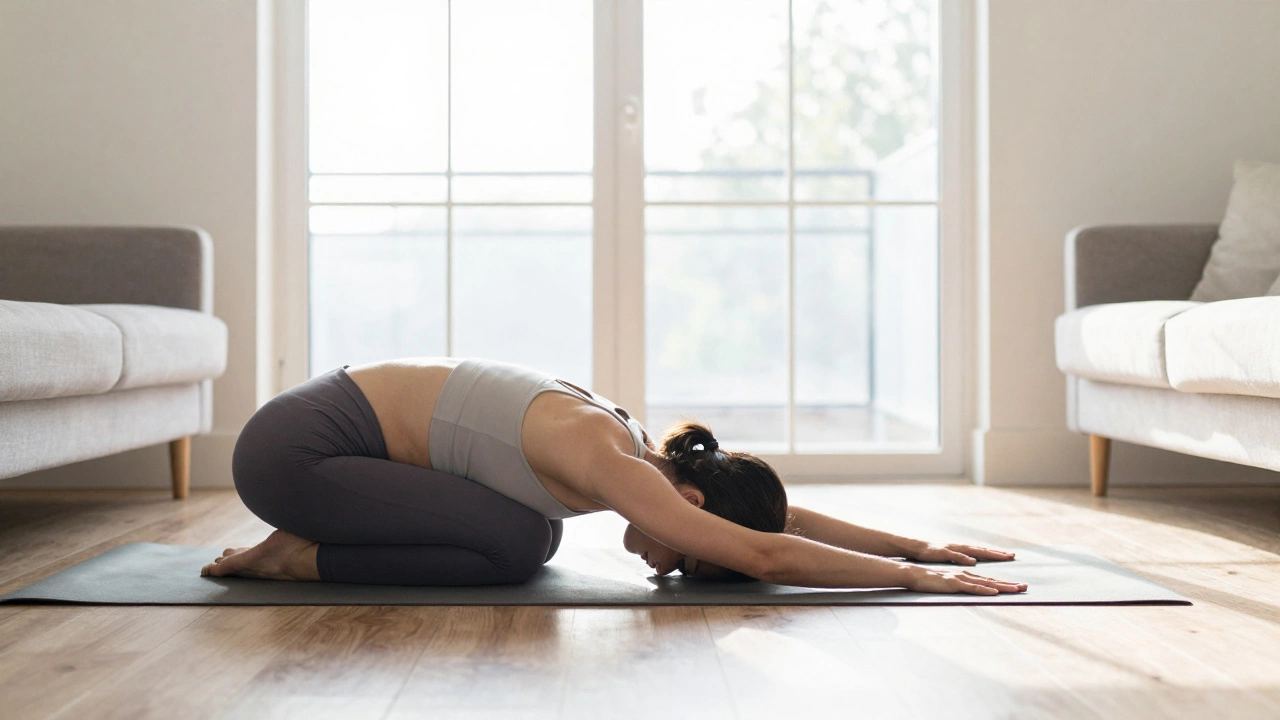
You've probably seen photos of people twisting themselves into pretzels or balancing on one hand, and thought, "There is no way I can do that." The short answer is: yoga isn't "hard" in the way a marathon is hard, but it can be humbling. For most people, the biggest hurdle isn't physical strength; it's the mental battle with a body that doesn't want to bend. If you can breathe and move, you can do yoga. The difficulty isn't in the poses themselves, but in the gap between where your body is now and where you think it should be.
When you start, you aren't fighting the poses-you're fighting your own expectations. You might find that touching your toes feels like a distant dream, or that balancing on one leg makes you wobble like a jelly. That's not failure; that's exactly where the practice begins. The goal isn't to look like a textbook illustration, but to find where your edge is and breathe into it.
| The Fear | The Reality | The Solution |
|---|---|---|
| "I'm not flexible enough" | Flexibility is the result, not the requirement | Use blocks and straps |
| "I don't have any balance" | Balance is a skill you build over time | Use a wall for support |
| "I can't breathe properly" | Most people breathe shallowly by default | Focus on belly breathing |
| "I'll look silly" | Everyone is too focused on their own struggle | Focus on your own mat |
Where the struggle actually happens
Most beginners assume the difficulty is all about stretching. In reality, the first few weeks are often a mix of physical fatigue and mental frustration. You'll encounter yoga for beginners is a modified approach to the practice that focuses on foundational alignment and basic breathwork. You'll likely find that your arms shake during a plank or your calves burn during a simple stretch. This happens because you're engaging muscles that have been dormant for years.
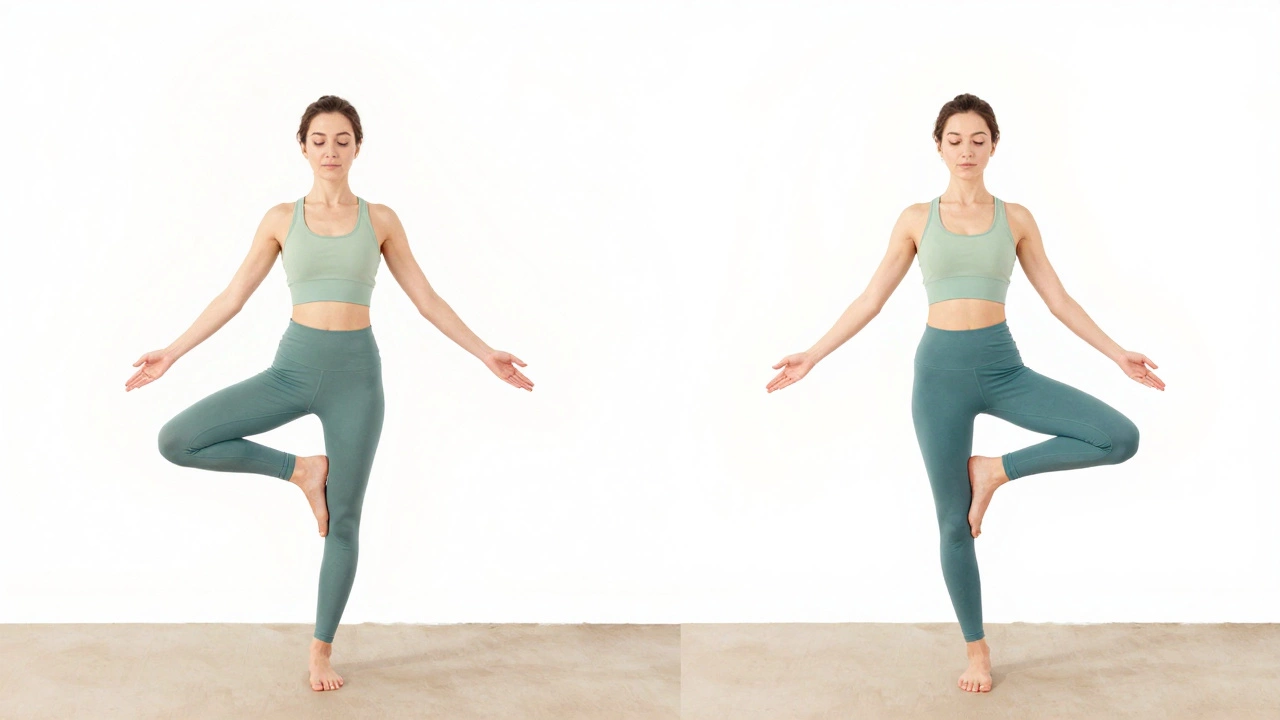
Then there's the balance aspect. Trying a Vrksasana commonly known as Tree Pose, where you balance on one leg with the other foot resting on the inner thigh or calf for the first time can feel like you've forgotten how to stand. Your brain has to rewire how it handles stability. It's a bit like learning to ride a bike; the first few times are clumsy, but once the neuromuscular connection clicks, it becomes second nature.
The mental part is perhaps the hardest. We live in a world of instant results, but yoga is a slow burn. You might spend ten classes just trying to get your heels closer to the floor in a forward fold. The "difficulty" here is the patience required to accept that progress is measured in millimeters, not miles.
Choosing the right style to avoid burnout
One reason beginners find yoga "too hard" is that they walk into the wrong class. If you jump straight into a high-intensity Power Yoga session, you're going to feel overwhelmed. To keep it manageable, you need to pick a style that matches your current energy and goals.
Hatha Yoga a classic form of yoga that emphasizes physical postures and breathing, typically taught at a slower pace is generally the gold standard for newcomers. It gives you time to learn the alignment of each pose without the pressure of rapid transitions. If you're looking for something even more gentle, Yin Yoga a slow-paced style that targets deep connective tissues and fascia through long-held passive poses focuses on stillness and deep stretching, which is great for those with very tight joints.
On the other hand, Vinyasa Yoga a dynamic style of yoga that links breath with movement in a continuous flow can feel more challenging because it's faster. It's like the difference between walking and jogging. Both are great, but if you've never walked before, you shouldn't start by jogging a 5K. Start with Hatha to build your foundation, then move toward Vinyasa as your confidence grows.
The gear that makes it easier
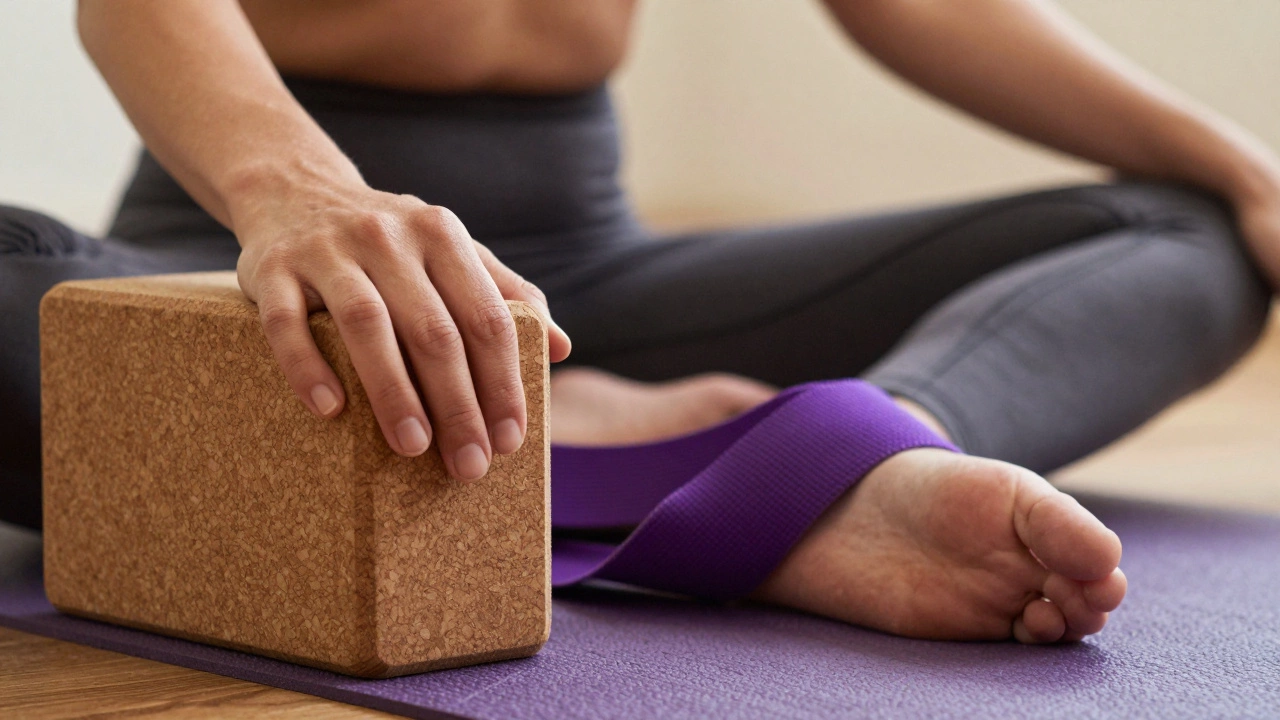
A huge mistake beginners make is trying to do everything with just a mat. If you can't reach the floor, don't strain your back to get there-bring the floor to you. This is where Yoga Props tools such as blocks, straps, and bolsters used to support the body and modify poses become life-savers. Using a foam block under your hand in a triangle pose can be the difference between a painful stretch and a productive one.
A strap is essentially an extension of your arms. If you're doing a seated forward fold and your hamstrings are screaming, looping a strap around your feet allows you to keep your spine straight while still getting the stretch. This prevents the common injury of rounding the lower back, which often happens when beginners force a pose they aren't ready for.
Even your mat matters. A thin, slippery mat can make balance poses feel impossible because your feet are sliding around. A thicker, high-grip mat provides the stability you need to feel secure. When you aren't worrying about slipping, you can actually focus on the muscle engagement and the breath.
Common pitfalls and how to bypass them
The most dangerous thing a beginner can do is compare their "Day 1" to someone else's "Year 10." In a class setting, you'll see people folding themselves in half effortlessly. Remember that they started exactly where you are. When you push too hard to match someone else, you risk straining a ligament or pulling a muscle.
Another common trap is ignoring the breath. Many people hold their breath when a pose gets difficult. This triggers a stress response in the body, making your muscles tense up and making the pose feel even harder. The secret is to breathe *into* the discomfort. When you maintain a steady rhythm of Pranayama the ancient practice of breath control in yoga to harness vital energy, you signal to your nervous system that you are safe, which allows your muscles to relax and open up.
Finally, avoid the "no pain, no gain" mentality. Yoga should be challenging, but it should never be painful. There is a big difference between the "good ache" of a deep stretch and the "sharp pinch" of a joint being pushed too far. If you feel a sharp pain, back off immediately. Pushing through a pinch is a fast track to an injury that will sideline you for months.
Your first 30 days: What to expect
The first week is usually the most physically jarring. You'll likely feel sore in places you didn't know you had muscles. Your balance will be shaky, and you'll probably spend a lot of time adjusting your feet. This is the "clumsy phase," and it's completely normal.
By the second and third weeks, something interesting happens. The poses start to feel familiar. You'll notice that a stretch that felt impossible on Monday feels slightly more open by Friday. You'll start to recognize the patterns of the flow and stop needing to look at the teacher every three seconds to see what comes next. This is where the mental satisfaction kicks in.
By the end of the first month, the "difficulty" shifts. It's no longer about whether you can do the pose, but about how well you can do it. You start noticing the subtle difference between just standing and actually engaging your core. The physical struggle fades into a background hum, and the focus shifts toward the mind-body connection.
Do I need to be flexible to start yoga?
Absolutely not. Saying you need to be flexible to do yoga is like saying you need to be in shape to go to the gym. Flexibility is a result of the practice, not a prerequisite. Yoga is designed to meet you where you are, and with the use of props and modifications, anyone can practice regardless of their current range of motion.
How often should a beginner practice yoga?
Consistency beats intensity. Starting with 2-3 sessions a week is usually the sweet spot. This allows your muscles to recover and gives your brain time to process the new movements without causing burnout or overuse injuries. Even 15 minutes of stretching a day is better than one three-hour marathon session once a month.
Which is harder: home practice or a studio class?
Studio classes are generally "easier" for learning because you have a teacher to correct your alignment and prevent injury. However, home practice is easier for the ego because you don't feel the pressure of others watching you. The ideal path is to take a few studio classes to learn the basics, then supplement them with home videos or apps.
Can yoga help with chronic back pain?
Yes, it can, but you must be careful. Gentle yoga can strengthen the core and release tension in the spine, which often alleviates back pain. However, if you have a diagnosed condition like a herniated disc, you should always consult a doctor and tell your instructor about your limitations so they can provide safe modifications.
How long does it take to see results in flexibility?
While some feel a difference after one session, significant changes in flexibility usually take 4 to 8 weeks of regular practice. Connective tissue (fascia) takes longer to change than muscle. The key is to avoid forcing the stretch and instead allow the body to release slowly over time through consistent, gentle pressure.
Next steps for your journey
If you're feeling intimidated, start with a "10-minute morning stretch" routine. Don't even worry about the names of the poses; just focus on how your body feels. Once you're comfortable with that, try a beginner-specific video series that emphasizes form over speed.
If you find yourself struggling with balance, try practicing near a wall. It removes the fear of falling and allows you to focus on the correct alignment of your hips and shoulders. Eventually, you can move a few inches away from the wall, using it only as a safety net.
Finally, keep a simple journal or note on your phone. Write down one thing that felt difficult today and one thing that felt slightly easier than last time. Tracking these tiny wins is the best way to stay motivated when the progress feels slow.