Can Adults Still Learn How to Swim? Yes-and Here’s How
 Feb, 16 2026
Swimming Readiness Calculator
How Ready Are You to Learn Swimming?
This tool estimates your learning timeline based on your unique situation. It's never too late to learn!
It’s never too late to learn how to swim. I’ve seen it happen dozens of times in Sydney’s public pools-people in their 30s, 50s, even 70s, stepping into the water for the first time since childhood. Some were scared. Others just never had the chance. But they all left the pool stronger, calmer, and more confident. If you’re wondering whether adults can still learn to swim, the answer is a clear yes.
Why So Many Adults Wait
Most adults who haven’t learned to swim didn’t grow up with access to pools. Maybe their school didn’t have one. Maybe their family couldn’t afford lessons. Or maybe they had a bad experience-dunked too early, laughed at, or left feeling like they’d never get it. That fear sticks. It’s not about being unfit or uncoordinated. It’s about trust. Trust in the water. Trust in yourself.Here’s the truth: swimming isn’t a skill you’re born with. It’s a motor skill, like riding a bike or typing. And your brain doesn’t stop learning those skills just because you turned 18. Research from the University of Sydney’s Human Movement Lab shows adults who start swimming after age 30 improve coordination and balance just as fast as teens, if not faster, because they’re more focused and intentional.
What You Actually Need to Start
Forget fancy gear. You don’t need goggles, a swim cap, or a wetsuit to begin. All you need is:- A safe, shallow pool with a lifeguard on duty
- A qualified instructor who’s worked with adult beginners
- One hour a week, consistently
- Patience-and a sense of humor
Many community centers in Sydney offer adult-only swim classes for under $10 per session. These aren’t for competitive swimmers. They’re for people who want to float without panicking, kick without sinking, and breathe without choking. The instructors know the emotional blocks. They don’t rush. They don’t shame. They just show you how to move with the water, not against it.
The First Step Isn’t Swimming-It’s Floating
Most adults panic when their feet leave the bottom. That’s normal. But floating isn’t magic. It’s physics. Your body is naturally buoyant-about 95% of it is water. You don’t need to be thin or muscular to float. You just need to relax.Start by holding onto the edge. Take a deep breath. Let your legs drift up. Don’t kick. Don’t tense. Just let gravity do its job. If you feel yourself sinking, you’re probably holding your breath or clenching your muscles. Exhale slowly underwater. That’s the key. Most people think they need to gasp for air, but it’s the opposite. Slow, steady breaths keep you light.
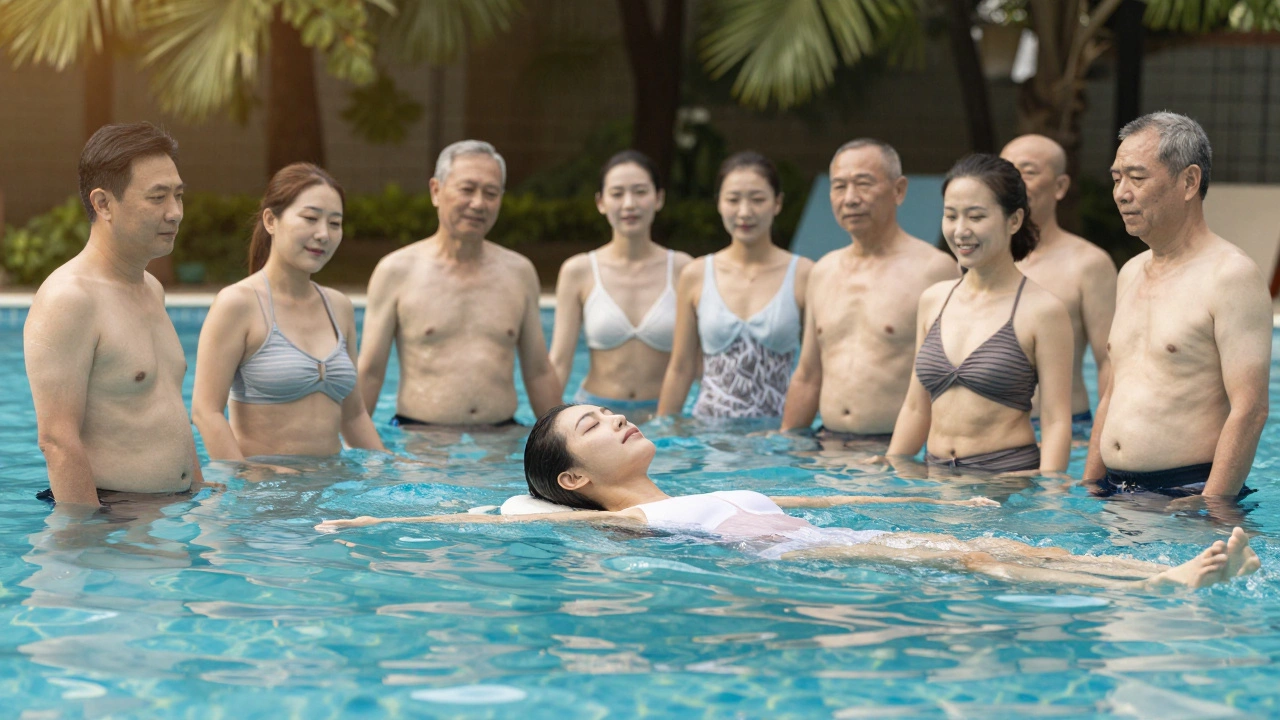
Try this: stand in waist-deep water, close your eyes, and lean back. Let your head rest on the water. Someone hold your hands if you need to. You’ll be surprised how easily you float. It’s not about strength. It’s about surrender.
From Floating to Freestyle-One Skill at a Time
Once you’re comfortable floating, you move to three simple movements:- Blowing bubbles-exhaling underwater while your face is in. This teaches breath control.
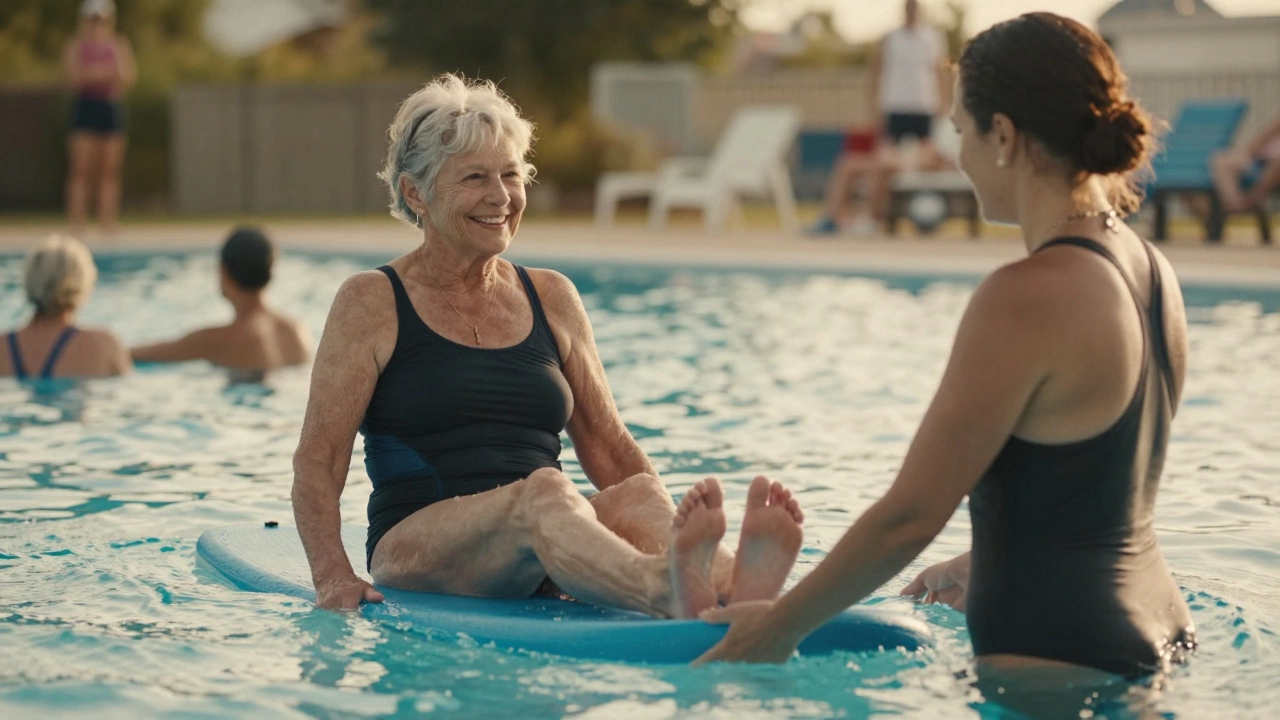
- Kicking with a board-keep your legs straight, point your toes, and kick from the hips. Don’t bend your knees like you’re pedaling a bike. Small, fast kicks work better than big, slow ones.
- Side breathing-turn your head to the side while your arm pulls through. Don’t lift your head. Rotate it like you’re looking at your shoulder. This keeps your body level.
Don’t try to do all three at once. Master one before adding the next. It takes most adults 6-8 weeks to link them into a full stroke. That’s not slow. That’s normal. You wouldn’t expect to learn to drive a manual car in two lessons. Swimming is the same.
Common Mistakes Adults Make
Here’s what usually goes wrong-and how to fix it:- “I’m too heavy to float.” Weight doesn’t matter. Body fat floats better than muscle. Even people with high body mass can float with proper technique.
- “I’ll never get the breathing right.” You don’t need perfect timing. Just exhale underwater, turn your head when your arm pulls, and inhale quickly. It gets easier with repetition.
- “I’m embarrassed to be in a class with kids.” Adult-only classes exist for a reason. If your local pool doesn’t offer them, ask. Demand them. There are more adults like you than you think.
- “I tried before and failed.” That was a different teacher, a different day, a different mindset. This time, you’re older. Wiser. And you’ve got a reason to learn.
What Happens After You Learn
Swimming isn’t just a skill-it’s a lifeline. People who learn as adults report better sleep, less anxiety, and more energy. A 2024 study from the Australian Institute of Sport tracked 300 adults who completed beginner swim courses. After six months, 87% said they felt more confident in everyday situations. 72% said they started doing other physical activities they’d avoided for years.Some swim for fitness. Others swim to feel safe near water-on holidays, at lakes, with grandchildren. One woman I met at the Bondi Pool started learning at 68 because she wanted to join her grandkids in the ocean. Two years later, she swam 500 meters without stopping. She told me, “I didn’t know I could do this. I didn’t know I’d want to.”
Where to Start Today
Look for these in your area:- Local council pools-they usually have low-cost adult beginner programs
- YMCA or community centers-often offer private 1-on-1 sessions
- Swim schools with adult-only time slots-search for “adult swim lessons [your suburb]”
- Online booking platforms like Swim Australia’s Find a Club tool
Don’t wait for the “right time.” There’s no perfect age. There’s only now. And the water? It’s always there, waiting.
Is it too late to learn to swim if I’m over 50?
No. People in their 60s, 70s, and even 80s learn to swim every year. The body adapts to movement at any age. In fact, older adults often learn faster because they’re more disciplined and motivated. Many swim programs specifically cater to seniors, focusing on safety, joint health, and gentle progression.
How long does it take an adult to learn to swim?
Most adults can swim 25 meters confidently in 6 to 10 weeks with one lesson per week. It depends on fear levels, consistency, and the instructor. Some pick it up in four weeks. Others take three months. There’s no rush. The goal isn’t speed-it’s comfort.
Can I learn to swim without a teacher?
You can try, but it’s risky. Without feedback, you’ll likely develop bad habits that are hard to fix. Worse, you might not realize you’re doing something dangerous, like holding your breath or sinking too deep. A good instructor spots tension, misalignment, and panic before they become problems. Even one private lesson can change your entire approach.
What if I’m scared of deep water?
Start in the shallow end. Stay there until you’re completely comfortable. Then, slowly move toward deeper water-step by step. Many adult programs use flotation aids and gradual depth progression. You don’t need to jump in the deep end. You just need to believe you can survive the next step.
Are there health risks for adults learning to swim?
Swimming is one of the safest forms of exercise for adults. It’s low-impact, supports your joints, and improves cardiovascular health. If you have heart conditions, asthma, or mobility issues, talk to your doctor first. But most people can swim safely with proper instruction. The real risk isn’t swimming-it’s staying out of the water.
Next Steps
If you’re ready to try:- Call your local council and ask about adult swim lessons
- Book a single trial session-no commitment needed
- Bring a towel, a swimsuit, and an open mind
- Don’t expect perfection. Just expect progress
The water won’t judge you. It doesn’t care how old you are, how out of shape you are, or how many times you’ve tried before. It only asks one thing: Will you let go?