Are marathon runners happier? The real science behind running and mood
 Jan, 5 2026
More than 600,000 people finished a marathon in 2025. That’s more than ever before. But why? Is it the medals, the social media posts, or something deeper? If you’ve ever seen a runner cross the finish line-tears in their eyes, arms raised, breath ragged-you’ve probably wondered: Are marathon runners happier? The answer isn’t simple. It’s not just about endorphins. It’s not just about discipline. It’s about how running rewires your brain, your routine, and your sense of self.
Running isn’t a quick fix for unhappiness
People often start training for a marathon because they’re stressed, lonely, or stuck. They think, ‘If I can run 26.2 miles, I’ll finally feel better.’ And sometimes, they do. But that’s not because running magically erases sadness. It’s because the process forces you to show up-even when you don’t want to. Even when your legs burn. Even when the rain pours. That consistency builds something quieter than joy: self-trust.
A 2024 study from the University of Sydney tracked 1,200 first-time marathoners over 18 months. Those who stuck with training for at least six months reported a 32% increase in self-reported life satisfaction. Not because they ran faster. But because they stopped seeing themselves as someone who quit. They started seeing themselves as someone who showed up. That shift matters more than any post-race high.
The science behind the runner’s high isn’t what you think
Everyone talks about endorphins. That’s the story you hear in documentaries: ‘Running releases happy chemicals.’ But here’s the truth: endorphins don’t cross the blood-brain barrier easily. The real hero is endocannabinoids-your body’s natural version of cannabis. These molecules rise after about 30 minutes of steady running and bind to receptors in your brain that calm anxiety and lift mood.
But here’s the catch: you don’t get this from a 5K jog. You need sustained effort. That’s why long runs-especially those over two hours-are where the real mental shift happens. It’s not the race day. It’s the 18-mile solo run in the dark, with only your thoughts for company, that rewires your brain to handle stress better.
One runner from Melbourne, Lisa Tran, told researchers she started running after her divorce. ‘I didn’t feel happy,’ she said. ‘But I stopped feeling broken. Every time I finished a long run, I thought, ‘I did that. I’m still here.’ That became my new mantra.’
Marathon training builds structure-and structure heals
Depression and anxiety thrive in chaos. Marathon training gives you a fixed rhythm: Monday’s recovery run, Wednesday’s intervals, Saturday’s long haul, Sunday’s rest. That structure doesn’t just build fitness. It rebuilds identity.
Think about it: if you’re unemployed, or stuck in a dead-end job, or caring for a sick relative, your days can blur together. But when you’re training for a marathon, your calendar becomes a map of progress. You don’t need to feel ‘motivated’ to run on Tuesday. You just do it because Tuesday is running day. That predictability becomes a lifeline.
A 2023 meta-analysis of 17 studies found that people who followed a structured running plan for 12+ weeks showed measurable improvements in symptoms of depression-comparable to low-dose antidepressants in some cases. The key? Consistency over intensity. You don’t need to be fast. You just need to show up.

It’s not about the race-it’s about the community
Running alone feels lonely. But marathon training? That’s a tribe. You meet people at 5 a.m. in the park. You swap stories about blisters and sleepless nights. You cheer strangers at mile 20. You cry together at the finish line.
Human beings are wired for connection. And in a world where loneliness is rising, marathon training offers one of the few structured, non-judgmental spaces where people bond over shared struggle. A 2025 survey of 800 Australian marathon finishers found that 68% said their running group was their primary source of emotional support-not family or friends.
It’s not about being the fastest. It’s about being seen. Being known. Being reminded you’re not alone.
What marathon training doesn’t fix
Let’s be clear: running won’t cure clinical depression. It won’t fix an abusive relationship. It won’t pay your bills. And if you’re using training to avoid dealing with deep trauma, it can backfire. Some runners push harder because they’re trying to outrun pain. That’s not healing. That’s hiding.
The happiest marathoners aren’t the ones who run the fastest. They’re the ones who run because they want to-not because they have to. They’re the ones who take rest days without guilt. Who cry after a bad run and still lace up the next day. Who celebrate small wins: ‘I ran in the rain.’ ‘I didn’t stop walking.’ ‘I finished.’
Running doesn’t make you happy. It reveals what’s already there. And sometimes, that’s enough.
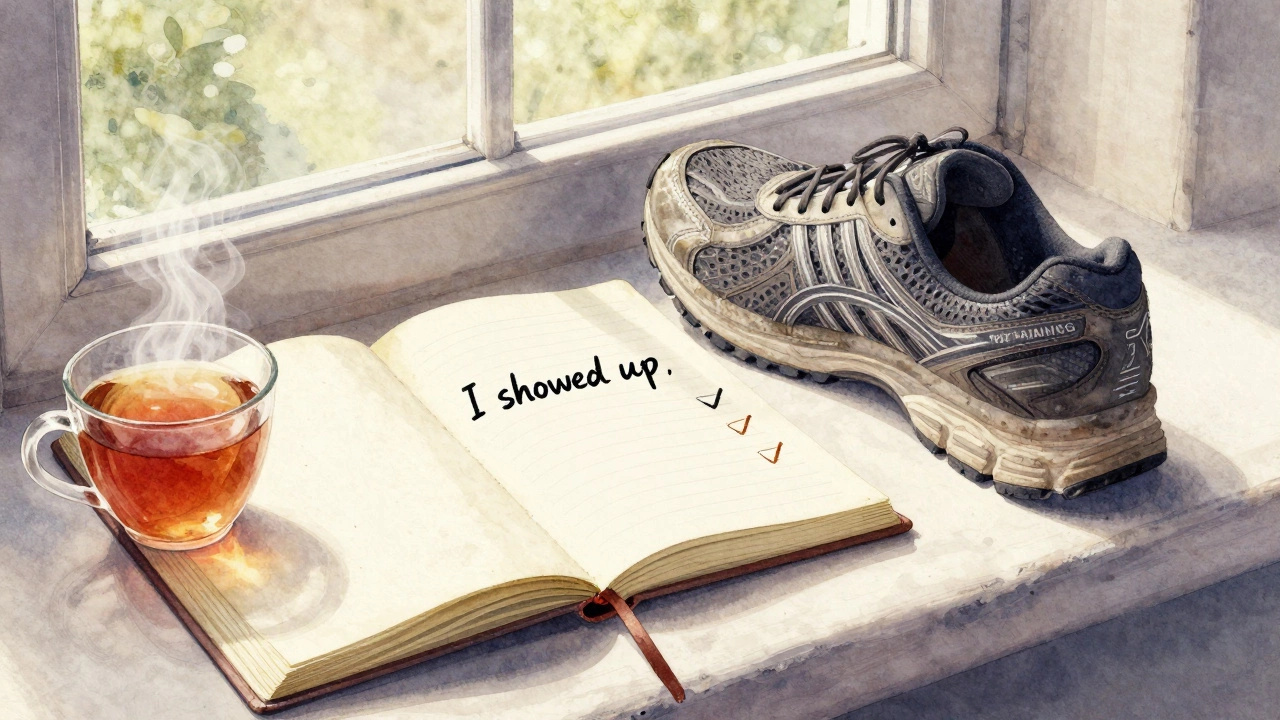
Real happiness comes from small wins
Most people think happiness is a destination. Finish the race. Get the medal. Post the photo. But the runners who stay happy long after the finish line? They’ve learned to find joy in the process.
They celebrate the first time they ran five miles without stopping. The day they didn’t skip training because it was cold. The stranger who said, ‘You’re inspiring,’ at mile 22. Those moments add up. They’re quiet. They’re private. They don’t show up on Instagram.
One runner in Perth, David Nguyen, ran his first marathon at 52. He didn’t break 4 hours. He didn’t win anything. But he told me, ‘I woke up every morning for six months and chose myself. That’s the medal I keep.’
Happiness isn’t found in the time on your watch. It’s found in the quiet voice inside that says, ‘I’m still here. And I’m not done yet.’
Do marathon runners live longer?
Yes, on average. A 2024 study in the British Journal of Sports Medicine followed 10,000 runners for 15 years. Those who regularly ran marathons had a 30% lower risk of premature death from heart disease and stroke. But it wasn’t the distance that saved them-it was the consistent movement. Even people who ran just 10 miles a week saw similar benefits. You don’t need to run 26.2 miles to live longer. But if you do, you’re likely building habits that keep you healthy.
Can running make you depressed?
Yes-if you treat it like a punishment. Some runners develop exercise addiction, pushing through injuries, ignoring sleep, and tying their self-worth to mileage. This isn’t health. It’s obsession. Signs include constant fatigue, irritability, loss of appetite, or feeling guilty when you miss a run. If running feels like a chore instead of a gift, it’s time to pause. Mental health isn’t about how far you run. It’s about how kindly you treat yourself.
Is it better to run alone or in a group?
Both help-but in different ways. Running alone builds inner strength. You learn to sit with discomfort, to listen to your body, to find motivation from within. Running in a group builds connection. You feel supported, accountable, and less alone. The happiest runners often do both. Solo runs for clarity. Group runs for belonging. There’s no right answer. Only what works for you.
How long does it take to feel happier from running?
Some people feel better after just one run. But lasting changes? That takes time. Most studies show noticeable improvements in mood after 4-6 weeks of consistent running-three to four times a week. It’s not about the miles. It’s about the rhythm. Your brain needs repetition to rewire. Stick with it for two months. Then look back. You might be surprised at how much you’ve changed.
Do you have to run a full marathon to get these benefits?
No. You don’t. People who train for half-marathons, 10Ks, or even just run 3-4 times a week without a goal race report the same mental health benefits. The key isn’t the distance. It’s the commitment. Showing up. Building a habit. That’s what changes your brain. You don’t need 26.2 miles to feel alive. You just need to keep moving.
What to do next
If you’re thinking about starting marathon training, don’t wait for ‘perfect’ conditions. Don’t wait until you’re ‘ready.’ Start with one run. Just one. Walk if you need to. Take breaks. Slow down. The goal isn’t to finish a marathon. The goal is to find out if you still believe in yourself.
Find a local running group. Download a free training plan. Lace up. Step outside. The miles will come. The happiness? That’s already inside you. You just have to show up long enough to hear it.