Does Swimming Help in Weight Loss? The Truth About Calories and Fat Burn
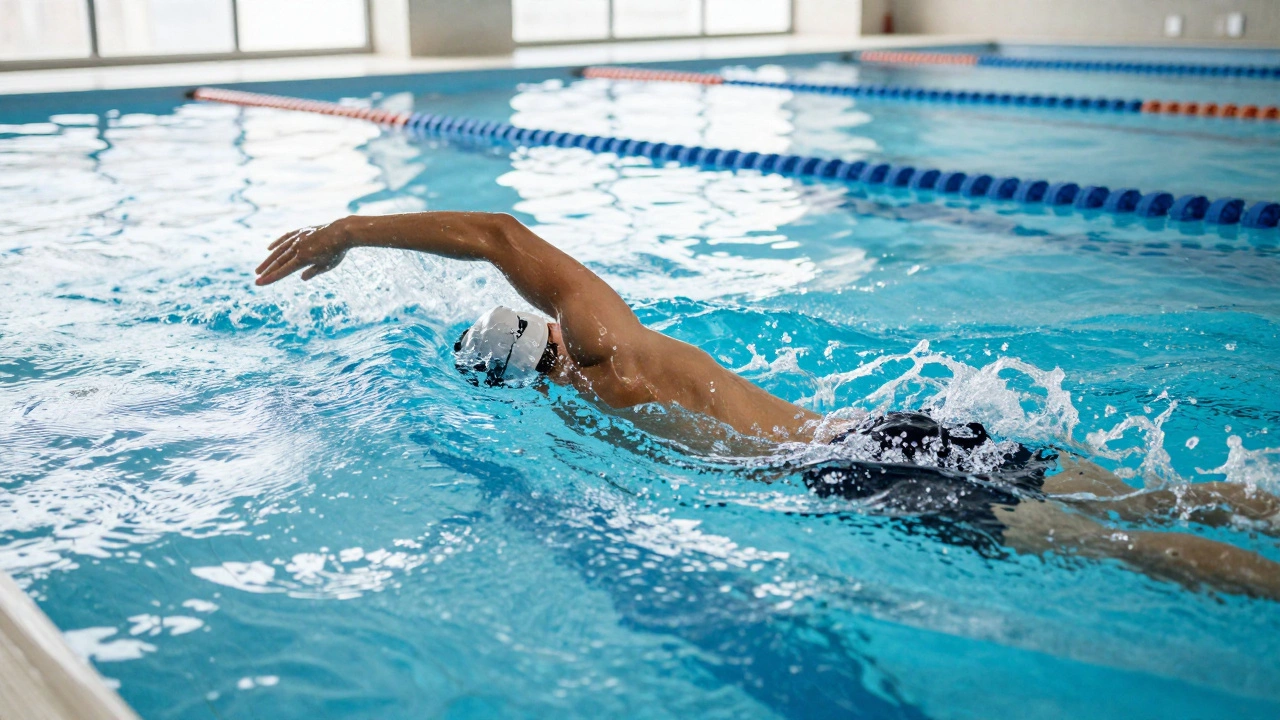 Jul, 12 2026
Swimming Calorie Burn Calculator
Freestyle
VigorousButterfly
Very VigorousBreaststroke
ModerateBackstroke
ModerateEstimated Calories Burned
Diet Tip: To lose weight, ensure your post-swim snack is protein-rich to combat the cold-water hunger spike without undoing your progress.
Picture this: You’re standing poolside, shivering slightly in the cool air, wondering if jumping into that chlorinated water is actually going to melt away those extra pounds or if you’re just wasting time. It’s a common doubt. We’ve all heard that running burns more calories than walking, so does swimming burn more than cycling? Or is it just a fun way to stay cool?
The short answer is yes, swimming helps in weight loss, but with a major catch. Water is roughly 800 times denser than air, which means every movement you make requires effort against resistance. A vigorous lap session can torch between 400 and 900 calories per hour, depending on your weight and stroke. However, the real secret isn’t just the burning-it’s what happens to your appetite afterward.
The Science of Burning Calories in Water
To understand why swimming is effective, we need to look at how your body reacts to the aquatic environment. When you are submerged, your heart works harder to pump blood because water pressure pushes against your skin. This increases your cardiovascular output even before you start kicking hard.
But the biggest factor is resistance. On land, gravity pulls you down, but in water, buoyancy supports you. This allows for high-intensity movements without the joint impact of running. Because water resists movement in all directions, your muscles engage more fully. For example, when you do the breaststroke, you aren't just moving forward; you're pushing water backward and sideways. This multi-directional resistance recruits more muscle fibers, leading to higher energy expenditure.
| Stroke / Activity | Intensity Level | Estimated Calories Burned |
|---|---|---|
| Freestyle (Front Crawl) | Vigorous | ~500 - 600 kcal |
| Butterfly | Very Vigorous | ~700 - 800 kcal |
| Breaststroke | Moderate | ~350 - 450 kcal |
| Backstroke | Moderate | ~350 - 450 kcal |
| Water Aerobics | Moderate | ~250 - 350 kcal |
Notice the difference between freestyle and butterfly? Butterfly is technically demanding and uses almost every major muscle group simultaneously. If you can sustain it, it’s a calorie furnace. But for most people aiming for sustainable weight loss, consistency matters more than peak intensity. Freestyle and breaststroke are easier to maintain for longer periods, which often leads to a higher total calorie burn over a 45-minute session compared to sprinting butterfly for five minutes and then treading water for an hour.
The Cold Water Trap: Why You Might Eat More
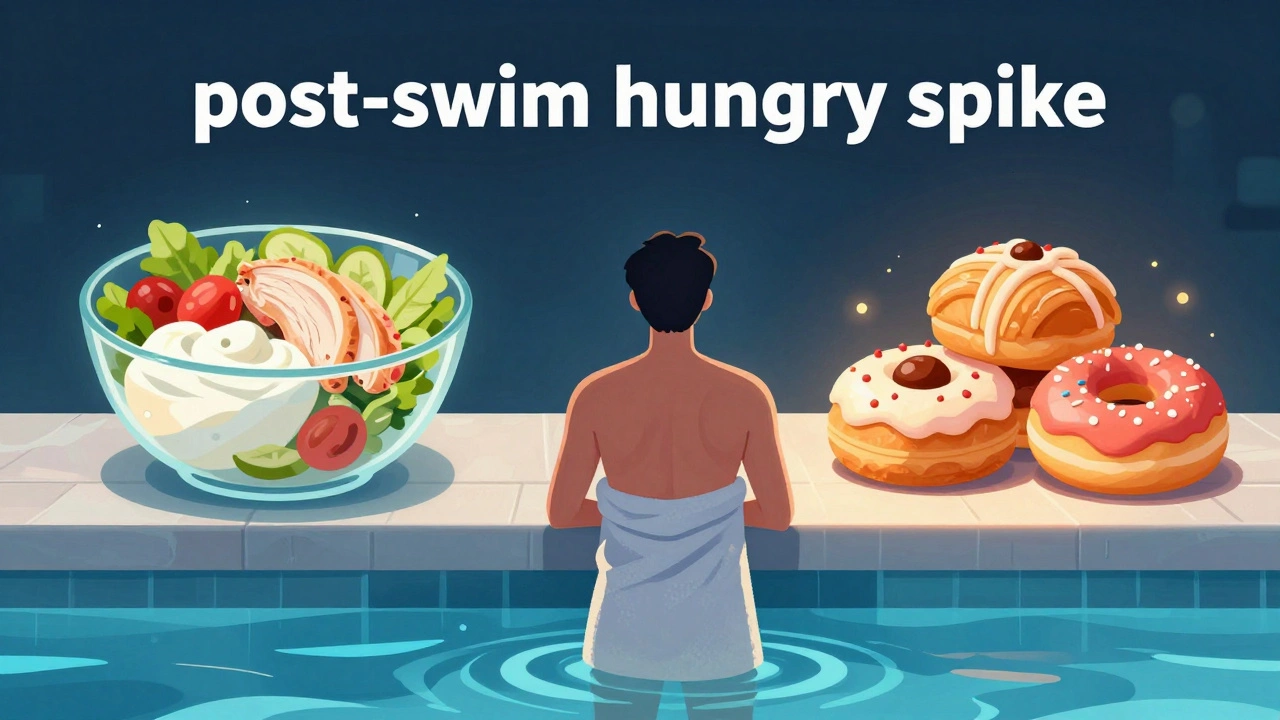
Here is where many swimmers get tripped up. You jump out of the pool, feeling exhausted and proud of your workout. Then, you feel ravenous. This is known as the "post-swim hunger spike."
Cold water lowers your core body temperature slightly. Your body needs energy to warm itself back up, triggering thermogenesis. While this sounds good for burning fat, it also triggers strong hormonal signals-specifically ghrelin (the hunger hormone)-that tell your brain you need fuel immediately. Studies have shown that after a cold-water swim, people often consume significantly more calories than they burned during the exercise, sometimes reaching for high-carb or sugary foods because their bodies crave quick energy.
If you don’t manage this hunger, you’ll undo your progress. The solution isn’t to skip the swim; it’s to plan your post-workout nutrition. Instead of grabbing a donut, aim for a protein-rich snack like Greek yogurt or a chicken salad within 30 minutes of exiting the pool. This stabilizes blood sugar and reduces the urge to binge.
Building Muscle Without Bulking Up
Weight loss isn’t just about the number on the scale; it’s about body composition. Swimming builds lean muscle mass, particularly in the shoulders, back, and legs. Unlike heavy weightlifting, which might add significant bulk, swimming creates long, toned muscles due to the constant stretching and contracting against water resistance.
More muscle means a higher resting metabolic rate. Even when you’re sleeping, your body burns more calories if you have more muscle tissue. This is crucial for long-term weight management. If you only do cardio like jogging, you might lose weight initially, but your metabolism can slow down. Swimming preserves and builds muscle while burning fat, keeping your engine revving higher.
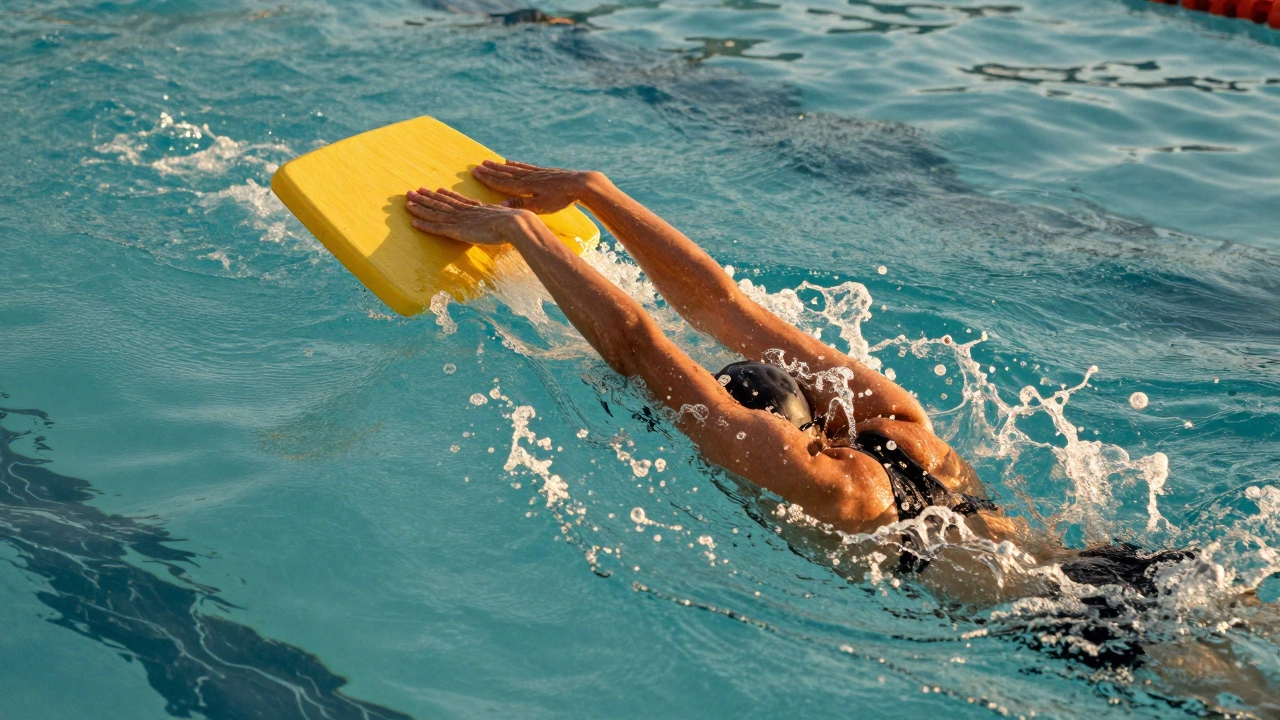
Consider the kickboard drill. By holding a board and focusing solely on your legs, you isolate the quadriceps, hamstrings, and glutes. Doing this for 20 minutes can create a deep burn that lasts for hours, increasing your afterburn effect (Excess Post-exercise Oxygen Consumption, or EPOC). Your body continues to burn calories at an elevated rate as it recovers.
Designing a Swim Workout for Fat Loss
You don’t need to be an Olympic athlete to see results. In fact, structured intervals work better than steady-state swimming for fat loss. Here is a simple, effective routine you can follow three times a week:
- Warm-up (5 minutes): Easy laps of any stroke. Focus on smooth breathing and loose joints.
- Interval Set 1 (10 minutes): Swim 4 lengths of freestyle at a moderate pace, then rest for 30 seconds. Repeat 10 times.
- Strength Interval (10 minutes): Use a pull buoy (to keep legs up) and focus on strong arm pulls. Do 8 lengths fast, rest 45 seconds. Repeat 6 times.
- Kick Set (10 minutes): Hold a kickboard. Kick hard for 2 lengths, easy for 2 lengths. Repeat until time is up.
- Cool Down (5 minutes): Slow, easy backstroke or breaststroke to lower your heart rate gradually.
This structure keeps your heart rate in the "fat-burning zone" while also spiking it during intervals to boost metabolism. Varying your strokes prevents boredom and ensures you hit different muscle groups. If you only do freestyle, your shoulders might get tight. Mixing in breaststroke engages your inner thighs and chest differently.
Swimming vs. Other Cardio Exercises
How does swimming stack up against the usual suspects like running or cycling? Let’s look at the trade-offs.
- Joint Health: Running is high-impact. If you carry extra weight, running can stress your knees and ankles, potentially leading to injury that stops you from exercising altogether. Swimming is low-impact and safe for nearly everyone, including those with arthritis or previous injuries.
- Accessibility: You need a pool for swimming, which might require a membership fee or travel time. Running requires only a pair of shoes. Accessibility affects consistency, and consistency is key to weight loss.
- Appetite Control: Interestingly, some research suggests that cooler environments (like pools) increase appetite more than warmer environments (like a hot gym track). Runners might not feel as intensely hungry immediately after a jog as swimmers do after a dip in cold water.
For someone who is overweight and new to exercise, swimming is often the superior starting point. It allows you to build endurance without pain. Once you’re fitter, you might combine swimming with strength training for optimal results.
Tips to Maximize Your Results
To ensure your swims translate to actual weight loss, keep these practical tips in mind:
- Reduce Drag: Wear a tight-fitting swimsuit, not baggy shorts. Drag slows you down, making you work less efficiently. Streamlining your body position means you move faster with the same effort, raising your intensity.
- Keep Moving: Don’t stop at the wall to chat. Use flip turns if you know them, or push off quickly. Every second spent stationary is a second not burning calories.
- Track Your Progress: Use a waterproof fitness tracker to monitor heart rate zones. Aim to spend at least 70% of your workout in Zone 2 or Zone 3 (moderate to vigorous intensity).
- Combine with Diet: No amount of swimming will offset a poor diet. Create a slight caloric deficit (eating 300-500 calories less than you burn daily) while maintaining high protein intake to preserve muscle.
Is Swimming Right for You?
If you hate running, dread the treadmill, or have bad knees, swimming is a game-changer. It offers a full-body workout that challenges your lungs, strengthens your heart, and sculpts your physique. Yes, you will get hungry. Yes, you need to find a pool. But if you stick to a consistent schedule and manage your post-swim meals, the water can be your most powerful ally in shedding pounds and keeping them off.
Start with two sessions a week. Listen to your body. And remember, the goal isn’t just to lose weight-it’s to gain health, mobility, and confidence. Jump in.
How much weight can I lose by swimming daily?
The amount varies based on intensity, duration, and diet. Generally, if you swim vigorously for 30-60 minutes daily and maintain a caloric deficit, you could expect to lose 1-2 pounds (0.5-1 kg) per week. Sustainable weight loss is typically around 1-2% of your body weight per month.
Which swimming stroke burns the most calories?
Butterfly burns the most calories due to its high intensity and full-body engagement. However, it is difficult to sustain. Freestyle (front crawl) is the next best option for sustained calorie burning and is easier to perform for longer durations.
Why am I so hungry after swimming?
Cold water lowers your core temperature, triggering thermogenesis and increasing ghrelin (the hunger hormone). Your body seeks quick energy to warm up. To combat this, eat a protein-rich snack immediately after your swim rather than waiting until you’re starving.
Can beginners swim for weight loss?
Absolutely. Even treading water or doing gentle laps burns more calories than sitting. Start with shorter sessions and focus on continuous movement. As your technique improves, your efficiency and calorie burn will increase.
Should I swim before or after eating?
It’s best to wait 1-2 hours after a large meal to avoid cramps or discomfort. A light snack 30-60 minutes before swimming can provide energy. Avoid heavy, fatty, or fibrous foods right before your workout.