What Is the 5 Rule in Golf? Explaining the Five-Club Limit and Other Rules
 Jun, 11 2026
Golf Handicap Stroke Calculator
• Handicap 1-5: 1 stroke on top N holes.
• Handicap 6-10: 1 stroke on top N holes.
• Handicap 11+: Holes 1-5 get 2 strokes; remaining get 1.
You’re standing on the first tee, ready to start your round. You reach into your bag and pull out a driver. Then an iron. Then another. Suddenly, someone yells from behind you, "Hey! That’s five clubs!" Panic sets in. Did you just break a major rule? Are you disqualified before you’ve even hit your second shot?
If this scenario sounds familiar, you aren’t alone. The phrase "the 5 rule in golf" circulates widely among beginners and casual players, often causing confusion. Unlike the "14-club rule," which is strictly enforced by the governing bodies of the game, there is no single, universal penalty for carrying exactly five clubs. However, the number five appears in several critical areas of golf: equipment limits, handicap calculations, and course etiquette.
Understanding these nuances matters because they affect how you play, how you score, and whether you stay within the bounds of fair competition. Let’s clear up the fog around this term and look at where the number five actually holds power in the game.
The Misconception: Is There a Penalty for Carrying Five Clubs?
First, let’s address the elephant in the room. Many new players hear about the 14-club rule, defined as a regulation stating that a golfer may carry no more than 14 clubs in their bag during a round and assume there is also a minimum limit. They wonder if carrying too few clubs-like five-is illegal.
The short answer is no. According to the Rules of Golf published by the USGA (United States Golf Association) and R&A, there is no minimum number of clubs you must carry. You can play a round with one club if you want to. You can play with five. You can even play with zero, though that would be difficult.
So why do people talk about a "5 rule"? Usually, it stems from two sources:
- Borrowing Clubs: If you start with fewer than 14 clubs, you are allowed to add clubs during the round until you reach 14. However, you cannot borrow a club from another player if doing so would exceed the 14-club limit or if you have already reached your own limit. Some groups jokingly enforce a "five-club max" for borrowing to keep things simple.
- Practice Rounds: In some amateur leagues or charity scrambles, organizers might impose a "five-club challenge" as a fun constraint. This isn’t an official rule but a local house rule designed to increase difficulty and entertainment.
If you are playing a formal stroke-play tournament, carrying five clubs is perfectly legal. Just don’t expect to win against someone carrying 14 optimized tools.
The Real "Five": The Handicap Index and Stroke Index
Where the number five truly impacts your game is not in your bag, but in your scorecard. Specifically, it relates to how handicaps work and how strokes are allocated on a course.
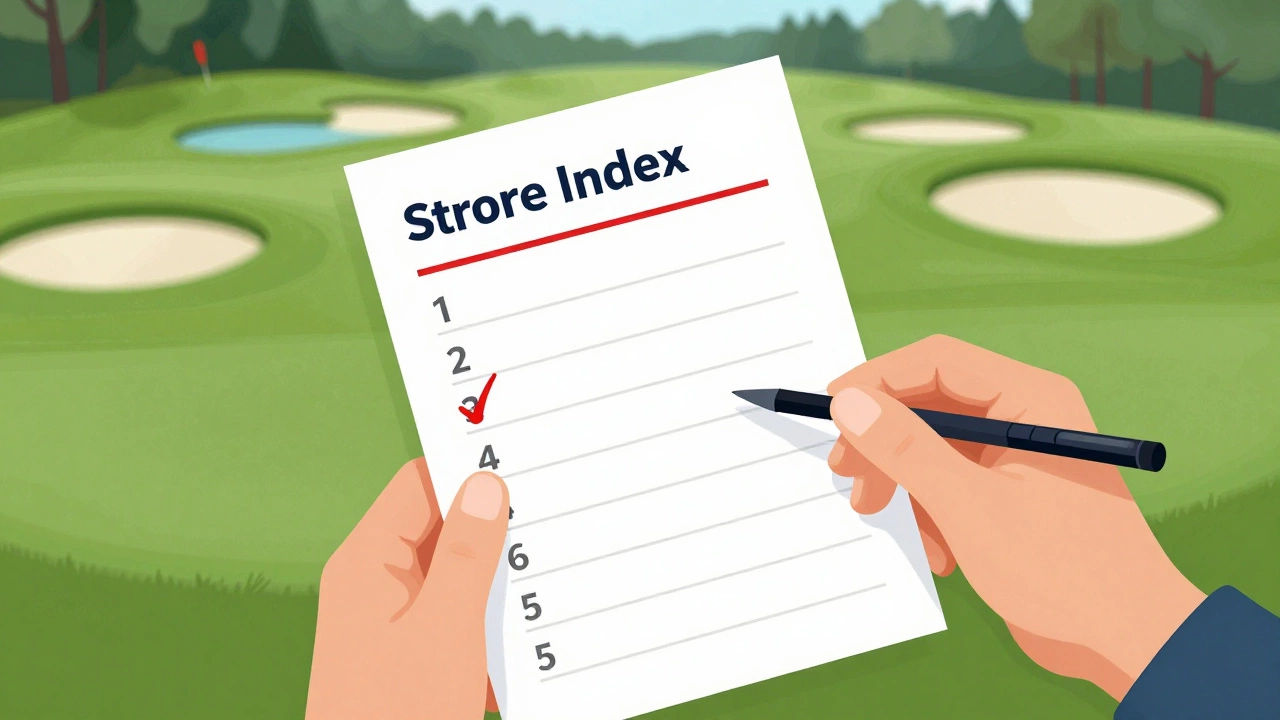
In the modern World Handicap System (WHS), your handicap is calculated using the best 8 of your last 20 rounds. But when you are actually playing, you use your Course Handicap to determine how many extra strokes you get on specific holes. These holes are ranked by difficulty using the Stroke Index, which is a ranking of holes from 1 (most difficult) to 18 (least difficult).
Here is where the "5" comes in for many players. If you have a Course Handicap of 5, you receive one extra stroke on the five most difficult holes on the course. For example, if the Stroke Index shows holes 1, 3, 5, 7, and 9 as the hardest, those are the holes where you get help.
| Your Course Handicap | Holes Where You Get Extra Strokes | Example Scenario |
|---|---|---|
| 1-5 | Only the top N hardest holes (e.g., if handicap is 5, you get strokes on holes ranked 1 through 5) | You shoot a par on a hard hole; it counts as a bogey for scoring purposes. |
| 6-10 | All holes ranked 1-5 get one stroke; holes ranked 6-N get one stroke | A handicap of 8 means you get one stroke on holes 1-8. |
| 11+ | Strokes wrap around. Holes 1-5 get two strokes; remaining holes get one. | A handicap of 15 means holes 1-5 get two extra strokes, holes 6-15 get one. |
For a beginner with a high handicap, understanding this distribution is crucial. It tells you where to save your energy and where to aim for pars rather than birdies. The "5 rule" here isn’t a restriction; it’s a strategic guide.
The Five-Yard Drop Zone: A Modern Relief Option
Another place where the number five has gained prominence recently is in the optional Local Rules adopted by many courses. In recent years, the USGA and R&A introduced Model Local Rules to make the game faster and more enjoyable for recreational players.
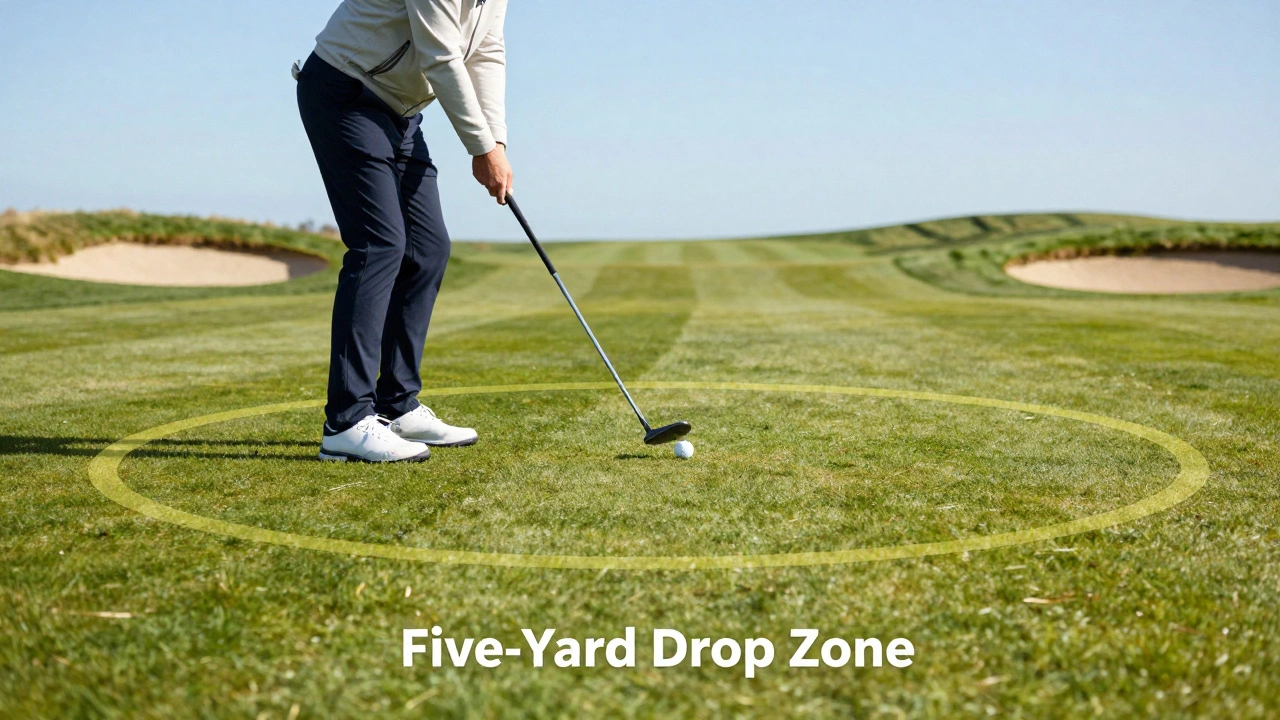
One popular option is the Five-Yard Drop Zone. Under standard rules, if your ball lands in a bunker or rough, you might face a difficult lie. With this local rule in effect, you can drop your ball within five yards of its original position, no closer to the hole, for a one-stroke penalty. This provides a "reset" button without forcing you to go back to the tee.
This rule is particularly relevant for casual weekend golfers. It reduces frustration and keeps the pace of play moving. When someone mentions the "5 rule" in this context, they are likely referring to this relief option. Always check the scorecard or ask the pro shop if this local rule is active on the course you are playing.
Etiquette and Pace: The Five-Minute Warning
Golf is a self-policed sport, and etiquette plays a huge role in maintaining harmony on the course. While not a written law in the rulebook, there is an unwritten "five-minute" expectation regarding pace of play.
If your group is significantly slower than the group behind you, marshals or other players may issue a warning. Often, if a hole takes more than a certain time frame-or if you are five minutes behind the group ahead-you are expected to speed up or allow the faster group to play through. This isn’t a penalty stroke, but ignoring it can lead to being asked to leave the course.
To avoid this:
- Keep your searches for lost balls under three minutes.
- Be ready to hit when it’s your turn.
- Walk briskly between shots.
Respecting the time of others is just as important as respecting the rules of the game.
Why Confusion Persists: Cultural Variations and House Rules
Golf is played globally, and different regions have developed their own slang and informal rules. In some countries, "the 5 rule" might refer to a betting format. For instance, in a "5-ball scramble," each player hits five balls, and the team chooses the best one. Or it could refer to a maximum score per hole in a net stableford format, where any score over 5 (or par + 2) is capped at 5 to prevent large penalties.
These variations highlight why context matters. If you join a new golf league, always ask for the specific rules sheet. Assuming a universal "5 rule" exists will lead to misunderstandings. The core principles of golf remain consistent, but the peripheral details can vary wildly depending on who you are playing with.
Practical Tips for Navigating Golf Rules
To ensure you never accidentally break a rule-or miss out on a benefit-keep these strategies in mind:
- Read the Scorecard: Every course prints its local rules on the back of the scorecard. Look for mentions of drop zones, bunker restrictions, or pace-of-play policies.
- Know Your Handicap: Use apps like Golf Handicap Apps to track your scores accurately. Understanding your Stroke Index helps you manage expectations on each hole.
- Ask Before Borrowing: If you need a club, ask politely. Never take a club from another player’s bag without permission, as this violates etiquette and potentially the rules if it causes a delay.
- Embrace Optional Rules: If you are playing casually, propose using the five-yard drop zone or maximum score caps. It makes the game more fun and less stressful.
Remember, the goal of golf is enjoyment. Rules exist to ensure fairness, not to ruin your day. Whether you are carrying five clubs or fifteen, playing by the book keeps the spirit of the game alive.
Is it illegal to carry only 5 clubs in golf?
No, it is not illegal. The Rules of Golf set a maximum limit of 14 clubs, but there is no minimum requirement. You can play with as few as one club if you choose, provided you do not borrow clubs from others in a way that violates specific tournament conditions.
What does the 5-yard drop zone rule mean?
The 5-yard drop zone is an optional Local Rule that allows players to drop their ball within five yards of its original location, no closer to the hole, for a one-stroke penalty. This is often used to relieve difficult lies in bunkers or rough, making the game faster and more enjoyable for casual players.
How does a handicap of 5 affect my game?
A Course Handicap of 5 means you receive one extra stroke on the five most difficult holes on the course, as determined by the Stroke Index. For example, if holes 1, 3, 5, 7, and 9 are ranked as the hardest, you get an additional stroke on those specific holes to level the playing field against lower-handicap opponents.
Can I borrow a club from my partner if I only have 5 clubs?
Generally, yes, as long as neither of you exceeds the 14-club limit. However, in match play or stroke play, you must ensure that borrowing the club does not give you an unfair advantage or cause a delay. Always ask for permission first. Some casual games may have house rules restricting sharing, so check beforehand.
Is there a penalty for taking too long on a hole?
There is no automatic stroke penalty for slow play, but severe cases can result in disqualification. Most courses enforce a pace-of-play policy where groups falling significantly behind (often measured in minutes) are asked to speed up or play through. Aim to complete each hole within a reasonable timeframe to maintain courtesy to other players.