What is a Boxing Match? Rules, Rounds, and How Wins Are Decided
 Jun, 29 2026
Boxing Match Scorecard Simulator
Final Decision
| Judge | Fighter A | Fighter B | Winner |
|---|
Enter scores and click calculate to see the result.
Ever sat in the front row of a boxing arena, heart pounding as two fighters circle each other, and wondered exactly what defines this contest? Is it just two people hitting each other until one gives up? Not quite. A boxing match is a regulated combat sport event governed by strict rules regarding weight classes, round duration, scoring systems, and safety protocols. It’s a structured battle where technique, stamina, and strategy matter far more than raw aggression.
Understanding what a boxing match actually entails goes beyond watching punches fly. It involves knowing why the referee steps in, how points are tallied when no one gets knocked out, and why weight limits exist. This guide breaks down the anatomy of a professional bout so you can watch with clarity instead of confusion.
The Anatomy of a Professional Bout
A standard professional boxing match consists of a series of timed intervals called rounds. In modern professional boxing, these rounds typically last three minutes each, separated by one-minute rest periods. The number of rounds depends on the significance of the fight. Non-title bouts usually run for four to six rounds, while championship fights-the ones deciding world titles-are scheduled for twelve rounds. Amateur boxing, such as at the Olympics, follows different rules, often featuring shorter three-round matches with two-minute intervals.
The structure isn’t arbitrary. The three-minute round was standardized in the early 20th century after the Marquess of Queensberry Rules were adopted. Before that, fights could go on indefinitely under bare-knuckle traditions, which led to dangerous exhaustion levels. The current format balances intensity with recovery, allowing fighters to exert maximum power without collapsing from fatigue mid-fight.
- Round Duration: 3 minutes of action followed by 1 minute of rest.
- Total Rounds: 4-6 for regular fights; 12 for title defenses.
- Rest Periods: Fighters return to their corners for medical attention, hydration, and tactical advice from their trainers.
During those rest periods, the corner team plays a crucial role. They clean cuts, adjust gloves, and offer strategic feedback. If a fighter is too damaged or exhausted to continue, their trainer can "throw in the towel," officially ending the match. This safety mechanism ensures that competitors aren’t forced to endure unnecessary harm.
Weight Classes: Why Size Matters
You won’t see a 90-pound lightweight fighting a 250-pound heavyweight in a sanctioned boxing match. Weight classes ensure fair competition by grouping athletes of similar mass together. There are seventeen official weight divisions in professional boxing, ranging from Minimumweight (up to 105 lbs) to Heavyweight (no upper limit).
| Class Name | Weight Limit (lbs) | Weight Limit (kg) |
|---|---|---|
| Lightweight | 135 | 61.2 |
| Welterweight | 147 | 66.7 |
| Middleweight | 160 | 72.6 |
| Cruiserweight | 200 | 90.7 |
| Heavyweight | No limit | No limit |
Fighters must weigh in within specific tolerances before the match day. If a boxer misses weight, they may lose purse money, be stripped of title eligibility, or face sanctions. This system protects smaller athletes from being overwhelmed by sheer size advantages, making skill and speed the deciding factors rather than brute force alone.

How Wins Are Decided
Not every boxing match ends with someone falling unconscious. While knockouts are dramatic and memorable, most professional bouts are decided by judges’ scorecards. Understanding the methods of victory helps clarify why certain outcomes happen.
- Knockout (KO): A fighter is hit and falls to the canvas, unable to rise before the referee counts to ten. The count starts immediately upon impact, regardless of whether the fighter touches the ropes or stays standing briefly.
- Technical Knockout (TKO): The referee stops the fight because one fighter is taking excessive damage and cannot defend themselves effectively. This also applies if a fighter’s corner throws in the towel or if a doctor determines further continuation is unsafe.
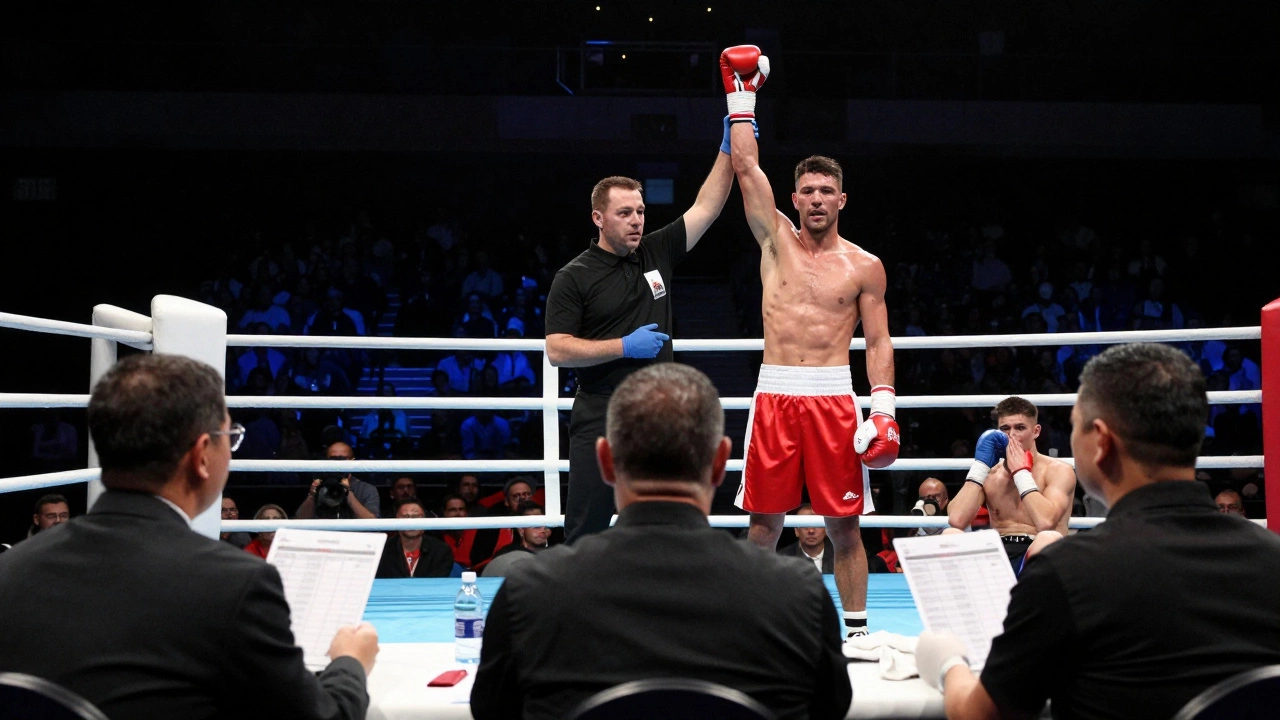
- Decision: When all scheduled rounds are completed without a stoppage, three judges tally points based on clean hits, ring generalship, defense, and aggression. Each round is scored independently using the 10-point must system: the winner of a round gets 10 points, the loser 9 (or fewer if heavily outclassed).
- Disqualification (DQ): A fighter loses due to repeated rule violations, such as holding, hitting below the belt, or using illegal headgear. Intentional fouls can lead to immediate loss.
- Draw: If judges’ scores are tied evenly across all rounds, the result is declared a draw. Splits occur when one judge favors Fighter A, another favors Fighter B, and the third calls it even.
The 10-point must system means that winning a round clearly doesn’t guarantee a big point swing-it’s usually just a single point difference per round. Over twelve rounds, small margins accumulate, making consistency critical. A fighter who dominates early but fades late might still lose if the opponent finishes stronger.
Key Roles Inside the Ring
A boxing match isn’t just about the two fighters. Several officials ensure fairness and safety throughout the bout.
The Referee stands inside the ring, monitoring action closely. Their job includes enforcing rules, separating fighters after clinches, counting knockdowns, and protecting vulnerable opponents. Referees have broad discretion-they can warn fighters for minor infractions or disqualify them for serious breaches.
Three Judges sit ringside, recording scores for each round. They don’t communicate with each other during the fight, ensuring independent evaluations. Their decisions determine the outcome in non-stoppage contests. Judges look for effective punching-clean landings with proper form-not just volume or effort.
The Timekeeper controls the bell signals for starting and ending rounds. Accuracy here is vital; even a few seconds off can affect pacing and strategy. Meanwhile, the Ring Doctor inspects fighters between rounds, especially if cuts or swelling appear. They can halt a match if injuries pose health risks.
Equipment and Safety Standards
Modern boxing relies heavily on protective gear to minimize injury. Fighters wear padded gloves, typically weighing between 8 and 12 ounces depending on weight class. Lighter gloves increase punch speed but reduce cushioning, raising concussion risk. Heavier gloves protect hands better but slow down combinations.
Mouthguards are mandatory. These custom-fit devices absorb shock and prevent teeth damage, reducing jaw fractures and brain trauma from impacts. Hand wraps secure wrists and knuckles, stabilizing joints during strikes. Some jurisdictions require headgear in amateur bouts, though professionals rarely use it due to visibility restrictions and tradition.
Rings themselves vary slightly in size but generally measure 16 to 24 feet square. Canvas flooring provides grip while allowing slight give to reduce joint stress. Ropes around the perimeter contain fighters within bounds; stepping outside results in warnings or point deductions.
Strategic Elements Beyond Punching
Watching a boxing match requires noticing subtle tactics beyond flashy combos. Footwork dictates positioning-moving forward pressures opponents, circling away creates angles for counterattacks. Defensive maneuvers like slipping, bobbing, and weaving evade incoming blows without retreating entirely.
Pacing matters immensely. Early rounds often feature cautious feel-outs, testing range and timing. Middle rounds intensify as stamina depletes. Late rounds become battles of willpower, where conditioning separates champions from contenders. Smart fighters conserve energy, targeting body shots to drain opponents gradually rather than chasing knockouts prematurely.
Psychological warfare also plays a role. Staring down an opponent, feinting movements, or changing rhythm disrupts focus. Trainers shout instructions during breaks, reminding fighters to exploit weaknesses observed earlier. Adaptability wins fights-rigid plans fail against unpredictable adversaries.
Why do boxers wear different glove sizes?
Glove weights correlate with fighter mass to balance protection and performance. Smaller athletes use lighter gloves (8-10 oz) to maintain speed, while heavier fighters opt for 10-12 oz models to cushion powerful punches. Training gloves are bulkier (14-16 oz) to safeguard partners during sparring sessions.
Can a boxing match end in a technical decision?
Yes. If a fight stops due to an accidental foul (like a head clash) after six full rounds, judges review recorded scores to declare a winner. Fewer than six rounds result in a "no contest," meaning neither athlete gains credit for the bout.
What happens if both fighters fall simultaneously?
The referee begins counting both athletes. Whoever rises first continues fighting; if both stand before ten, the match resumes normally. Should either fail to recover in time, they’re deemed knocked out despite mutual collapse.
Are there age restrictions for professional boxing?
Most commissions require fighters to be at least 18 years old to compete professionally. Upper age limits vary by region, but many organizations retire athletes automatically at 40 unless granted special exemptions based on medical clearance and recent activity records.
How does scoring differ between amateur and pro boxing?
Amateur bouts emphasize clean contact over damage inflicted, awarding points for any legal touch. Professional judging prioritizes effectiveness, considering power, precision, and impact. Amateurs also wear headgear and fight shorter rounds, reflecting developmental goals versus entertainment-driven pros.