What Came First: English Football or Rugby? The Full History
 Jun, 15 2026
The Evolution Timeline: Soccer vs Rugby
Explore the key moments that shaped two of the world's most popular sports. Scroll down to see how medieval folk football evolved into distinct codes through pivotal decisions at public schools and historic meetings.
Medieval Mob Football
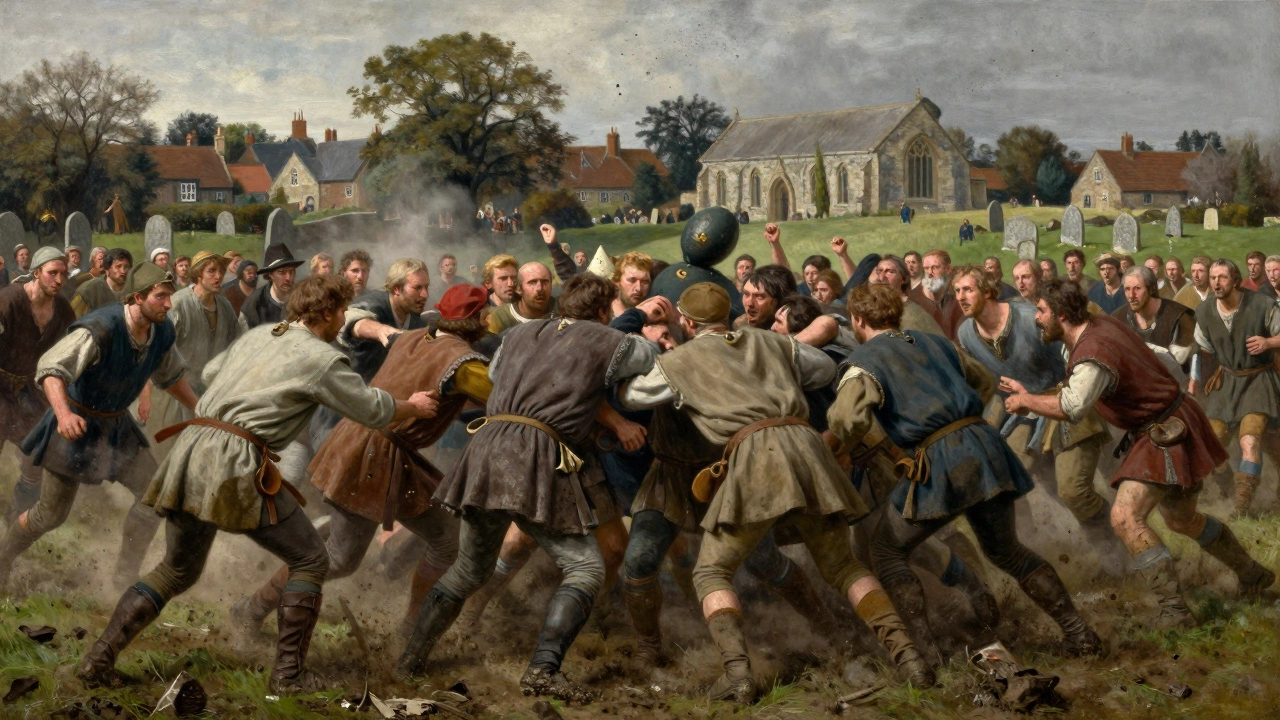
Villages compete in chaotic mass games with minimal rules. Players use both hands and feet. King Edward II bans these games in 1314 due to violence and disturbance.
Public School Variations
Prestigious schools like Eton, Harrow, and Rugby develop their own house rules. At Harrow, players hold the ball against their chest. At Rugby School, handling becomes more prominent.
William Webb Ellis Myth
According to legend, Webb Ellis picks up the ball during a match at Rugby School and runs with it. Historians consider this apocryphal—handling likely evolved gradually.
Cambridge Rules
Former students from various public schools meet at Cambridge University to create a standardized set of rules, attempting to bridge different school variations.
The Great Schism
The Football Association is founded at London's Freemasons' Tavern. Representatives vote to ban hacking and carrying the ball by hand. Several groups walk out in protest.
Soccer Takes Shape
The FA codifies laws emphasizing kicking and continuous play. The term "association football" emerges, later shortened to "soccer." Early clubs form across England.
RFU Founded
Clubs and schools favoring handling the ball establish the Rugby Football Union, creating a separate governing body for what becomes known as "rugby football." Eight years after the FA.
Rugby Codification
Rugby develops its own complete rulebook emphasizing backward passing, tackling, and forward momentum. The oval ball becomes standard equipment.
Global Expansion
British soldiers, missionaries, and traders spread both sports worldwide. Soccer gains popularity in Latin America and Asia. Rugby finds strongholds in New Zealand, South Africa, and Wales.
FIFA Established
The Fédération Internationale de Football Association forms, creating international governance for soccer. The sport begins its journey to becoming the world game.
All Blacks Debut Black Ferns
New Zealand's Māori communities fully embrace rugby, integrating it into cultural identity. The All Blacks become a powerful symbol of national pride.
Two Branches, One Root
Both sports thrive globally with billions of fans combined. While distinct in rules and culture, they remain connected through shared heritage stretching back nearly a millennium.
Picture this: it’s a muddy pitch in the mid-1800s. A group of schoolboys are chasing an oval ball. Some are kicking it, others are carrying it. There are no referees, no strict rules, and certainly no offside line. If you were standing there, would you call it soccer? Or would you call it rugby?
The question "what came first, English football or rugby?" is one of those classic chicken-and-egg debates that keeps sports historians up at night. The short answer might surprise you: neither really existed as distinct sports until they split from each other. They are siblings, born from the same chaotic parent.
To understand who came first, we have to look back further than the modern professional leagues. We need to dig into the messy, unregulated past where "football" meant almost any game played on foot with a ball. This isn't just about trivia; it's about understanding how two of the world's most popular sports evolved from a single, rough-and-tumble tradition.
The Ancient Roots: Before the Split
Before there was a clear distinction between association football (soccer) and rugby union, there was simply "folk football." These were massive, often violent community events held in medieval England and France. Villages would go head-to-head, sometimes involving hundreds of players on each side. The goal was usually to get a pig's bladder stuffed with hair into a specific churchyard or riverbank.
Mob Football is a traditional folk sport played in parts of England where entire communities compete in large-scale matches with minimal rules. It dates back to the Middle Ages, with records of such games appearing as early as the 12th century. King Edward II even banned these games in 1314 because they caused too much disturbance and injury, proving that the chaos of early football was already well-documented.
These games didn't follow a standard set of rules. In some towns, handling the ball was allowed; in others, it wasn't. Kicking was common, but so was running with the ball. The key takeaway here is that "football" was a broad umbrella term. It encompassed everything from kicking games to handling games. There was no separate identity for rugby yet because the concept of distinct codes hadn't been invented.
This lack of standardization continued through the Renaissance. At prestigious public schools like Eton, Harrow, and Rugby, students played their own versions of football. Each school had its own house rules. At Harrow, for instance, players ran while holding the ball against their chest. At Rugby School, handling the ball became more prominent over time. This diversity of play styles laid the groundwork for the eventual split.
The Crucial Moment: The 1863 Schism
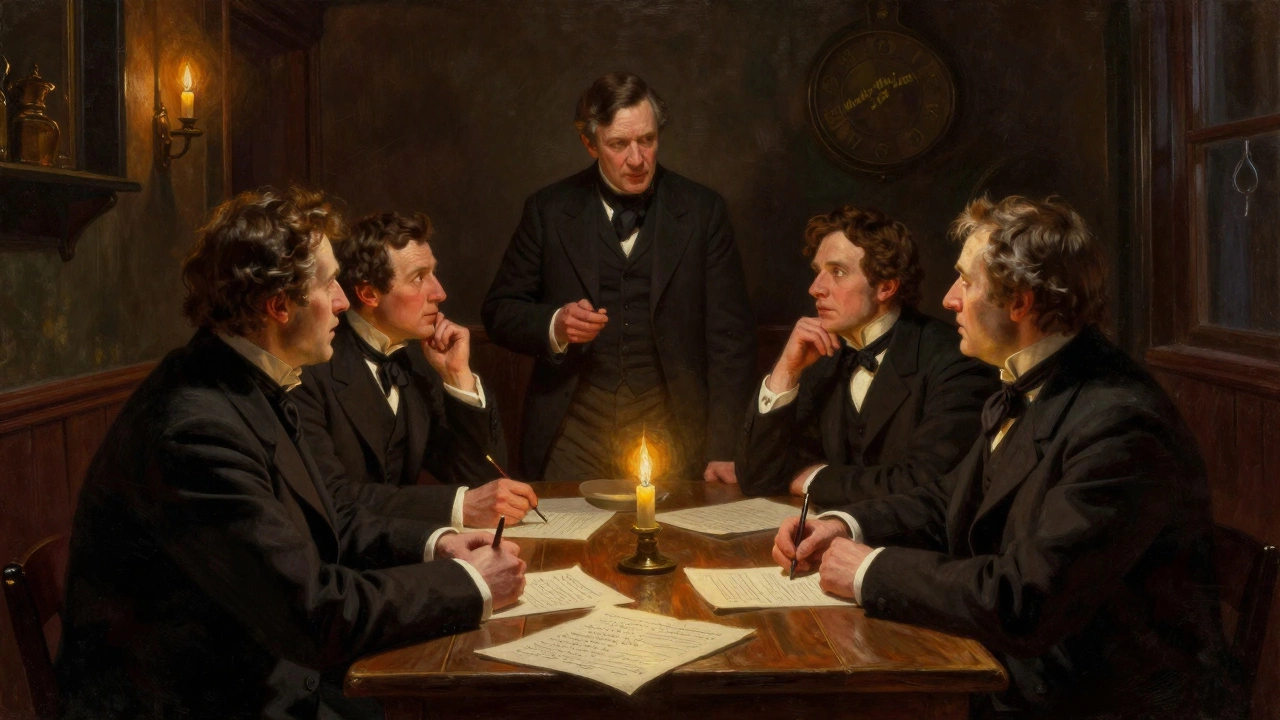
If you want a definitive date for when "English football" (as we know it today) separated from "rugby," you have to look at October 26, 1863. This is the day the Football Association (FA) was founded in London. Representatives from various clubs and schools met at the Freemasons' Tavern to codify the laws of the game.
The meeting was contentious. The main debate centered on two controversial practices: hacking (kicking opponents in the shins) and carrying the ball by hand. Proponents of the handling style, largely influenced by the rules at Rugby School, argued for keeping these elements. However, the majority voted to ban both hacking and carrying the ball.
The Football Association (FA) is the governing body of association football in England, established in 1863 to standardize the rules of the game. Its formation marked the birth of modern soccer as a distinct sport separate from rugby football. The FA's decision to prohibit handling the ball created a clear divide that would define two major sporting traditions.
When the rule against carrying the ball was proposed, several representatives walked out. These dissenters took their version of the game back to their schools and clubs. Within a few years, the Rugby Football Union (RFU) was formed in 1871 to govern this handling variant. So, technically, the code we now call "soccer" was codified eight years before the code we call "rugby" had its own dedicated union.
Does this mean soccer came first? Not exactly. Both sports emerged simultaneously from the same source material. The FA simply made a choice to exclude handling, which forced the handling enthusiasts to create their own organization later. It was a separation of church and state, but for sports.
Why the Confusion Persists
The confusion stems from the name itself. For centuries, "football" referred to any game played on foot, regardless of whether you used your hands or feet. The term "association football" was coined to distinguish the new FA-sanctioned game from "rugby football." Over time, "association football" shortened to "soccer" in Britain (from "assoc" + "er") and eventually became the global standard outside the UK, while "football" remained the dominant term in Europe and South America.
In Australia and New Zealand, the term "football" still carries ambiguity. Depending on the region, it could refer to Australian Rules Football, Rugby League, or Rugby Union. This linguistic overlap keeps the historical connection alive in everyday conversation. When Australians talk about "footy," they rarely specify which code unless necessary, reflecting the shared heritage of these sports.
Another factor is the visual similarity. Both sports use oval-shaped balls (though soccer uses a spherical ball, the original folk games often used irregular shapes). Both involve tackling, territorial gain, and scoring points by moving the ball into a designated area. The tactical evolution of both sports has also seen cross-pollination, with coaches borrowing strategies from one code to another.
Comparing the Modern Codes
While they share a common ancestor, modern English football (soccer) and rugby have diverged significantly in terms of rules, equipment, and culture. Understanding these differences helps clarify why they are considered separate entities today.
| Feature | Soccer (Association Football) | Rugby Union |
|---|---|---|
| Governing Body Founded | 1863 (The FA) | 1871 (RFU) |
| Ball Shape | Spherical | Oval |
| Handling the Ball | Prohibited (except goalkeeper) | Allowed and central to gameplay |
| Tackling | No physical contact below the waist | Tackling allowed, including below the waist |
| Number of Players | 11 per side | 15 per side |
| Scoring Method | Goals only | Tries, conversions, penalties, drop goals |
The table above highlights the structural differences that solidified after the 1863 split. Soccer emphasizes continuous flow and technical skill with the feet, while rugby focuses on physical contest, forward momentum, and strategic use of the oval ball. These differences weren't present in the medieval mob games, where anything went.
The Role of Public Schools
You can't tell the story of English football and rugby without mentioning the British public school system. Institutions like Rugby School, Eton College, and Westminster School acted as laboratories for sport. During the 19th century, these schools developed their own unique variations of football to keep boys active during winter months.
At Rugby School, under the influence of headmaster Thomas Arnold, the game evolved to emphasize character building and teamwork. Handling the ball became a way to maintain continuity of play when the ball bounced unpredictably. This pragmatic approach stuck. Meanwhile, at Eton, different forms of football coexisted, including "Eton Field Game," which involved pushing and shoving.
The standardization efforts of the 1860s were driven by former pupils of these schools who wanted to recreate their school days in adulthood. They formed clubs and sought to unify the disparate rules. The failure to agree on handling led to the bifurcation. Without the rigid structures of these elite educational institutions, the codification process might have taken decades longer or resulted in entirely different sports.

Global Expansion and Divergence
As the British Empire expanded, so did its sports. Soldiers, missionaries, and traders carried both soccer and rugby to every corner of the globe. However, the adoption patterns differed. Soccer spread rapidly due to its simplicity-it requires minimal equipment and can be played on any surface. Rugby, requiring more space and specific skills for passing backward, found strongholds in specific regions like New Zealand, South Africa, and Wales.
In many colonies, the introduction of these sports coincided with social change. In New Zealand, Māori communities adopted rugby enthusiastically, integrating it into their cultural fabric. Today, the All Blacks remain a symbol of national pride. In contrast, soccer gained popularity in Latin America and Asia, where it became intertwined with local identities and political movements.
This global divergence means that the question "what came first" takes on different meanings depending on where you are. In England, the historical split is clear. In other parts of the world, one code may have arrived decades after the other, shaping local perceptions of their origins.
Common Misconceptions
A persistent myth involves William Webb Ellis, a student at Rugby School. Legend says he picked up the ball during a match in 1823 and ran with it, inventing rugby on the spot. While this story makes for a great anecdote, historians generally regard it as apocryphal. The practice of handling the ball likely evolved gradually rather than through a single eureka moment.
Another misconception is that soccer is older because it has roots in ancient China (Cuju) or Greece (Episkyros). While these ancient games resemble modern soccer, they are not direct ancestors. The link between Cuju and modern football is tenuous at best. The true lineage of both soccer and rugby traces back to medieval European folk games, not ancient civilizations.
Finally, some believe that rugby was originally called "football" and only changed its name later. In reality, it was always known as "rugby football" to distinguish it from "association football." The shorthand "rugby" emerged naturally as the sport grew in popularity.
Conclusion: A Shared Heritage
So, what came first? The answer lies in recognizing that they are two branches of the same tree. Medieval folk football is the root. The 1863 FA meeting was the branch point. One branch grew into soccer, emphasizing kicking and flow. The other grew into rugby, embracing handling and physicality.
Neither sport truly "came first" in their modern forms. They emerged together from the same chaotic past, shaped by the decisions of Victorian gentlemen trying to impose order on playground chaos. Whether you prefer the elegance of a bicycle kick or the brute force of a ruck, you're participating in a tradition that stretches back nearly a thousand years.
Next time you watch a match, remember that the player dribbling past defenders and the one breaking through the tackle line are connected by history. They are cousins, separated by a vote in a London tavern over 160 years ago.
Did William Webb Ellis really invent rugby?
No, the story of William Webb Ellis picking up the ball in 1823 is widely considered a myth. While he was a real person who attended Rugby School, there is no contemporary evidence to support the claim. The handling style of rugby evolved gradually from various school games rather than being invented by a single individual.
Why is it called soccer if it's English football?
The term "soccer" originated in Britain as a slang abbreviation of "association football." It comes from "assoc" plus the suffix "-er," similar to how "rugger" was used for rugby. The term fell out of favor in England but remained popular in countries like the US, Australia, and Canada to distinguish it from other forms of football.
Which sport is older: soccer or rugby?
In their modern, codified forms, soccer is slightly older because the Football Association was founded in 1863, while the Rugby Football Union was formed in 1871. However, both sports derive from the same medieval folk football traditions, so they share a common origin rather than one predating the other significantly.
Can you play rugby with a round ball?
While it is physically possible, rugby is specifically designed for an oval ball. The shape allows for backward passing and unpredictable bounces, which are integral to the game's strategy. Using a round ball would fundamentally alter the dynamics of passing, kicking, and ground play, making it unrecognizable as rugby.
How did the rules of football and rugby diverge?
The divergence occurred in 1863 when the Football Association banned carrying the ball and hacking (kicking opponents). Clubs and schools that preferred handling the ball withdrew from the FA and eventually formed the Rugby Football Union in 1871. This split created two distinct codes with different rules, equipment, and playing styles.