Can You Transform Your Body in 1 Month? Realistic Results & How to Start
 Jun, 28 2026
Realistic 30-Day Transformation Calculator
This tool estimates your results based on biological realities described in the article:
- Week 1: Rapid drop due to water weight/glycogen depletion.
- Weeks 2-4: Actual fat loss (0.5-1kg/week) and neural strength adaptations.
- Protein Needs: Calculated to preserve muscle during deficit.
Note: These are estimates. Individual genetics and adherence play major roles.
Your 30-Day Projection
Weekly Breakdown
| Phase | Weight Change | Composition | Focus |
|---|
Let’s be brutally honest for a second. You’ve seen the ads. The before-and-after photos that look like someone swapped bodies overnight. They promise you can drop ten kilograms or pack on five pounds of pure muscle in thirty days. It sounds incredible, doesn’t it? But if you’re standing in front of your mirror right now, wondering if a body transformation is actually possible in just one month, the answer isn’t a simple yes or no. It’s a "yes, but..." and that "but" is where most people fail.
The truth is, you cannot change your genetic structure in four weeks. However, you can make dramatic changes to how your body looks, feels, and performs. If you are disciplined, consistent, and strategic, you can strip away bloating, reduce visible fat, and tighten up your physique enough that your clothes fit differently by day thirty. This guide cuts through the noise to show you exactly what is biologically possible, what is marketing hype, and how to get the best results without burning out or injuring yourself.
What Actually Happens in the First Four Weeks?
To understand what you can achieve, we need to look at the biology. When you start a new fitness regimen, your body goes through distinct phases. In the first week, much of the weight you lose is water weight. As you cut back on processed foods and sodium, your glycogen stores deplete. Since every gram of glycogen holds about three grams of water, this leads to a rapid drop on the scale. This isn’t fat loss yet; it’s fluid balance shifting.
By week two and three, real metabolic adaptation kicks in. Your muscles begin to repair and grow slightly stronger, especially if you are lifting weights. This process, known as hypertrophy, takes time, but neural adaptations happen quickly. This means your brain learns to recruit more muscle fibers efficiently, making you feel stronger even before you see massive size gains. By week four, these small changes compound. You might not look like a different person, but you will look sharper, leaner, and more defined. The key is managing expectations: aim for progress, not perfection.
The Non-Negotiables: Nutrition Over Everything
You cannot out-train a bad diet. If you want a visible change in thirty days, nutrition is 80% of the battle. Exercise builds the engine, but fuel determines whether the car runs clean or sputters. To transform your body quickly, you need to create a calorie deficit if your goal is fat loss, or a slight surplus with high protein if you want to build muscle. For most people asking this question, fat loss is the primary driver.
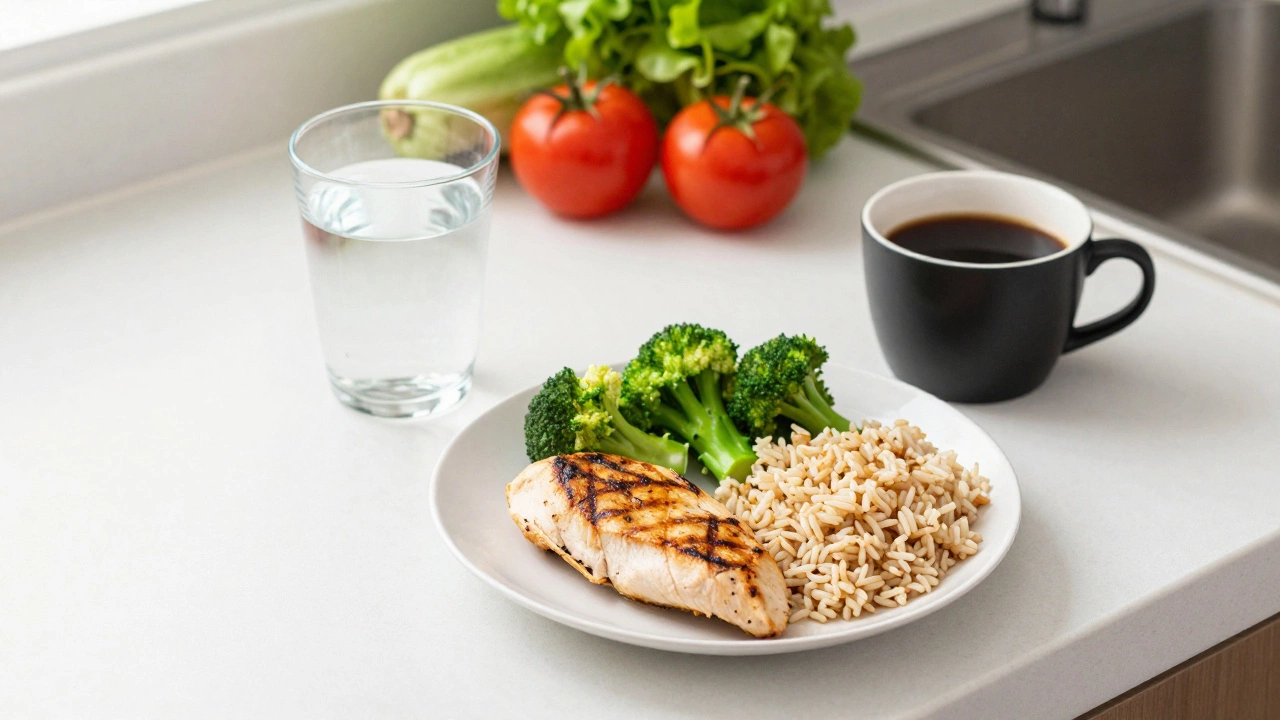
Start by tracking your intake. Use an app to log everything you eat for the first week. Most people underestimate their consumption by 30-50%. Once you have a baseline, reduce your daily calories by 300-500 below your maintenance level. Don’t go lower than this; starving yourself slows down your metabolism and causes muscle loss, which makes you look softer, not fitter. Prioritize protein. Aim for 1.6 to 2.2 grams of protein per kilogram of body weight. Protein keeps you full, preserves muscle mass during weight loss, and has a high thermic effect, meaning your body burns more calories digesting it compared to fats or carbs.
Cut out liquid calories. Sodas, sugary coffees, and alcohol are empty energy bombs that spike insulin and promote fat storage. Replace them with water, black coffee, or unsweetened tea. Hydration is critical too. Drinking enough water helps reduce water retention paradoxically. When you are dehydrated, your body hoards water. Drink at least 2-3 liters a day, more if you are sweating heavily in workouts.
Training Smart: Strength and Cardio Balance
If you spend all your time on the treadmill, you’ll burn calories while you run, but you won’t change your body composition significantly. To transform your shape, you need resistance training. Lifting weights or doing bodyweight exercises signals your body to hold onto muscle tissue while burning fat. Muscle is denser than fat, so you might stay at the same weight but look smaller and tighter because you are taking up less space.
Here is a simple framework for a one-month plan:
- Strength Training (3-4 times a week): Focus on compound movements. Squats, deadlifts, push-ups, pull-ups, and overhead presses work multiple muscle groups at once. This maximizes hormonal response and calorie burn. Do 3 sets of 8-12 reps for each exercise. Rest 60-90 seconds between sets.
- Cardio (2-3 times a week): Mix low-intensity steady state (LISS) with high-intensity interval training (HIIT). LISS, like brisk walking or cycling for 30 minutes, aids recovery and burns fat directly. HIIT, like sprinting for 30 seconds followed by 30 seconds of rest, boosts your metabolism for hours after the workout (the afterburn effect).
- Daily Movement: This is the secret weapon. Aim for 8,000-10,000 steps a day outside of your workouts. This is called Non-Exercise Activity Thermogenesis (NEAT). It adds up to hundreds of extra calories burned daily without stressing your body.
Don’t try to do everything every day. Recovery is when the magic happens. If you train hard every single day, you risk injury and burnout. Schedule at least one full rest day or active recovery day (like yoga or light stretching) per week.
Sleep and Stress: The Hidden Saboteurs
You can eat perfectly and train hard, but if you sleep five hours a night, your transformation will stall. Sleep is when your body repairs muscle tissue and regulates hormones like cortisol and ghrelin. High cortisol (stress hormone) promotes belly fat storage and muscle breakdown. Ghrelin is the hunger hormone; lack of sleep spikes it, making you crave junk food.
Aim for 7-9 hours of quality sleep. Keep your room cool and dark. Avoid screens an hour before bed. Manage stress through meditation, deep breathing, or simply spending time in nature. In Sydney, where I live, we have great parks for morning walks-use your environment to lower stress levels. A calm mind supports a lean body.
Common Pitfalls to Avoid
Many people ruin their one-month plan by falling into these traps:
- Overdoing it: Going from zero to hero in week one leads to injury. Start moderate and increase intensity gradually.
- Focusing only on the scale: Weight fluctuates daily due to water, salt, and digestion. Take progress photos and measurements instead. The scale lies; the mirror tells the truth.
- Skipping meals: This slows metabolism and leads to binge eating later. Eat regular, balanced meals.
- Expecting linear progress: Some weeks you’ll lose weight fast; others you’ll plateau. This is normal. Stick to the plan.

Sample One-Week Schedule
To make this actionable, here is a sample weekly routine you can adapt:
| Day | Workout Focus | Nutrition Tip |
|---|---|---|
| Monday | Upper Body Strength | High protein breakfast |
| Tuesday | HIIT Cardio (20 mins) | Hydrate well |
| Wednesday | Lower Body Strength | Complex carbs pre-workout |
| Thursday | Active Recovery (Walk/Yoga) | Light dinner |
| Friday | Full Body Circuit | Protein shake post-workout |
| Saturday | LISS Cardio (45 min walk/cycle) | Cheal meal (controlled) |
| Sunday | Rest Day | Meal prep for next week |
This schedule balances intensity with recovery. Adjust the exercises based on your equipment access. If you don’t have weights, use resistance bands or bodyweight variations like lunges and push-ups. Consistency beats intensity in the long run.
Mental Shift: Building Habits
A one-month transformation is a sprint, but fitness is a marathon. Use this month to build habits that last. Instead of thinking "I’m suffering through this diet," think "I’m investing in my health." Celebrate small wins. Did you hit your step goal? Did you choose a salad over fries? Acknowledge it. Positive reinforcement rewires your brain to enjoy healthy choices.
Find accountability. Tell a friend your goals, join a fitness class, or hire a trainer for a few sessions to learn proper form. Social support increases adherence rates significantly. Remember, transformation isn’t just about looking better; it’s about feeling energized, confident, and capable. That internal shift is often more powerful than any external change.
How much weight can I realistically lose in one month?
A safe and sustainable rate of weight loss is 0.5 to 1 kg (1-2 lbs) per week. So, in one month, you can expect to lose 2-4 kg of actual fat. However, in the first week, you may lose additional water weight, making the total drop on the scale appear larger, perhaps 4-6 kg initially. This initial drop is mostly fluid, not fat.
Can I build significant muscle in 30 days?
For beginners, you can gain some "newbie gains"-up to 1-2 kg of muscle mass in the first month due to neural adaptations and glycogen storage. For experienced lifters, muscle growth is slower, maybe 0.5 kg or less. While you won’t look bodybuilder-ready, you will notice increased strength and tighter muscle definition.
Do I need to count calories to see results?
Counting calories is the most accurate way to ensure you are in a deficit or surplus. However, if you hate tracking, you can use portion control methods like the plate method: half vegetables, quarter protein, quarter complex carbs. Just be mindful of hidden calories in sauces, oils, and drinks.
Is cardio or strength training better for body transformation?
Strength training is superior for changing body composition because it builds muscle, which raises your resting metabolic rate. Cardio is excellent for heart health and burning extra calories. The best approach combines both: strength training 3-4 times a week and cardio 2-3 times a week.
What should I eat on rest days?
On rest days, your calorie needs are slightly lower since you aren’t burning as much energy. Reduce carbohydrate intake slightly and focus on protein and healthy fats. This helps maintain your calorie deficit while still providing nutrients for recovery. Don’t skip meals; just adjust portions.