Can You Lose Belly Fat in 30 Days? The Realistic Truth
 Jul, 2 2026
30-Day Belly Fat Loss Calculator
Estimate your realistic weight loss and waist reduction based on your daily habits. This tool uses the metabolic principles outlined in our guide.
You stare at the mirror. That stubborn layer of soft tissue around your midsection seems to defy every diet trend you’ve tried. You want it gone. Fast. Thirty days feels like a magic number-long enough to see change, short enough to stay motivated. But can you actually lose belly fat in just one month? The honest answer is yes, but not in the way most internet gurus promise.
You won’t spot-reduce fat from your stomach by doing a thousand crunches. Your body doesn't work that way. However, you can significantly reduce your overall body fat percentage and shrink your waistline in 30 days if you combine aggressive dietary changes with strategic movement. This isn't about starvation; it's about creating a metabolic environment where your body is forced to burn stored energy, including that dangerous visceral fat hiding around your organs.
The Biology of Belly Fat: Why It Sticks
To lose belly fat, you first need to understand what you are fighting against. There are two main types of abdominal fat: subcutaneous fat and visceral fat. Subcutaneous fat sits right under your skin. It’s the kind you can pinch. Visceral fat, on the other hand, is deeper. It wraps around your liver, pancreas, and intestines.
Visceral fat is metabolically active. It acts almost like an organ itself, releasing hormones and inflammatory substances that can mess with your insulin sensitivity. This is why losing this specific type of fat is crucial for long-term health, not just aesthetics. When you create a calorie deficit, your body tends to tap into visceral fat stores relatively quickly because they are more easily accessible to your bloodstream than the stubborn subcutaneous layers.
Think of it like a bank account. Visceral fat is cash in your wallet-easy to spend. Subcutaneous fat is money in a high-security vault. In a 30-day sprint, you will likely see significant reductions in the "wallet" (visceral), which shrinks your waist measurement, even if the "vault" (subcutaneous) takes longer to drain completely.
The 30-Day Blueprint: Nutrition First
If you want results in four weeks, the kitchen is where 80% of the battle is won. You cannot out-train a bad diet. Here is the non-negotiable framework for shedding pounds fast without crashing your metabolism.
- Create a Calorie Deficit: You must consume fewer calories than you burn. For rapid but sustainable loss, aim for a deficit of 500-750 calories per day. This typically translates to losing 1-1.5 kg (2-3 lbs) per week. Anything more aggressive often leads to muscle loss and water retention, which can make your belly look puffier.
- Prioritize Protein: Protein is the king of satiety. It keeps you full and requires more energy to digest than carbs or fats (the thermic effect of food). Aim for 1.6 to 2.2 grams of protein per kilogram of body weight. Chicken breast, white fish, eggs, and Greek yogurt are excellent choices. They keep insulin levels stable, preventing fat storage.
- Cut Added Sugars and Refined Carbs: Sugar spikes insulin, and insulin is a fat-storage hormone. When insulin is high, fat burning shuts down. For these 30 days, eliminate soda, candy, pastries, and white bread. Swap them for complex carbohydrates like oats, quinoa, and vegetables, which digest slowly and keep blood sugar steady.
- Embrace Healthy Fats: Don't fear fat. Avocados, nuts, olive oil, and fatty fish provide essential hormones that regulate metabolism. Just be mindful of portions, as fats are calorie-dense.
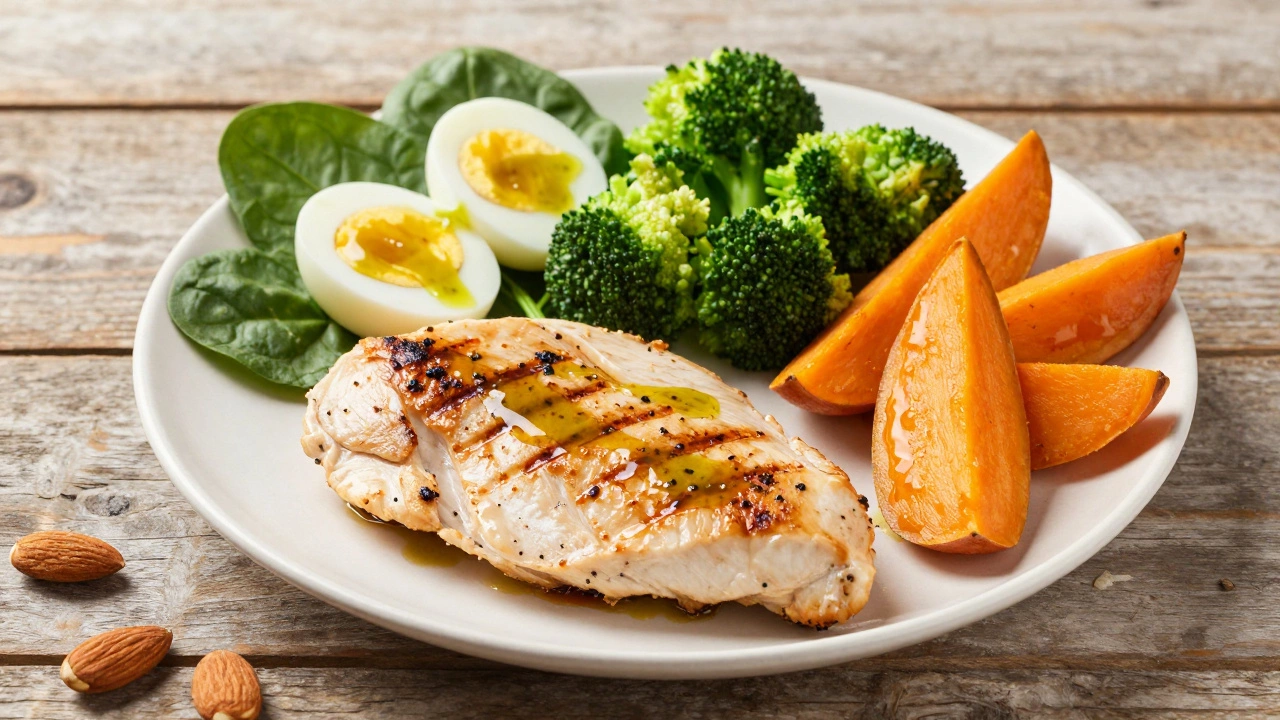
A sample day might look like this: A breakfast of scrambled eggs with spinach (protein + fiber), a lunch of grilled chicken salad with olive oil dressing (lean protein + healthy fats), and a dinner of baked salmon with broccoli and a small portion of sweet potato (omega-3s + complex carbs). Snack only if hungry, opting for an apple or a handful of almonds.
Movement Strategy: More Than Just Cardio
While nutrition drives the fat loss, exercise determines the shape of your body. If you only diet, you might lose weight but end up looking "skinny-fat" because you lost muscle along with the fat. To keep your metabolism humming and your core tight, you need a mix of resistance training and cardiovascular activity.
Resistance training is critical. Muscle tissue burns more calories at rest than fat tissue does. By building or maintaining muscle, you increase your basal metabolic rate (BMR). Focus on compound movements that engage multiple muscle groups. Squats, deadlifts, push-ups, and rows recruit large amounts of muscle fibers, triggering a greater hormonal response for fat loss than isolation exercises like bicep curls.
For cardio, High-Intensity Interval Training (HIIT) is more time-efficient than steady-state jogging for belly fat reduction. HIIT involves short bursts of intense effort followed by brief recovery periods. A typical session might include 30 seconds of sprinting followed by 60 seconds of walking, repeated for 15-20 minutes. This method creates an "afterburn" effect (Excess Post-exercise Oxygen Consumption or EPOC), where your body continues to burn calories hours after the workout is done.
However, don't neglect low-intensity steady-state (LISS) cardio. Walking 10,000 steps a day is a simple, underrated tool. It lowers cortisol levels (stress hormone linked to belly fat) and adds to your daily calorie expenditure without adding stress to your central nervous system.
The Hidden Killers: Sleep and Stress
You can eat perfectly and train hard, but if you sleep five hours a night and live in a state of chronic stress, your belly fat will fight back. This is where many people fail in their 30-day challenges.
Sleep deprivation disrupts two key hunger hormones: ghrelin and leptin. Ghrelin makes you feel hungry, while leptin signals fullness. When you’re tired, ghrelin spikes, and leptin drops. You crave sugary, high-carb foods for quick energy. Studies show that people who sleep less than six hours a night gain more weight, particularly visceral fat, compared to those who get seven to eight hours.
Stress triggers the release of cortisol. Cortisol encourages the body to store fat specifically in the abdominal area as a survival mechanism. If you are stressed, your body thinks it needs extra reserves. Managing stress through meditation, deep breathing, or simply taking walks in nature is not just "wellness fluff"-it is a physiological necessity for losing belly fat.

Tracking Progress Beyond the Scale
The scale is a liar, especially in the first few weeks. You might lose water weight rapidly, then stall, while still burning fat. Don't let the number on the scale dictate your sanity. Instead, use multiple metrics.
- Tape Measure: Measure your waist at the navel level. This is the most accurate indicator of visceral fat loss. A reduction of even 1 cm in 30 days is a victory.
- Progress Photos: Take front, side, and back photos in the same lighting and clothing every seven days. Visual changes often precede scale changes.
- Clothing Fit: Notice how your jeans sit. Are they looser around the hips and waist? This is tangible proof of fat loss.
| Category | Action Item | Frequency |
|---|---|---|
| Diet | Eat 1.6g protein per kg of body weight | Daily |
| Diet | Eliminate added sugars and alcohol | Daily |
| Exercise | Resistance training (compound lifts) | 3-4 times/week |
| Exercise | HIIT or brisk walking | 3-5 times/week |
| Lifestyle | Sleep 7-9 hours | Nightly |
| Lifestyle | Manage stress (meditation/walks) | Daily |
Realistic Expectations: What Can You Actually Achieve?
In 30 days, a realistic goal is to lose 2-4 kg (4-9 lbs) of total body weight, with a significant portion coming from fat if you follow the plan strictly. Your waistline may shrink by 2-5 cm (1-2 inches). This is substantial progress. It proves you have control over your body composition.
Remember, belly fat was not gained in 30 days, so it won't vanish completely in 30 days. The goal of this month is to break habits, jumpstart your metabolism, and build momentum. The visible abs you see in magazines often require years of consistent effort and very low body fat percentages (below 10% for men, below 20% for women), which is not healthy or sustainable for everyone.
Focus on feeling stronger, having more energy, and seeing your clothes fit better. These are the true markers of success. Once you establish these habits in your first 30 days, continuing them becomes easier, and the fat loss accelerates over time.
Can I spot-reduce belly fat with crunches?
No, spot reduction is a myth. Doing hundreds of crunches will strengthen your abdominal muscles, but it will not burn the fat covering them. To lose belly fat, you must reduce overall body fat through a calorie deficit and full-body exercise.
How much water should I drink to lose belly fat?
Aim for 2-3 liters of water daily. Water boosts metabolism slightly and helps reduce bloating. Drinking a glass before meals can also help you feel fuller, leading to lower calorie intake.
Is intermittent fasting effective for belly fat?
Intermittent fasting can be an effective tool for creating a calorie deficit and improving insulin sensitivity. Methods like the 16:8 protocol (fasting for 16 hours, eating within an 8-hour window) help many people control appetite and reduce visceral fat.
Why is my weight staying the same but my waist shrinking?
This is a good sign! You are likely losing fat and gaining muscle simultaneously. Muscle is denser than fat, so the scale may not move, but your body composition is improving. Trust the tape measure and your clothes fit.
Does alcohol affect belly fat loss?
Yes, significantly. Alcohol contains empty calories and pauses fat burning as your body prioritizes processing the toxin. It also increases appetite and impairs judgment, leading to poor food choices. Cutting out alcohol for 30 days can dramatically speed up belly fat loss.