Why is Rugby Called Rugby? The True Story of William Webb Ellis
 Aug, 2 2026
Rugby History Timeline Explorer
The Webb Ellis Incident
November 25, 1823
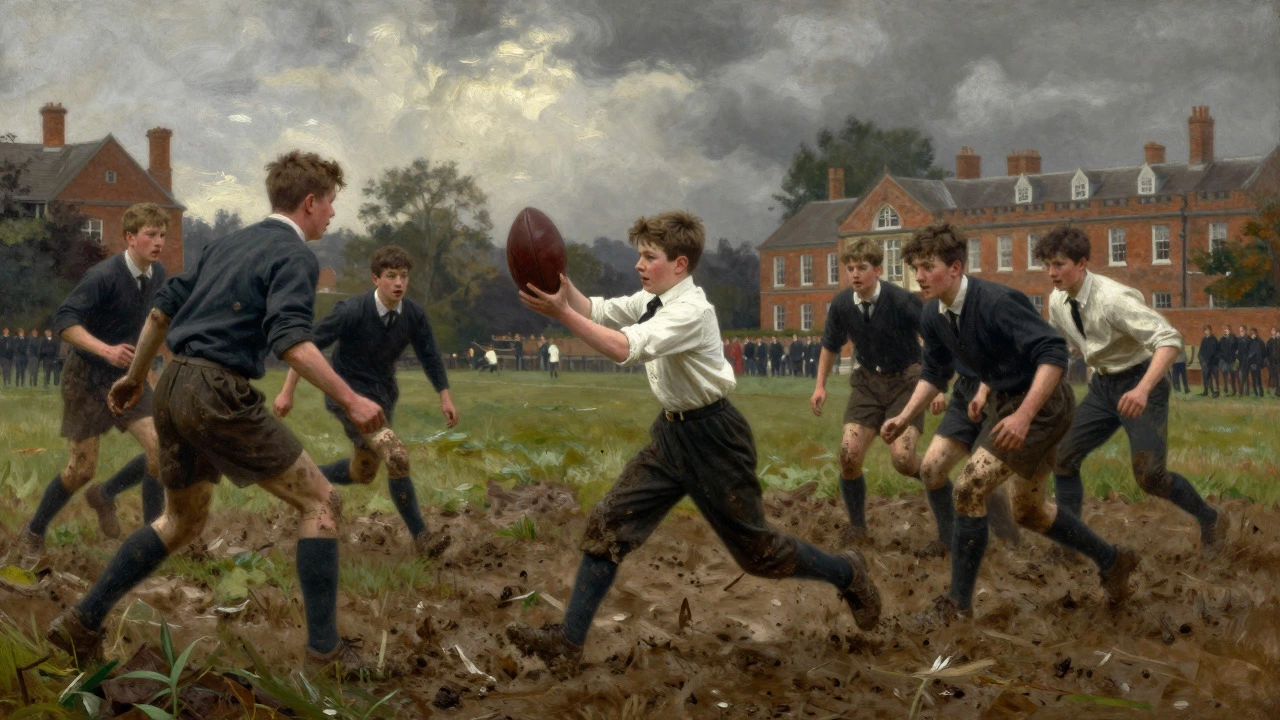
William Webb Ellis allegedly picks up the ball during a football match at Rugby School and runs with it, breaking the rules.
Fact Check: There is no contemporary evidence this happened. No diary entries or school records from 1823 mention it. The story was likely fabricated later to give the sport a romantic origin.
First Written Rules
Mid-19th Century
Former pupils draft the first formal code of laws for the game played at Rugby School.
These rules allowed players to carry the ball, pass it backward, and tackle opponents—key elements that distinguish rugby from soccer. This marked the transition from chaotic schoolyard play to a structured sport.
Formation of RFU
Governance Begins
Representatives from various clubs meet to form the Rugby Football Union (RFU) to unify rules.
As students left Rugby School, they formed clubs in London, Edinburgh, and Glasgow. The RFU was created to govern the sport professionally and ensure consistent rules across different regions.
The Great Schism
League vs. Union
Northern clubs break away to form Rugby League due to disputes over paying players.
Disagreements over payment for players led to a major split. Northern clubs formed Rugby League, allowing professional payments. Southern clubs remained as Rugby Union, maintaining amateur status until much later.
Worldwide Spread
Colonial Networks
British soldiers and settlers introduce rugby to Australia, New Zealand, South Africa, and France.
Local communities embraced the game, adapting it to their cultures. New Zealand integrated the Haka, while South Africa used rugby for reconciliation. The name "rugby" traveled with the game, becoming synonymous with strength and teamwork globally.
Did You Know?
- ✓ The International Rugby Board honors November 25, 1823, as the official birthdate of the sport, despite the lack of historical proof.
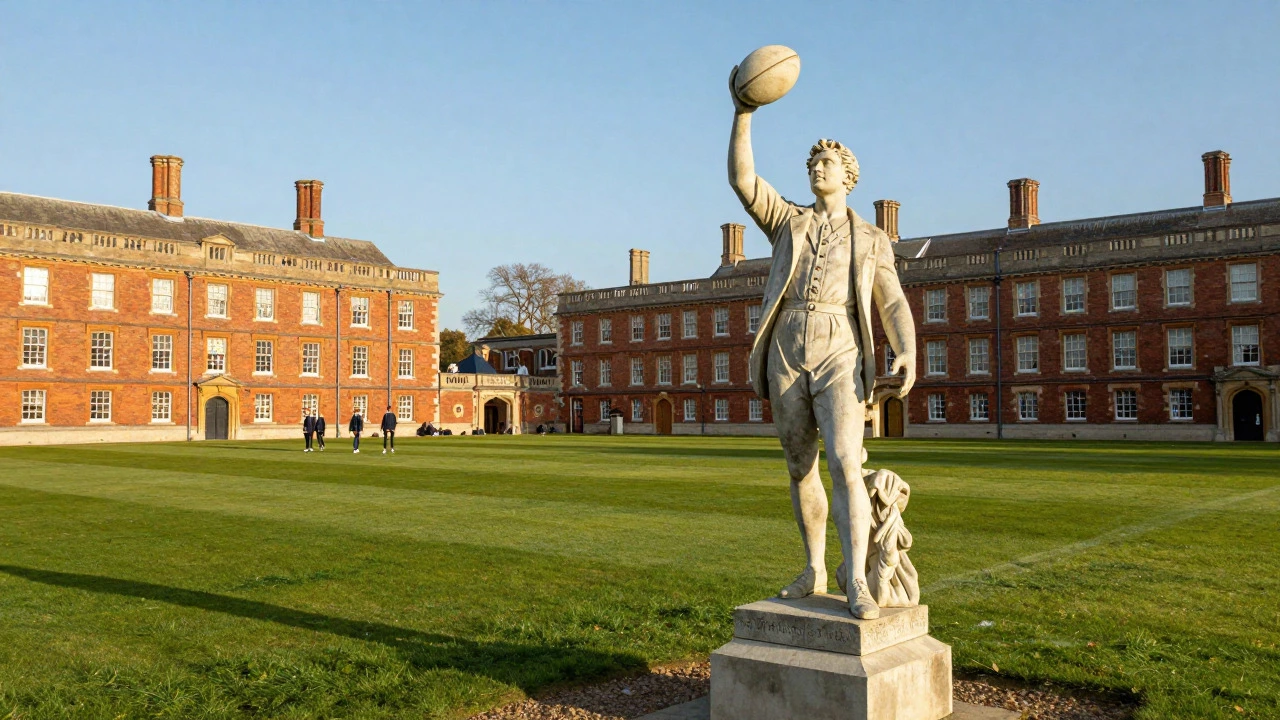
- ✓ There is a statue of William Webb Ellis at Rugby School holding the ball, cementing the legend in physical form.
- ✓ Unlike basketball, which has a clearly documented creator (James Naismith), rugby's origins blur fact and fiction.
Have you ever wondered why we call this brutal, beautiful game "rugby"? It’s not named after a type of ball, a specific move, or even a mythical creature. It’s named after a place. Specifically, Rugby School, a private boarding school in the town of Rugby, Warwickshire, England. But the story doesn’t stop at geography. There’s a legend about a student picking up the ball and running with it, breaking the rules of football as they were known in the 19th century. Is that true? Or is it just a myth invented to give the sport a romantic origin?
The Legend of William Webb Ellis
If you ask most rugby fans how the game started, they’ll tell you the same story: In 1823, a student named William Webb Ellis was playing a game of football at Rugby School. Frustrated by the kicking, he picked up the ball with his hands and ran toward the opponent's goal. That single act of rebellion supposedly created the foundation for rugby union and rugby league.
This story is iconic. It’s taught in schools, printed on plaques, and celebrated annually. The International Rugby Board (now World Rugby) even honors the date, November 25, 1823, as the official birthdate of the sport. There’s a statue of Webb Ellis at the school, holding the ball, looking determined. It’s a perfect narrative: one boy, one bold move, one new sport.
But here’s the catch: there is no contemporary evidence that this actually happened. No diary entries from classmates, no school records from 1823 mention an incident like this. For decades, historians have debated whether Webb Ellis really did pick up the ball or if the story was fabricated later to give the sport a clear origin point.
What Actually Happened at Rugby School?
In the early 19th century, "football" wasn’t a standardized game. Different schools had different rules. Some allowed handling the ball; others didn’t. At Rugby School, students played a chaotic version of football where running with the ball was occasionally permitted, though not always encouraged. Over time, these informal practices evolved into a more structured game.
By the mid-1800s, the need for standardization became apparent. Players wanted consistent rules so they could compete fairly across different schools. This led to the formation of the first formal code of laws for rugby. In 1845, a group of former pupils drafted the first written rules for the game played at Rugby School. These rules allowed players to carry the ball, pass it backward, and tackle opponents-key elements that distinguish rugby from soccer.
So while William Webb Ellis may not have been the sole inventor of rugby, the school itself was crucial in developing the unique style of play that defined the sport. The name "rugby" stuck because the game originated there, regardless of whether one individual sparked the revolution.
From Schoolyard Game to Global Sport
As students left Rugby School and joined universities or worked elsewhere, they took their version of football with them. They formed clubs in cities like London, Edinburgh, and Glasgow. Each club adapted the rules slightly, leading to variations in how the game was played. This fragmentation eventually caused tension within the rugby community.
In 1871, representatives from various clubs met to form the Rugby Football Union (RFU). Their goal was to unify the rules and govern the sport professionally. However, disagreements over payment for players led to a major split. In 1895, northern clubs broke away to form what became known as Rugby League, allowing professional payments. The southern clubs remained as Rugby Union, maintaining amateur status until much later.
This schism shaped the modern landscape of rugby. Today, both codes coexist globally, each with its own governing bodies, competitions, and fanbases. Yet they share the same roots-the muddy fields of Rugby School and the spirit of innovation that turned a schoolyard pastime into a worldwide phenomenon.
How the Name Spread Around the World
Once rugby gained traction in Britain, it spread rapidly through colonial networks. British soldiers, missionaries, and settlers introduced the game to countries like Australia, New Zealand, South Africa, and France. Local communities embraced it, adapting it to fit their cultures while keeping the core principles intact.
New Zealand, for example, transformed rugby into a national identity. The Māori people integrated traditional dance moves, such as the haka, into pre-match rituals, adding cultural depth to the sport. Similarly, in South Africa, rugby became a symbol of unity during apartheid and post-apartheid reconciliation efforts.
The name "rugby" traveled alongside the game. Whether you’re watching a match in Paris, Buenos Aires, or Tokyo, everyone refers to it as rugby. The term has become synonymous with strength, teamwork, and resilience. It transcends language barriers and borders, uniting millions of fans under one banner.
Why Does the Origin Matter Today?
You might wonder why we care about where rugby came from. After all, isn’t the game enough on its own? Understanding the origins helps us appreciate the values embedded in the sport. Rugby emphasizes respect, discipline, and camaraderie-values rooted in its educational beginnings.
Knowing that rugby emerged from a school environment reminds us of its emphasis on character development. Coaches often stress sportsmanship and fair play, echoing the ethos of institutions like Rugby School. Fans recognize these qualities when they cheer for teams who fight hard but remain respectful.
Additionally, tracing the history connects current players to their predecessors. When young athletes step onto the field, they join a lineage stretching back nearly two centuries. They inherit traditions passed down through generations, creating continuity between past and present.
Comparing Rugby’s Origins to Other Sports
| Sport | Origin Location | Key Figure(s) | Year Established |
|---|---|---|---|
| Rugby | Rugby, England | William Webb Ellis (legendary) | 1823 (mythical), 1845 (formal rules) |
| Soccer | England | The Football Association | 1863 |
| Basketball | Springfield, Massachusetts, USA | James Naismith | 1891 |
| Cricket | Southeast England | Unknown | Mid-16th century |
Unlike basketball, which has a clearly documented creator, rugby’s origins blur fact and fiction. Soccer also developed organically before being codified by organizations. Cricket’s ancient roots make pinpointing its exact beginning impossible. Rugby stands out because its name directly ties to its geographic origin rather than a person or concept.

Modern-Day Celebrations of Rugby’s Heritage
Today, Rugby School continues to celebrate its role in shaping the sport. Visitors can tour the historic grounds, see artifacts related to early rugby, and learn about influential alumni. The museum showcases memorabilia spanning centuries, offering insights into how far the game has come.
World Rugby organizes events commemorating significant milestones, including anniversaries tied to key dates like 1823 and 1845. Schools worldwide incorporate rugby history into physical education curricula, ensuring younger generations understand the context behind the sport they love.
Fan culture reflects this heritage too. Chants, songs, and mascots reference historical figures and moments. Teams wear jerseys honoring legendary players whose contributions helped define modern rugby. This connection fosters pride among supporters and strengthens communal bonds.
Common Misconceptions About Rugby’s Name
Some people assume "rugby" comes from the word "rough," implying aggression. While rugby certainly involves contact, the name predates any association with roughness. Others think it relates to "rugged terrain," suggesting outdoor endurance. Again, neither explanation holds water linguistically or historically.
Another misconception involves confusing rugby with Gaelic football or Australian rules football. Though similar in some aspects, those sports evolved independently in Ireland and Australia respectively. Their names reflect regional identities rather than shared ancestry with rugby.
Clarifying these misunderstandings enriches our appreciation of rugby’s distinct identity. Recognizing its true origins allows us to honor the journey from a small English town to global prominence.
Final Thoughts on Rugby’s Identity
Rugby isn’t just a game-it’s a legacy. From its humble beginnings at Rugby School to becoming a cornerstone of international athletics, the sport embodies perseverance, adaptability, and unity. Its name serves as a reminder of where it all started, grounding us in tradition while inspiring future innovations.
Whether you’re a lifelong fan or new to the sport, knowing why rugby is called rugby adds depth to your experience. Next time you watch a thrilling try or hear the roar of the crowd, remember the muddy fields of Warwickshire and the spirit of rebellion that birthed this extraordinary game.
Did William Webb Ellis really invent rugby?
There’s no concrete proof that William Webb Ellis invented rugby. The story likely emerged later as a way to create a compelling origin tale for the sport. Historical records from 1823 don’t mention him picking up the ball during a match.
When were the first official rugby rules written?
The first formal set of rugby rules was drafted in 1845 by former students of Rugby School. These rules established guidelines for carrying the ball, passing, and tackling, laying the groundwork for modern rugby.
Why did rugby split into two codes?
In 1895, northern English clubs broke away from the Rugby Football Union due to disputes over paying players. This led to the creation of Rugby League, while the original organization continued as Rugby Union.
Is rugby still played at Rugby School today?
Yes, rugby remains an integral part of life at Rugby School. Students participate in matches, training sessions, and tournaments, continuing the tradition that began over two centuries ago.
How does rugby differ from soccer based on its origins?
Rugby allows players to handle the ball, run with it, and pass backward, whereas soccer restricts use of hands except for goalkeepers. These differences stem from evolving rules at Rugby School versus those adopted by The Football Association.