Who is the Greatest Golfer Ever? Tiger Woods vs. Jack Nicklaus Debate
 Sep, 10 2026
The GOAT Calculator
Adjust the sliders below to weigh what matters most to you in the "Greatest of All Time" debate. The tool will calculate which legend aligns best with your values.
Jack Nicklaus
The Golden Bear
Your Score
- 18 Majors (Record)
- Unmatched Longevity
- Limited Global Field Data
Tiger Woods
The Phenom
Your Score
- 82 PGA Tour Wins
- Cultural Revolution
- Injuries Cut Prime Years
Verdict Pending...
Move the sliders above to see which legend wins according to your personal definition of greatness.
You walk into a bar in Sydney, or maybe you're at a barbecue in Melbourne, and you ask this question: "Who is the greatest golfer ever?" You will get punched in the face. Okay, maybe not literally, but you will definitely start a war. It is the most heated debate in sports history, right up there with Messi versus Ronaldo or Jordan versus LeBron. But unlike those debates, which often rely on stats that don't quite compare across eras, golf has a weirdly clear metric: Major Championships.
Before we pick sides, let's look at why this question is so hard to answer. Is it about raw talent? Longevity? Impact on the game? Or just winning the big ones? If you judge by Majors, Jack Nicklaus is the undisputed king. He won 18 of them. That number is so high that people think it's a typo. No one else has even gotten close to double digits. But if you judge by dominance, cultural impact, and skill level relative to his peers, Tiger Woods makes a terrifying case for himself. So, who actually wins? Let's break down the arguments without the fanboy bias.
The Case for Jack Nicklaus: The Golden Bear’s Unbreakable Record
If you are a numbers person, you stop reading here. Jack Nicklaus owns the record books. We aren't talking about small margins. We are talking about a gap that looks like a canyon. Nicklaus won 18 Major Championships between 1962 and 1986. To put that in perspective, the second-place player on that list, Tiger Woods, has 15. And Tiger had to play in an era where every other pro was training like an Olympic athlete, whereas Nicklaus played against guys who smoked cigarettes on the course and drank beer at the turn.
Nicklaus didn't just win; he dominated the hardest tests in golf. He won the Masters six times. Six! That is more than any other player. He won the PGA Championship five times. His consistency was insane. He finished second in majors 19 times. Think about that. He lost 19 finals at the biggest tournaments in the world, and he still holds the all-time lead. If he had won just two of those runner-up finishes, he would have 20 majors. The sheer volume of his success is what cements his status as the GOAT (Greatest of All Time) for traditionalists.
But there is a counter-argument regarding the field strength. Critics say Nicklaus played in an era when the best players from around the world didn't travel to America as frequently. In the 1960s and 70s, many top European and Australian golfers stayed home because travel was expensive and difficult. Did Nicklaus really beat the best players in the world every time he teed off? Probably not always. However, he did beat them when it mattered most. When the World Series of Golf happened, or when international stars came to the US Open, Nicklaus usually won. He wasn't just beating weak fields; he was beating the best available competition, repeatedly, for over two decades.
The Case for Tiger Woods: Peak Dominance and Cultural Shift
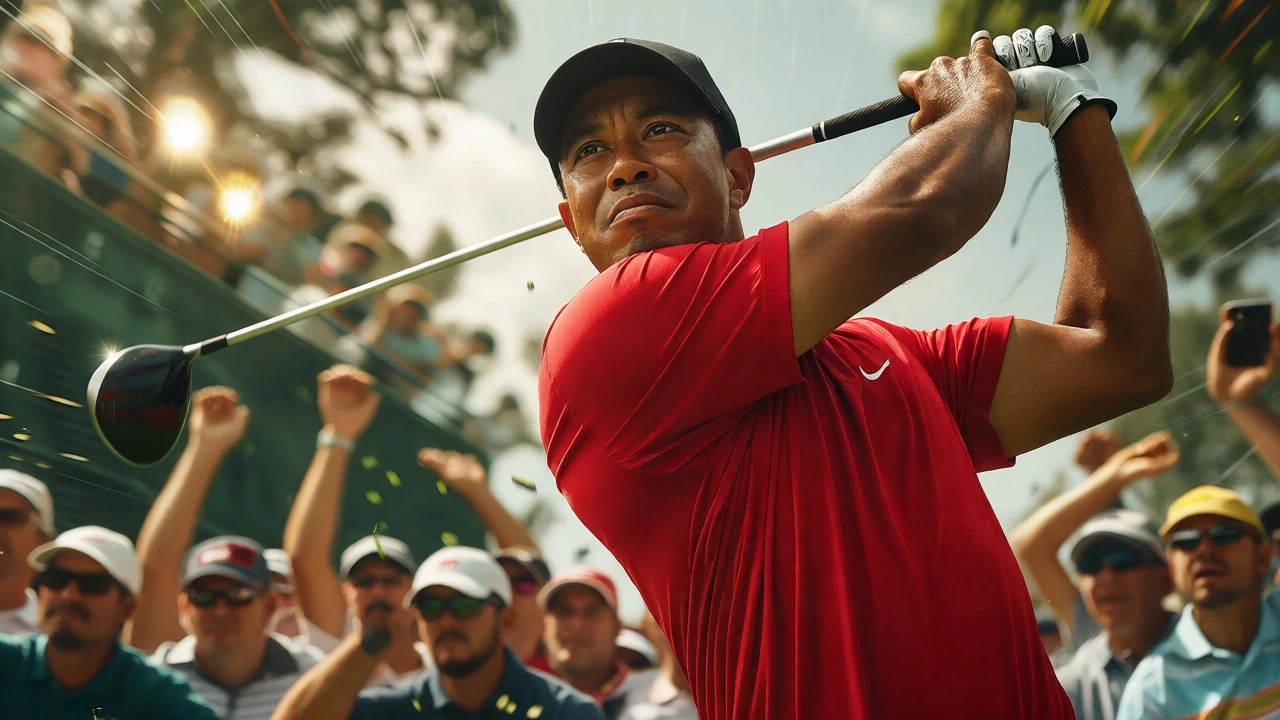
Now, let's talk about the guy who changed everything. Tiger Woods isn't just a golfer; he is a phenomenon. When Tiger burst onto the scene in the late 90s, he didn't just join the tour; he broke it. From 1997 to 2008, Tiger was arguably the most dominant athlete in any sport, period. His peak years saw him winning majors by huge margins. Remember the 2000 US Open at Pebble Beach? He won by 15 strokes. That is not a victory; that is an execution. No one has come close to that kind of margin since.
Tiger has 15 Major Championships, placing him second all-time behind Nicklaus. But look at the timing. He won his first major at age 21. He won his third before he turned 24. By the time he was 30, he had already secured his legacy. Nicklaus didn't win his first major until he was 22, and his dominance peaked later. Tiger's early career pace suggests he could have broken Nicklaus's record if injuries hadn't intervened. He missed prime years due to knee surgeries and back issues. If you adjust for time lost to injury, many analysts argue Tiger's statistical output per active year surpasses Nicklaus's.
Beyond the trophies, Tiger transformed the business of golf. Before Tiger, golf was a country club sport for older men. After Tiger, it became a global spectacle. He brought athleticism, power, and charisma to the fairways. He made golf cool. Young kids started swinging clubs because they wanted to be like Tiger, not because their dad forced them to. This cultural impact is unquantifiable, but it matters. A GOAT isn't just about winning; it's about how much you elevated the sport. Tiger did that single-handedly.
Head-to-Head: Comparing the Legends
To make sense of this, we need to look at the data side-by-side. While stats don't tell the whole story, they provide a baseline for comparison. Here is how the two legends stack up on key metrics.
| Metric | Jack Nicklaus | Tiger Woods | Advantage |
|---|---|---|---|
| Major Championships | 18 | 15 | Nicklaus |
| PGA Tour Wins | 73 | 82 | Woods |
| Weeks as World No. 1 | Data limited | 683 | Woods |
| Career Earnings | $5.7M (adjusted) | $120M+ | Woods |
| Major Runner-Ups | 19 | 8 | Nicklaus |
| Longest Winning Streak | 3 events | 7 events | Woods |
Notice the split. Nicklaus owns the big prizes. Woods owns the volume and the dominance streaks. Woods has more total PGA Tour wins (82 to 73), tying Sam Snead for the all-time lead. This shows incredible consistency week-in, week-out. But Nicklaus has twice as many runner-up finishes in majors. Why does that matter? Because getting to the final day of a major with a chance to win is harder than winning regular tournaments. Nicklaus was in contention at the end of majors 37 times (18 wins + 19 seconds). Tiger was there 23 times. That depth of sustained excellence over decades favors the Golden Bear.
Era Context: Who Had It Harder?
This is where the debate gets messy. You cannot compare 1970s golf to 2000s golf directly. The equipment changed. The courses changed. The players changed.
In Nicklaus's era, balls were made of balata rubber, which spun more but flew shorter. Clubs were persimmon wood, less forgiving than modern titanium drivers. Courses were designed to punish bad shots heavily. Greens were slower, making putting a different beast entirely. Nicklaus had to out-think his opponents because he couldn't overpower them. His strategy was surgical. He rarely took unnecessary risks. He won by being smarter, not necessarily stronger.
Tiger played in the age of technology. Modern drivers go 300+ yards easily. Courses were lengthened to keep up with players' distance gains. But Tiger didn't just benefit from tech; he mastered it. He combined long driving with elite short game skills. His ability to scramble from anywhere was unprecedented. Also, the field Tiger faced was deeper. Every week, 150 guys could win. In Nicklaus's time, maybe 10-15 guys had a realistic shot each week. Tiger had to beat a stacked deck every single round. Does that make his achievements more impressive? Many experts say yes.
The Intangibles: Charisma and Legacy
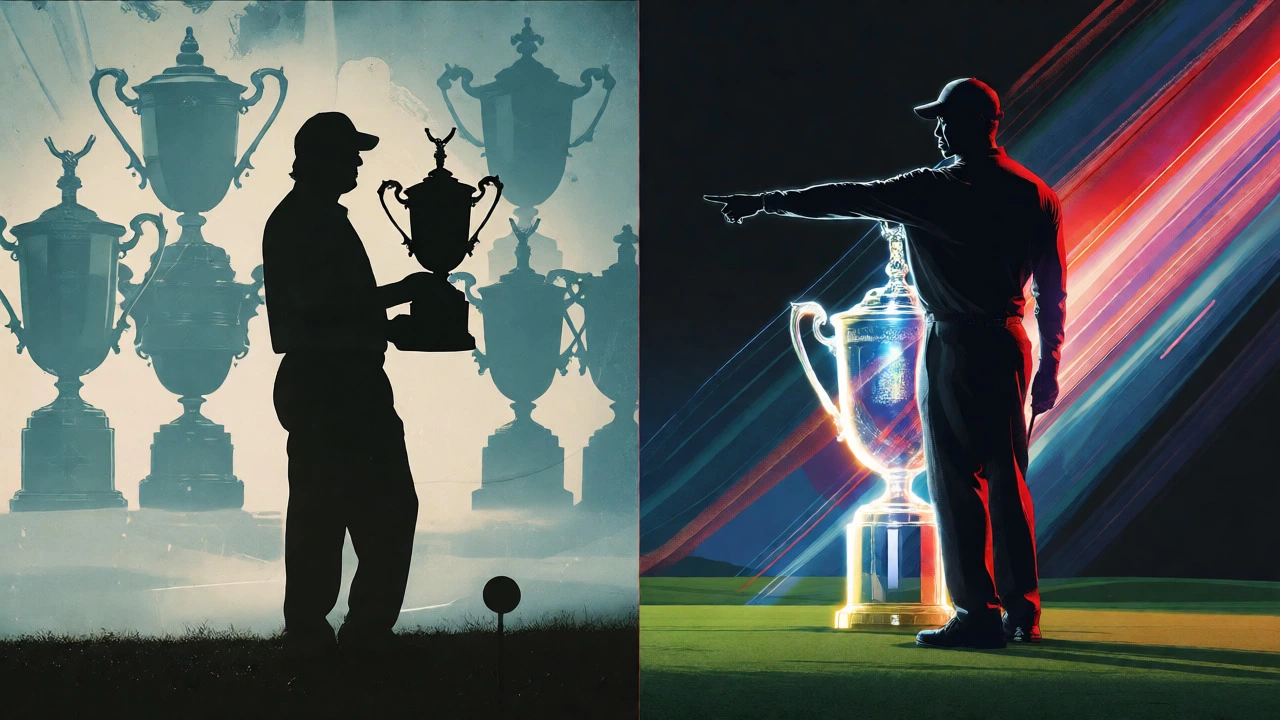
Golf is mental. Both players possessed ice-cold nerves, but they handled pressure differently. Nicklaus was known for his calm demeanor. He rarely showed emotion. He planned every shot meticulously. His famous quote, "I never hit a shot, not even in practice, without having a very sharp, very clear picture of it," sums up his approach. He visualized success before he executed it.
Tiger was different. He thrived on intensity. He wore red on Sundays because it was intimidating. He stared down opponents. His comeback in the 2019 Masters after multiple back surgeries showed a resilience that few athletes possess. Coming back from the brink of retirement to win another major at age 43? That is legendary stuff. Nicklaus won his last major at 46, which is also old for golf, but Tiger's path back was fraught with physical agony.
Legacy-wise, Tiger opened doors. He proved that African Americans could dominate a predominantly white sport. He inspired a generation of diverse players. Nicklaus built the blueprint for the modern professional golfer-businessman, ambassador, course designer. They represent different ideals. Nicklaus represents perfectionism and tradition. Tiger represents evolution and disruption.
Verdict: It Depends on What You Value
So, who is the greatest? If you value pure accumulation of major titles and longevity at the highest level, Jack Nicklaus is your guy. His 18 majors stand alone. No one has cracked 16 since. It is a fortress record.
However, if you value peak performance, dominance over peers, and transformational impact, Tiger Woods takes the crown. His 15 majors in fewer active years, combined with his record-setting weeks at No. 1 and cultural influence, make a compelling case. Most modern analysts lean slightly toward Tiger because of the depth of competition he faced and his statistical peaks. But honestly? It is too close to call definitively. They are both aliens playing a human game.
Next time someone asks you, don't just give a name. Ask them what criteria they use. Do they care about the trophy count? Or do they care about who was better when they were at their absolute best? Your answer defines your choice.
How many major championships does Jack Nicklaus have?
Jack Nicklaus holds the record for the most major championship victories in men's professional golf history with 18 wins. These include six Masters, five PGA Championships, four U.S. Opens, and three Open Championships.
Why is Tiger Woods considered the greatest by some despite having fewer majors?
Supporters argue that Tiger Woods faced deeper fields of competition, achieved greater dominance during his peak years (winning by large margins), and revolutionized the sport globally. His 15 majors were accumulated in fewer active years compared to Nicklaus, suggesting a higher rate of success.
Did Jack Nicklaus play against weaker fields than Tiger Woods?
This is a common criticism. In the 1960s and 70s, international travel was harder, so fewer top non-US players competed in American majors regularly. However, Nicklaus consistently defeated the best players available, including Gary Player and Arnold Palmer, and his record remains unmatched despite these conditions.
What is the significance of the 'Tiger Slam'?
The 'Tiger Slam' refers to Tiger Woods holding all four major championship titles simultaneously (2000-2001). Unlike a calendar-year Grand Slam, he won the US Open, British Open, and PGA Championship in 2000, then added the Masters in 2001. This feat demonstrated unprecedented dominance over a consecutive stretch of majors.
Can anyone break Jack Nicklaus's major record?
It is highly unlikely. With the current pace of winning majors, a player would need to win roughly 18 majors over a 20-year career, maintaining peak health and form. Recent stars like Rory McIlroy have only won a handful so far. The gap between 15 and 18 seems insurmountable for future generations.