What Sports Use Protective Equipment? A Complete Guide
 Oct, 4 2026
Protective Equipment Checklist
- Select a sport to view required equipment.
You might think you’re safe just because you’re not tackling someone into the mud. But here’s a surprising fact: protective sports equipment is standard in over 80% of organized athletic activities today, from high-impact collisions to low-speed falls. It’s not just about avoiding broken bones; it’s about keeping your brain healthy and your joints functional for decades. If you are wondering what sports use protective equipment, the answer is likely more extensive than you expect.
The Brain Case: Why Headgear Is Non-Negotiable
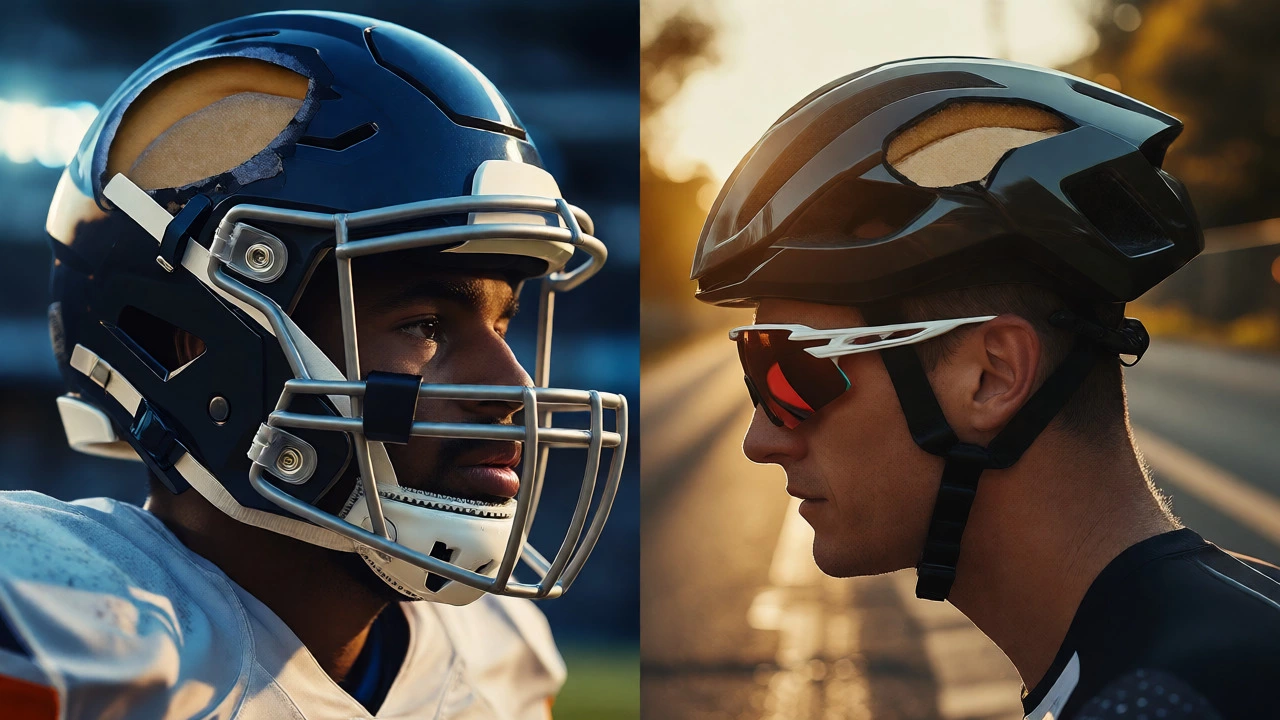
Let’s start with the most critical piece of kit: the helmet. For years, we treated helmets as optional accessories or symbols of toughness. That mindset has shifted dramatically due to research on Concussions and Traumatic Brain Injury (TBI). In contact sports like American Football and Rugby, helmets are mandatory. They aren’t designed to prevent every concussion-physics still applies-but they significantly reduce skull fractures and scalp lacerations.
But it’s not just the big hits that matter. Consider cycling. You might argue, "I’m only riding at 15 mph." Yet, a fall onto asphalt at that speed can be fatal without a shell. The CPSC (Consumer Product Safety Commission) standards for bicycle helmets have saved countless lives by absorbing impact energy through expanded polystyrene foam liners. Similarly, in ice hockey, players wear full-face cages or visors. Why? Because pucks travel at over 100 mph. One stray puck to the eye socket without a guard can end a career instantly.
- American Football: Hard-shell helmets with facemasks are required for all levels.
- Rugby: Soft scrum caps protect against cauliflower ear and minor cuts, though not major impacts.
- Cycling & Skateboarding: Multi-sport helmets are essential for any activity involving wheels and pavement.
- Lacrosse: Both field and box lacrosse require helmets with face masks due to ball speeds exceeding 90 mph.
Tackling the Torso: Chest, Back, and Core Protection
If your head is covered, what protects your vital organs? This is where torso protection comes into play. In American Football, shoulder pads are iconic. They distribute the force of a tackle across the clavicle and upper back rather than concentrating it on the spine. Without them, the sheer weight of two colliding athletes would cause severe spinal injuries regularly.
Moving away from gridiron, look at Ice Hockey. Players wear padded jerseys and pants that cover the kidneys, tailbone, and thighs. These pads are lightweight but dense enough to absorb checks against the boards. In baseball, catcher’s chest protectors are bulky but necessary. Catchers crouch behind home plate while facing balls thrown at 95+ mph. A direct hit to the sternum without padding could crack ribs or bruise the heart muscle.
Even in non-contact sports, torso protection appears. In archery, a chest guard prevents clothing from interfering with the bowstring, but also offers slight protection against string slap. In martial arts like Taekwondo, electronic chest protectors (hogu) score points based on impact force, serving both scoring and safety functions.
Limbs Under Fire: Elbows, Knees, and Shins
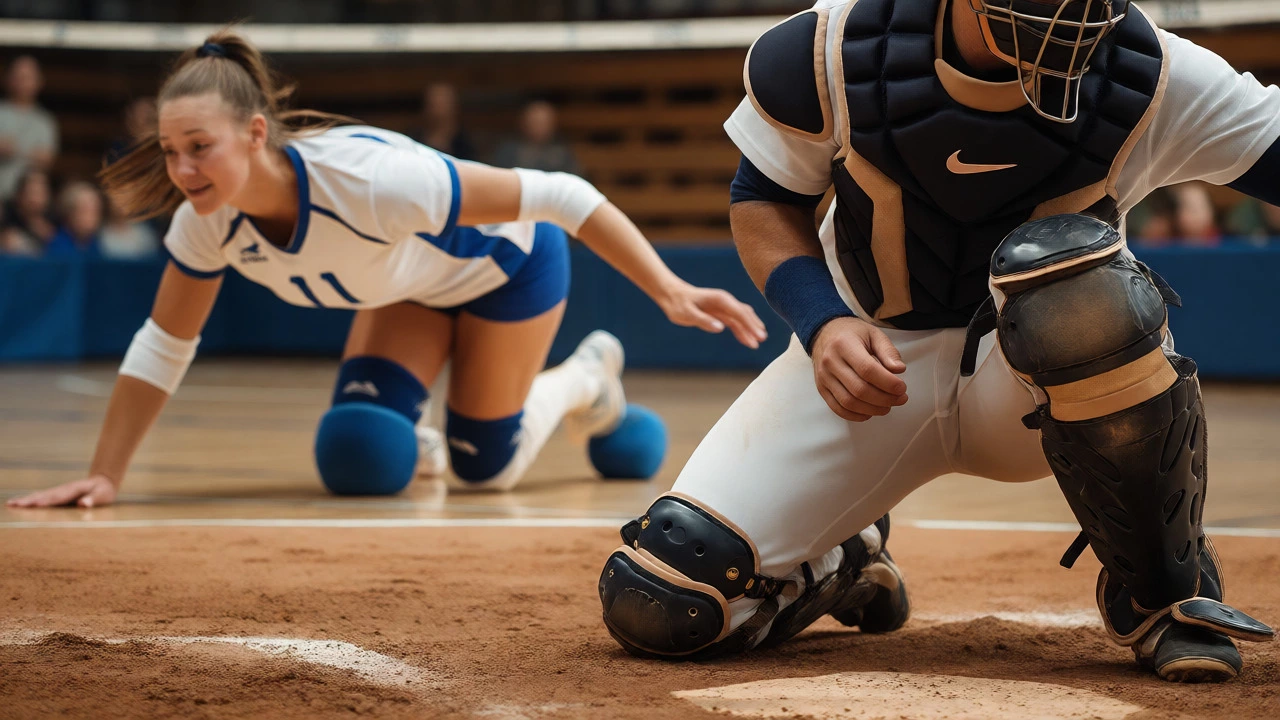
Your extremities take the brunt of falls and strikes. Think about volleyball. You dive for a ball, sliding across hardwood floors. Without knee pads, you risk abrasions and long-term joint inflammation. Volleyball players almost universally wear knee sleeves or pads during competitive play.
In soccer, shin guards are mandatory under FIFA laws of the game. Soccer cleats dig into turf, and studs can catch on opponents’ ankles. Shin guards, usually made of plastic or fiberglass backed with foam, shield the tibia-the bone most exposed when kicking or being kicked. Skipping them isn’t just against the rules; it’s a fast track to painful contusions or fractures.
| Sport | Primary Limb Gear | Material Type | Purpose |
|---|---|---|---|
| Soccer | Shin Guards | Plastic/Foam | Protect tibia from kicks and cleats |
| Volleyball | Knee Pads | Foam/Elastic | Prevent floor burns and joint strain |
| Baseball | Elbow Guards | Hard Plastic | Shield elbow from pitched balls |
| Hockey | Elbow/Shin Pads | Layered Foam/Plastic | Absorb body checks and stick hits |
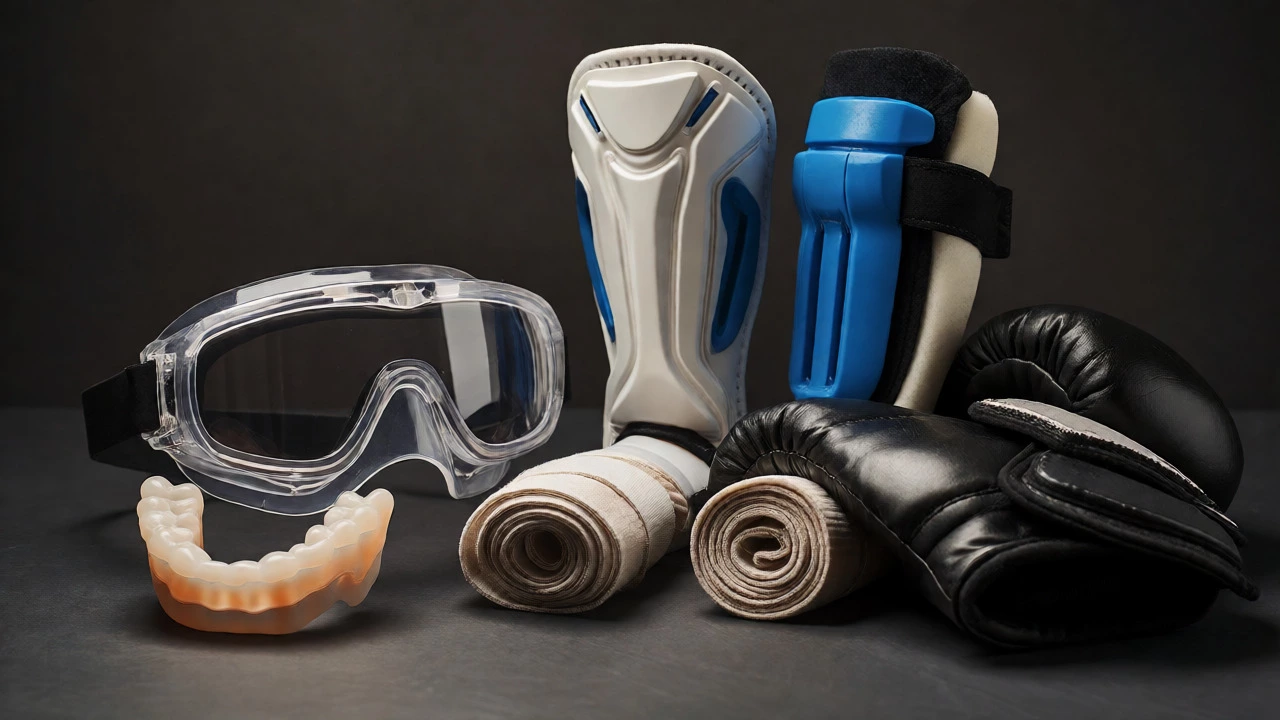
Boxing adds another layer. Hand wraps and gloves don’t just protect the opponent; they protect the boxer’s metacarpals. Punching a hard surface without wrapping compresses the small bones in the hand, leading to "boxer’s fracture," a break in the neck of the fifth metacarpal. Proper wrapping aligns the wrist and knuckles, distributing force evenly.
Specialized Gear: Mouthguards and Eye Protection
Often overlooked, mouthguards are arguably the most cost-effective protective device available. The American Dental Association recommends them for any sport with a risk of facial impact. In rugby, football, basketball, and lacrosse, custom-fitted mouthguards reduce the risk of dental injuries by up to 60%. They also help cushion the jaw, potentially reducing concussion severity by stabilizing the head-neck complex.
Eye protection has evolved beyond simple goggles. In racquet sports like squash, players must wear polycarbonate lenses meeting ASTM F803 standards. Squash balls move unpredictably off walls, and a direct hit to the eye can rupture the globe. Basketball players often wear protective glasses if they’ve had previous eye injuries, though this is less common than in squash or field hockey.
Is It Just Contact Sports? The Hidden Risks
Many people assume only collision sports need gear. Wrong. Skiing and snowboarding involve high speeds and hard surfaces (ice, trees, other skiers). Helmets are now standard practice, supported by studies showing a 41% reduction in head injury risk. Wrist guards are popular among snowboarders because falling forward naturally leads to extending arms to break the fall, often resulting in scaphoid fractures.
Even running has its niche gear. While not always mandatory, compression socks aid circulation and reduce muscle oscillation, potentially lowering injury risk. Trail runners wear ankle braces if prone to rolling ankles on uneven terrain. And let’s not forget swimming-goggles protect eyes from chlorine irritation, which sounds minor until you consider chronic exposure causing dry eye syndrome.
Choosing the Right Gear: Fit Matters More Than Brand
Owning equipment doesn’t equal safety. Poorly fitted gear fails. A helmet that slides around your head won’t stay aligned during impact. Shoulder pads that pinch restrict movement, causing players to hesitate, which increases injury risk. Always try gear on before buying. Check for pressure points, range of motion, and secure straps.
Consider maintenance too. Foam degrades over time. A five-year-old football helmet may look fine but have lost its shock-absorbing properties. Replace gear according to manufacturer guidelines or after significant impacts. Don’t buy used helmets unless you know their history; hidden cracks compromise integrity.
Do I really need a mouthguard for basketball?
Yes, strongly recommended. While basketball is technically a non-contact sport, accidental elbows to the face are frequent. Studies show basketball accounts for a significant number of dental injuries annually. A mouthguard costs little compared to dental repair bills.
Are soft scrum caps effective in rugby?
They protect against superficial injuries like cuts and cauliflower ear but do not prevent concussions or skull fractures. Their primary benefit is psychological comfort and reduced friction during rucks and mauls.
Why do cyclists need specific helmets?
Cycling helmets are designed for single-impact crashes typical of road falls. They are lighter and more aerodynamic than multi-sport helmets. Using a bike-specific helmet ensures proper ventilation and weight distribution for long rides.
Can I use football shoulder pads for rugby?
Generally no. Rugby requires greater freedom of movement for tackling and carrying the ball. Football pads are bulkier and restrict arm mobility. Rugby players typically wear minimal padding or none, relying on technique and softer materials.
How often should I replace my protective gear?
Inspect gear regularly. Replace helmets after any significant impact, even if no damage is visible. Foam-based pads should be replaced every 3-5 years as materials degrade. Follow manufacturer expiration dates printed inside the gear.