What Are Sports Equipment Made Of? Materials Explained
 Oct, 18 2026
Sports Equipment Material Explorer
Select a material below to discover its properties, ideal applications, and limitations based on modern sports engineering.
Material Name
Key Properties
Best For
Limitations
You grab a tennis racket, lace up running shoes, or strap on a helmet. It feels solid, light, and ready for action. But have you ever stopped to wonder what that gear is actually made of? It isn't just wood or leather anymore. Modern sports equipment is a complex mix of engineered polymers, high-tech metals, and advanced composites designed to push human performance limits.
This article breaks down the specific materials behind the gear you use. We will look at why certain plastics replace steel, how foam changes your stride, and what keeps your head safe during a crash. You do not need a chemistry degree to understand this. Just an interest in why your gear works the way it does.
The Rise of Synthetic Polymers
For centuries, athletes relied on natural materials like wood, animal hide, and wool. Today, those materials are mostly historical footnotes. The shift happened because natural resources vary too much. A wooden bat might have a weak spot; a leather ball absorbs water unevenly. Synthetic polymers offer consistency. They are chemically identical every time they come off the production line.
Polyethylene is one of the most common plastics in sports. You find it in hockey pucks, bowling balls, and protective padding. Why? Because it resists impact and doesn't crack easily in cold weather. When you hit a puck with a stick, the polyethylene core absorbs the shock without shattering.
Another key player is Nylon. This tough, elastic material dominates team sport uniforms and nets. Unlike cotton, nylon wicks sweat away from your skin. It dries quickly and holds its shape after hundreds of washes. If you have ever worn a wet cotton jersey in winter, you know why teams switched to synthetics decades ago.
Carbon Fiber and Composite Structures
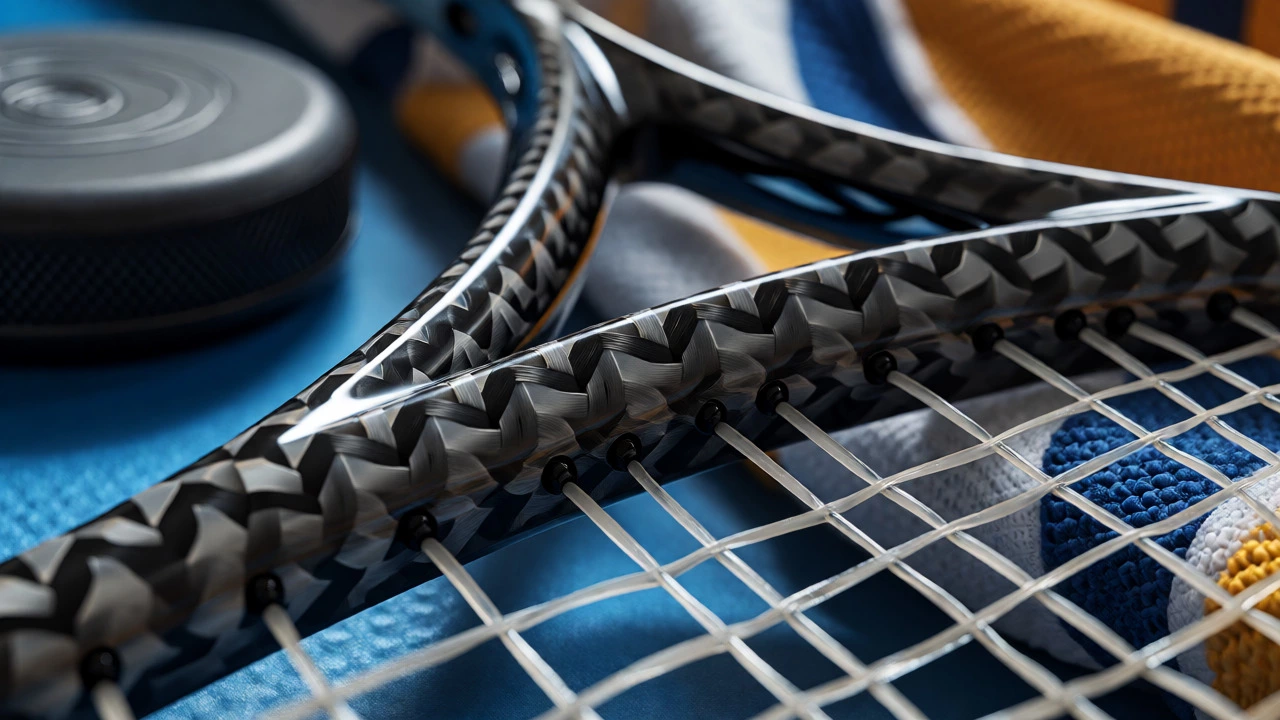
If polymers provide flexibility, carbon fiber provides stiffness without weight. This material consists of thin strands of carbon atoms woven into fabric and bonded with resin. The result is a composite that is stronger than steel but lighter than aluminum.
Cyclists love carbon fiber frames. A high-end road bike frame can weigh under 1 kilogram while maintaining rigidity. This means more power transfers from your legs to the wheels. Tennis rackets use similar technology. Older aluminum rackets vibrated heavily, causing arm fatigue. Carbon fiber dampens vibration and allows manufacturers to tune the flex point exactly where they want it.
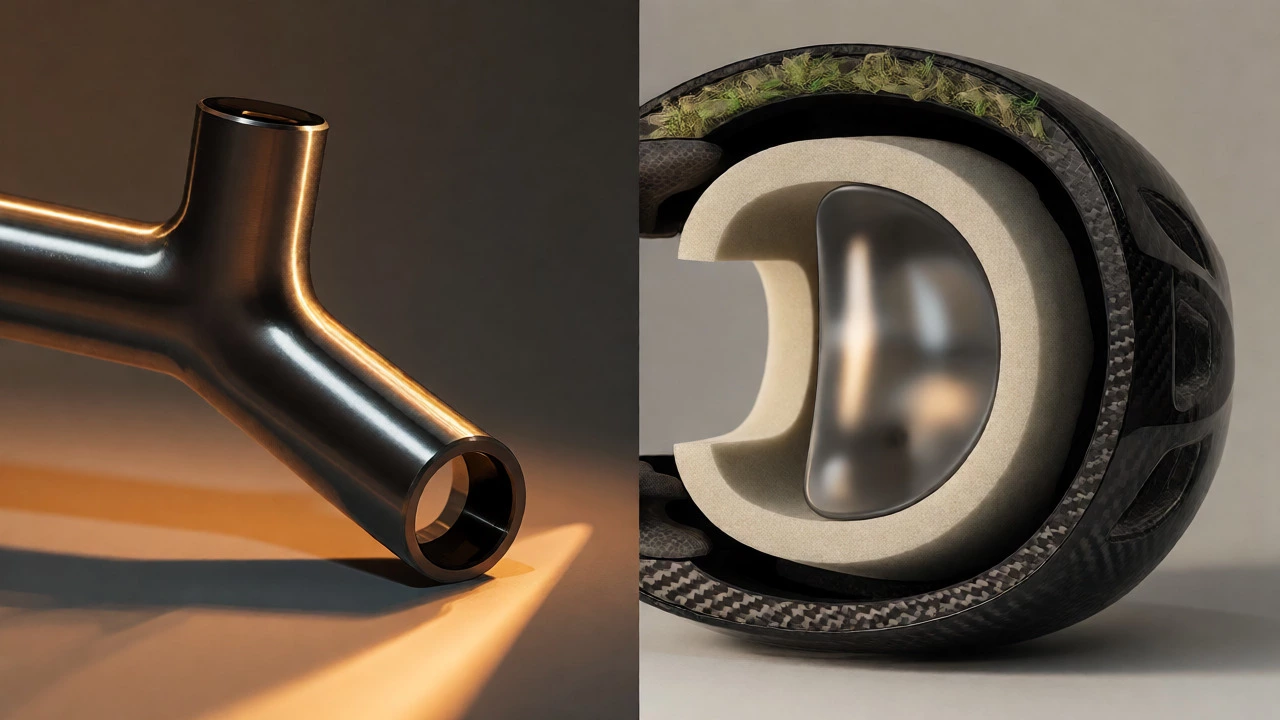
But carbon fiber has a downside. It is brittle under sharp impacts. While it handles bending forces well, a direct hit from a rock can crack it. That is why helmets often combine carbon shells with softer inner liners. The shell spreads the force, while the liner absorbs it.
Rubber Compounds and Grip Technology
Grip is everything in sports. Whether you are dribbling a basketball or cornering a motorcycle, friction determines success. Rubber compounds are formulated specifically for different surfaces and temperatures.
Natural rubber comes from latex trees. It offers excellent grip but wears out fast. Most modern athletic shoes use synthetic rubbers like styrene-butadiene rubber (SBR). Engineers tweak the chemical recipe to balance durability with traction. A basketball shoe needs sticky rubber for hardwood floors. A trail running shoe needs harder rubber that cuts through mud and rocks.
Consider soccer cleats. The studs are usually molded plastic or metal, but the soleplate-the part connecting the studs to the upper-is often a specialized thermoplastic. This plate must be stiff enough to prevent energy loss when you sprint, yet flexible enough to allow foot movement. Getting this balance wrong leads to blisters or reduced speed.

Foams and Impact Absorption
Protection relies on absorbing energy. When you fall, your gear must take the hit so your bones don't. Traditional stuffing used horsehair or straw. Now, we use engineered foams.
EVA foam (ethylene-vinyl acetate) is the standard for midsoles in running shoes. It is lightweight and compressible. However, EVA loses its bounce over time. After 300-500 miles, the cells break down, and the shoe feels flat.
Newer technologies like PEBAX address this issue. PEBAX is a thermoplastic elastomer that returns more energy with each step. Marathon runners now favor shoes with PEBAX plates and foams because they reduce metabolic cost. Essentially, you run faster using less oxygen.
In contact sports like football and rugby, helmets use multi-layered foam systems. Outer layers manage rotational forces, while inner layers handle linear impacts. Some brands even use air pockets or fluid-filled chambers that harden upon sudden impact, offering comfort during normal play but rigid protection during crashes.
Metals: From Steel to Titanium
Not everything is plastic. Metals still play a crucial role, especially in striking implements and structural components.
Aluminum alloys dominate baseball bats and golf clubs. Aluminum is cheap, easy to machine, and durable. However, it transmits vibration poorly compared to newer options. This led to the rise of titanium in high-end gear.
Titanium is stronger than aluminum and lighter than steel. It also resists corrosion better. You see titanium in lacrosse heads, fishing rods, and premium bicycle components. The trade-off is cost. Titanium is expensive to process. For casual players, aluminum remains the smart choice. For professionals chasing milliseconds, titanium’s strength-to-weight ratio justifies the price tag.
Steel hasn’t disappeared entirely. Weightlifting bars rely on steel for its predictable elasticity. A barbell needs to bend slightly under load and snap back. This "whip" helps lifters generate momentum. No other material replicates this specific behavior as reliably as high-grade steel.
| Material | Primary Use | Key Advantage | Limitation |
|---|---|---|---|
| Carbon Fiber | Bikes, Rackets, Helmets | High stiffness, low weight | Brittle under sharp impact |
| Polyethylene | Pucks, Padding, Balls | Impact resistance, low cost | Can deform under heat |
| EVA Foam | Shoe Midsoles, Mats | Lightweight, cushioning | Degrades with mileage |
| Titanium | Lacrosse, Golf, Bikes | Strength-to-weight ratio | High manufacturing cost |
| Nylon | Uniforms, Nets, Strings | Moisture-wicking, durable | Less breathable than wool |
Sustainability and Future Materials
The industry faces pressure to reduce waste. Rubber tires and plastic bottles pile up in landfills. Manufacturers are responding by recycling materials into new gear.
Some running shoes now use recycled ocean plastics for their uppers. Bicycle frames incorporate bio-resins derived from plants instead of petroleum-based epoxies. These changes don't always sacrifice performance. In fact, some recycled polyesters breathe better than virgin plastics.
Look for labels mentioning "recycled content" or "bio-based." As of 2026, major brands aim for 50% recycled materials in their product lines by 2030. This shift affects what you buy. Sustainable gear might feel slightly different initially, but it performs nearly identically to traditional counterparts.
How to Choose Gear Based on Material
Understanding materials helps you shop smarter. Here is a quick guide:
- For Speed: Look for carbon fiber or titanium. These materials minimize weight and maximize energy return.
- For Durability: Choose high-density polyethylene or reinforced nylon. These resist abrasion and impact damage.
- For Comfort: Prioritize PEBAX or advanced EVA foams. They maintain cushioning longer than basic foams.
- For Wet Conditions: Select hydrophobic coatings and closed-cell foams. Open-cell foams absorb water and become heavy.
Always check the care instructions. Heat degrades most polymers. Leaving a yoga mat in a hot car can warp it. Storing a tennis racket in freezing temperatures can make the strings brittle. Proper maintenance extends the life of these engineered materials.
Why is carbon fiber so expensive?
Carbon fiber requires complex manufacturing processes. The fibers must be precisely aligned and cured under high heat and pressure. This labor-intensive process, combined with the cost of raw carbon precursors, drives up the price. However, the performance benefits in weight savings justify the cost for competitive athletes.
Are synthetic fabrics worse than natural ones?
Not necessarily. Synthetics like polyester and nylon excel at moisture management and durability. Natural fibers like cotton absorb sweat, making them heavy and slow-drying. Wool offers temperature regulation but can itch and shrink. Modern blends often combine the best traits of both worlds.
How long do running shoe foams last?
Most standard EVA foams degrade significantly between 300 and 500 miles. High-performance foams like PEBAX or nitrogen-infused compounds can last longer, sometimes exceeding 600 miles. Signs of wear include visible creasing, loss of rebound, or increased joint pain after runs.
Is aluminum weaker than steel?
In terms of pure tensile strength, yes. However, aluminum has a better strength-to-weight ratio. For portable equipment like bats and bikes, reducing weight is often more critical than absolute strength. Engineers compensate for aluminum's lower strength by using thicker walls or alloying it with other metals.
What makes a helmet safe?
Safety depends on the combination of outer shell hardness and inner liner density. The shell distributes impact force across a wider area, while the liner crushes to absorb energy. Certifications like ASTM or Snell ensure the helmet meets minimum impact absorption standards under controlled tests.