What Are Golf Courses Called? Understanding Links, Parkland, and Heathlands
 Aug, 3 2026
Golf Course Type Identifier
Course Characteristics
Analysis Result
Select the characteristics of the golf course you are analyzing to see the result.
You’ve heard the term "links" thrown around in golf magazines and on TV broadcasts. You might even think it’s just a fancy word for any place you can hit a ball into a hole. But here is the thing: not all golf courses are created equal, and they definitely aren’t all called the same thing. The name of a golf course often tells you exactly what kind of experience you’re about to have.
When you ask, "what are golf courses called?" you are really asking about the terrain, the history, and the design philosophy behind the land. Is it a sandy dune landscape by the sea? A manicured park with trees? Or a rugged, rocky stretch of land? Each type has a specific name, and knowing these names helps you understand the game better. It also helps you choose where to play based on your skill level and what you enjoy.
The Original: What Is a Links Course?
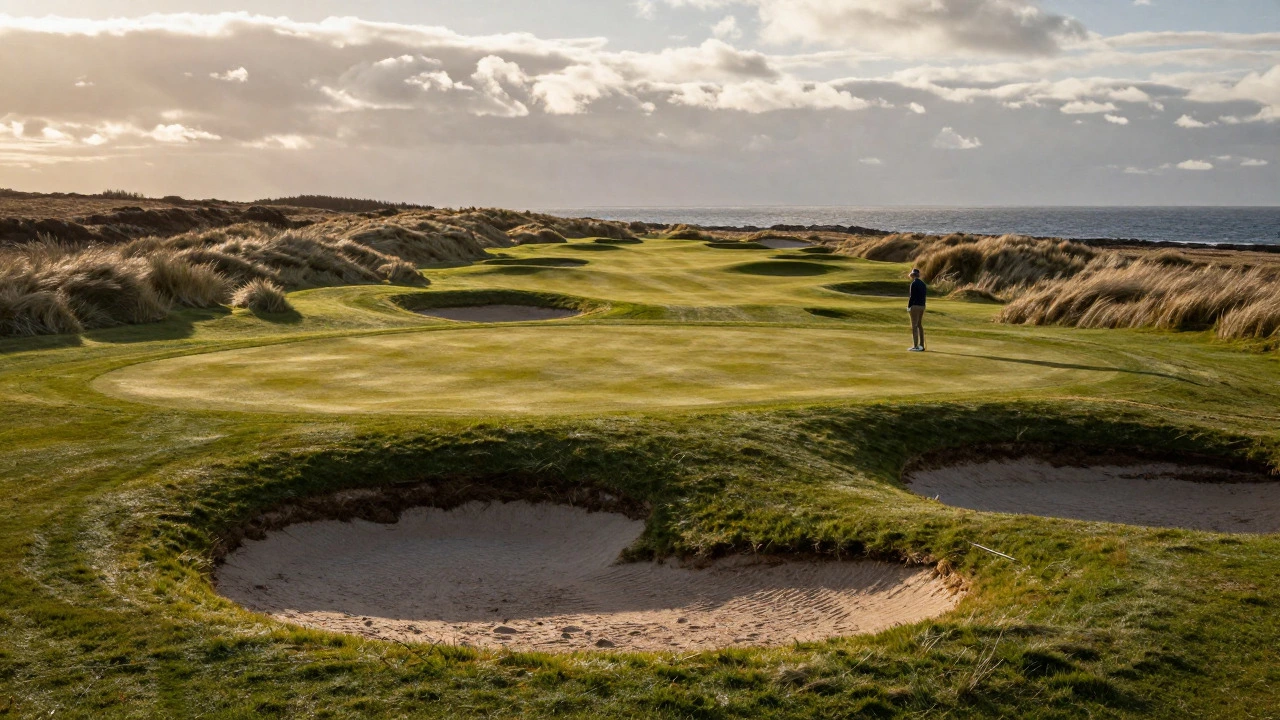
If we go back to the roots of the sport, we find the Links a type of golf course built on coastal sand dunes, characterized by firm turf, few trees, and deep bunkers. This is the oldest form of golf course. The word comes from the Old English "link," which means raised ground or ridge. These courses are almost exclusively found in Scotland and Ireland, though you can find them in other coastal areas like New Zealand and parts of the United States.
So, what makes a links course a links course? It’s all about the natural environment. Imagine walking along a beach, but instead of water, you have rolling hills of sand. There are no trees because the salt spray and wind kill most vegetation. The grass is tough and low-growing, usually bentgrass or fescue. The fairways are narrow, and the rough is thick and unforgiving.
- Terrain: Sandy soil that drains quickly. The ground is hard and firm.
- Vegetation: Very few to no trees. Bushes are sparse.
- Wind: Almost always windy, which changes how the ball flies.
- Bunkers: Deep, pot-like bunkers filled with sand that is difficult to escape from.
Playing a links course requires a different strategy than playing in a park. You can’t rely on high, soft shots. Instead, you need to keep the ball low and use the ground to your advantage. Bouncing shots become part of your arsenal. Famous examples include St Andrews in Scotland and Royal County Down in Northern Ireland. If you see a course with white sand bunkers and a view of the ocean, you are likely looking at a links layout.
The Common Standard: Parkland Golf Courses
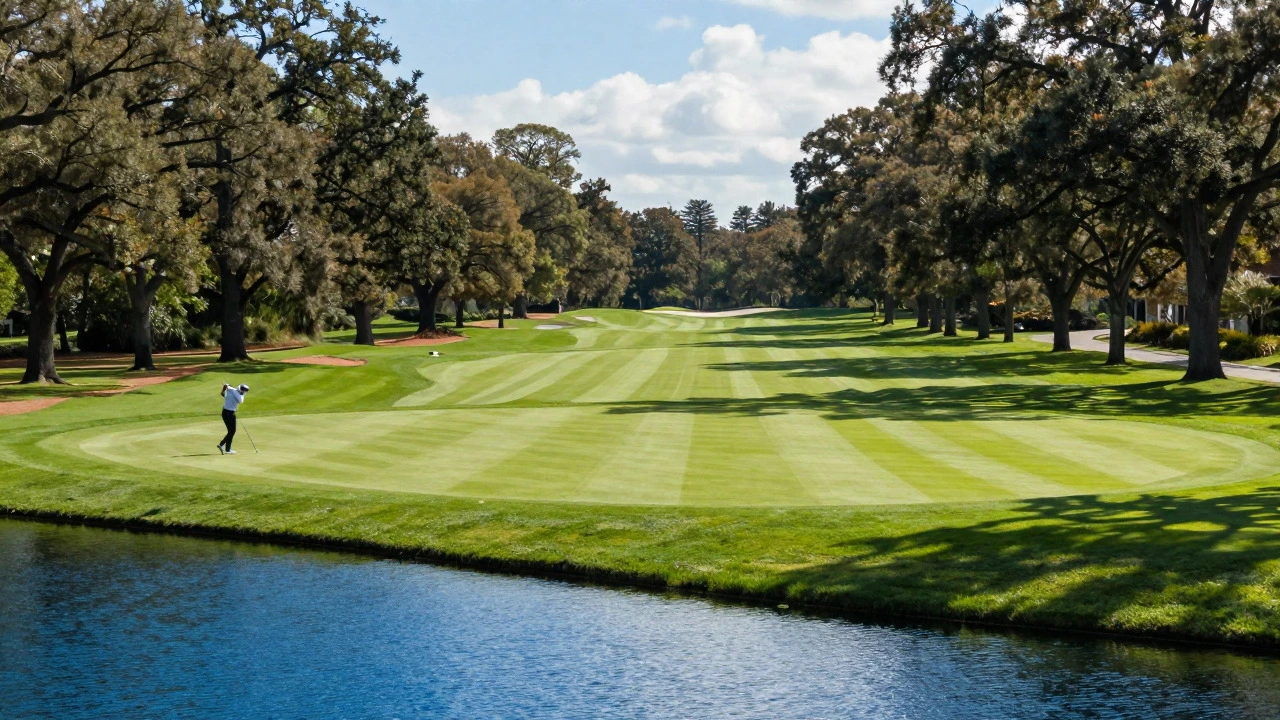
Now, let’s talk about what most people actually play. If you live in North America, Australia, or many parts of Europe, the course near you is probably a Parkland Course a golf course designed to resemble a public park, featuring lush fairways, tree-lined holes, and water hazards. This style emerged in the late 19th century as golf moved away from the coasts and into inland areas. Designers wanted to create beautiful, picturesque landscapes that felt like a walk through a botanical garden.
Parkland courses are defined by their aesthetics and accessibility. They feature wide, well-manicured fairways, large greens, and plenty of trees lining the holes. Water hazards-ponds, lakes, and streams-are common features used to add difficulty and visual appeal. The soil is usually clay-based, which holds moisture, making the turf softer and greener than on a links course.
For the average golfer, parkland courses are more forgiving. You can hit higher shots because the ground is soft. Trees provide shade and define the playable area. If you miss a shot left or right, you might end up in a tree, but you won’t be dealing with deep sand traps or blinding winds. Augusta National, home of the Masters Tournament, is perhaps the most famous parkland course in the world. Its pristine condition and tree-lined fairways set the standard for this style.
The Rugged Alternative: Heathland Courses
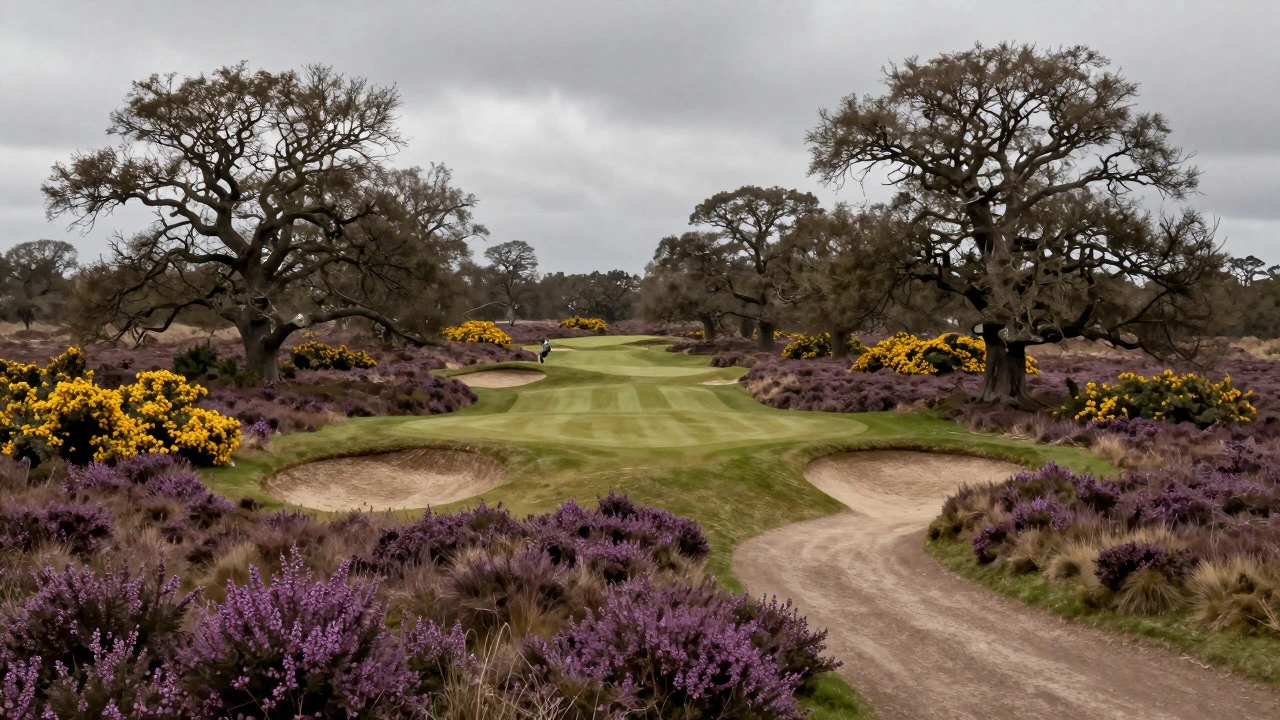
Between the coastal links and the lush parklands sits the Heathland Course a golf course built on acidic, sandy soil with heather, gorse, and small trees, offering a wilder, more natural challenge. Heathland courses are less common but highly respected among purists. They originated in England, particularly in the East Anglia region. Unlike links courses, heathlands are not necessarily by the sea, but they share similar soil conditions-acidic and sandy.
Imagine a landscape covered in heather, gorse bushes, and small, twisted oak trees. The fairways are narrower than parklands, and the rough is thick with native vegetation. The bunkers are often shaped naturally rather than dug out artificially. Playing a heathland course feels like navigating a wild forest. You need precision because there is very little room for error. The wind plays a role here too, but the trees offer some shelter compared to open links.
Famous heathland courses include Royal Liverpool (home of the British Open) and Muirfield Village. These courses test your creativity. You can’t just blast the ball; you have to work around obstacles. The beauty of a heathland course is its raw, untamed look. It doesn’t feel manicured; it feels alive. If you enjoy a challenge that feels ancient and rugged, a heathland course is for you.
Other Terms You Might Hear
Golf terminology can get confusing. Beyond the three main types, there are other terms that describe specific aspects of a course. Let’s clear up some common misconceptions.
| Feature | Links | Parkland | Heathland |
|---|---|---|---|
| Location | Coastal | Inland, Urban/Suburban | Inland, Rural |
| Soil Type | Sandy | Clay/Rich | Acidic/Sandy |
| Trees | Few/None | Many | Small/Oak |
| Difficulty | High (Wind/Ground) | Medium (Hazards) | High (Precision) |
| Example | St Andrews | Augusta National | Royal Liverpool |
You might hear the term "resort course." This isn’t a terrain type but a business model. Resort courses are often built on challenging land-sometimes combining elements of links, parkland, and heathland-to attract tourists. They tend to be longer and more difficult than municipal courses. Similarly, a "municipal course" refers to ownership, not design. These are owned by the city and are usually affordable and accessible to everyone.
Another term is "executive course" or "nine-hole course." These are shorter layouts designed for quick rounds. They don’t fit neatly into the links/parkland/heathland categories because they prioritize speed over tradition. Finally, there are "desert courses," found in places like Arizona and Dubai. These use irrigation to create green oases in arid landscapes. They are technically parkland-style but require massive amounts of water to maintain.
Why Does the Name Matter?
Understanding what a golf course is called matters because it sets expectations. If you book a tee time at a links course, expect wind, firm ground, and a strategic challenge. Bring your A-game and be prepared to adapt. If you choose a parkland course, expect a beautiful walk, manageable hazards, and a focus on accuracy off the tee. For heathland, prepare for tight fairways and creative shot-making.
Knowing these differences also helps you appreciate the history of the game. Golf started on the links because that was the only available land. As the sport grew, designers adapted to new environments, creating parklands and heathlands. Each type reflects the culture and geography of its location. Next time you pick up your clubs, take a moment to look around. Are you standing on ancient dunes or a manicured lawn? The answer tells you everything you need to know about the round ahead.
What is the difference between a links and a parkland course?
A links course is built on coastal sand dunes with few trees, firm ground, and strong winds. A parkland course is inland, features lush fairways, many trees, and water hazards. Links courses demand strategic ground play, while parklands focus on aerial shots and accuracy.
Are all golf courses called links?
No. Only courses built on specific coastal dune terrain are true links. Most modern courses are parkland or heathland styles. Using "links" for any course is a common misconception.
What is a heathland golf course?
A heathland course is built on acidic, sandy soil with native vegetation like heather and gorse. It features narrow fairways, small trees, and natural bunkers. It offers a rugged, challenging experience distinct from both links and parkland courses.
Which type of golf course is best for beginners?
Parkland courses are generally best for beginners. They have wider fairways, softer ground, and fewer extreme weather challenges. Links and heathland courses require more advanced skills and strategic thinking.
Can a course be both a links and a parkland?
Rarely. True links courses are defined by their natural coastal environment. Some courses may blend elements, such as having tree-lined holes on sandy soil, but they usually lean heavily toward one category. Hybrid designs are uncommon in traditional golf architecture.