How to Choose the Right Yoga Class for Beginners in 2026
 Aug, 23 2026
Yoga Class Finder for Beginners
Answer three quick questions to find the perfect starting point for your yoga journey.
Flexibility & Mobility
I want to loosen up tight muscles.Stress Relief
I need to relax my mind and body.Build Strength
I want a gentle physical workout.Mostly Sedentary
Desk job, little exercise.Moderately Active
Walk daily or light gym work.Very Active
Regular intense workouts.No Major Issues
Generally healthy and pain-free.Back or Knee Pain
Occasional discomfort in joints.Recent Injury
Recovering or dealing with acute pain.Your Recommended Start
Description goes here...
Class Metrics
Before You Book
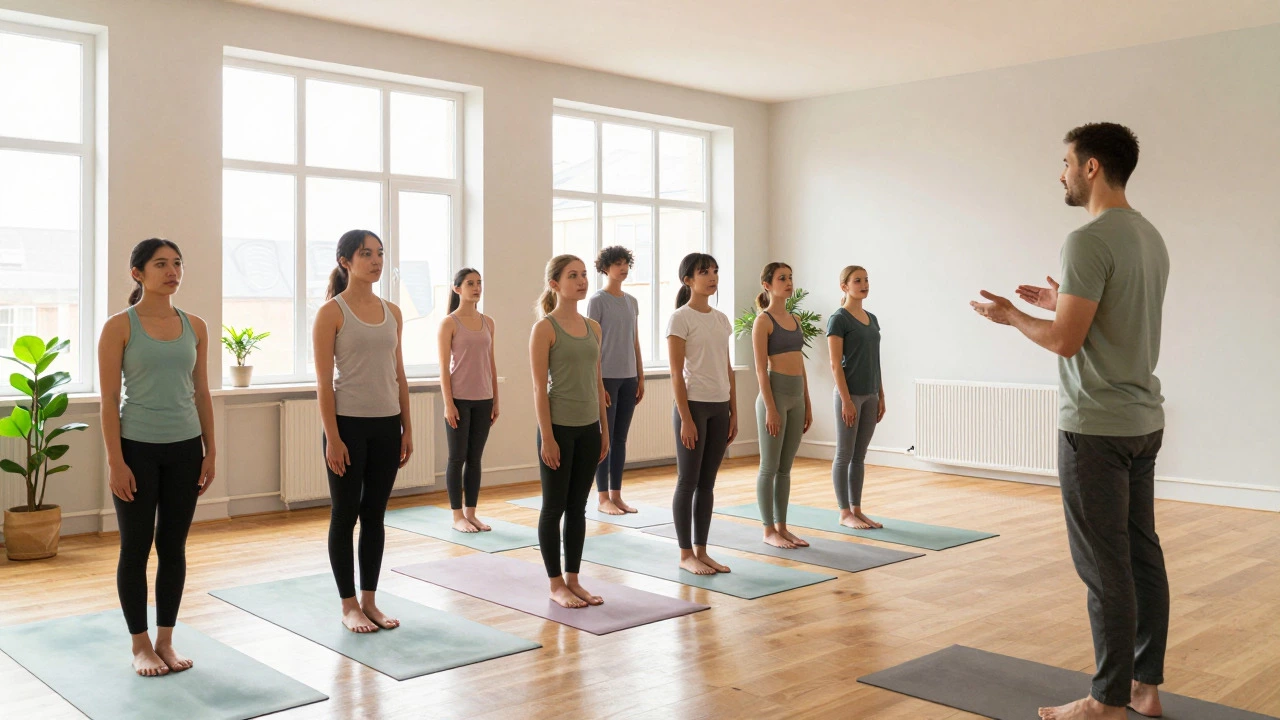
Walking into a new yoga class is like walking into a foreign language. You see people holding poses you can't name, listening to instructions that sound like poetry, and wondering if you're stiff enough or flexible enough. The truth? You don't need to be anything but willing. But picking the wrong style on day one can make you quit before week two. So, how do you find the right fit without guessing?
The short answer: avoid high-intensity flows first. Look for slow-paced, foundational styles that prioritize alignment over speed. Your body needs time to learn the vocabulary of movement before it can speak fluently.
Quick Summary / Key Takeaways
- Hatha yoga is the safest starting point because it moves slowly and focuses on basic postures.
- Avoid Vinyasa or Power yoga until you have at least 3-4 weeks of consistent practice.
- Check the class description for words like "beginner-friendly," "slow pace," or "alignment-focused."
- Arrive 15 minutes early to talk to the instructor; their teaching style matters more than the room's decor.
- Bring your own mat if the studio doesn't provide them, as hygiene and comfort are personal preferences.
Understanding the Landscape of Yoga Styles
Not all yoga is created equal. In fact, there are dozens of distinct styles, each with a different tempo, intensity, and focus. For a beginner, the main confusion comes from mixing up physical demand with spiritual depth. You might think "gentle" means easy, but sometimes gentle classes require deep concentration, which can be mentally exhausting if you're not used to it.
Let's break down the three most common styles you'll encounter in studios across the US and Europe:
- Hatha yoga is a foundational style that holds poses for several breaths, allowing students to learn proper alignment and breathing techniques without rushing. It’s the textbook approach. If you’ve never done yoga, this is where you start.
- Vinyasa yoga is a dynamic form of yoga that links movements together in a flowing sequence, often synchronized with the breath. Think of it as a dance. It’s great for building stamina but can be overwhelming if you don’t know the basics yet.
- Restorative yoga is a passive style that uses props like bolsters and blankets to support the body in comfortable positions for extended periods. This is excellent for stress relief but less effective for learning active movement patterns.
If you’re choosing between these, Hatha is your best friend. It gives you the tools. Vinyasa uses those tools. Restorative helps you recover while using them.
Reading Class Descriptions Like a Pro
Studios often use marketing buzzwords that can mislead beginners. When you look at a schedule online, ignore the pretty pictures and read the text carefully. Here’s what to look for and what to avoid:
| Style | Pace | Physical Demand | Mental Focus | Best For |
|---|---|---|---|---|
| Hatha | Slow | Low-Medium | High (Alignment) | First-timers |
| Vinyasa | Fast | Medium-High | Medium (Flow) | Intermediate practitioners |
| Ashtanga | Structured | High | Very High (Discipline) | Experienced yogis |
| Yin | Very Slow | Low | High (Internal sensation) | Flexibility & recovery |
Look for phrases like "foundational," "alignment-based," or "all levels welcome." Be cautious of terms like "power," "hot," or "athletic" unless you specifically want a sweat session. A "Hot Yoga" class, for instance, is practiced in a room heated to around 95-105°F (35-40°C). While some love the heat, many beginners find it dries out their joints and makes balance poses harder due to slippery floors.

Assessing Your Own Physical Readiness
Before you book, ask yourself three honest questions. These aren’t about fitness levels-they’re about constraints.
- Injuries: Do you have lower back pain, knee issues, or wrist problems? If so, tell the instructor before class. Good teachers offer modifications. If they don’t, it might be a sign to try a different studio.
- Time Availability: Can you commit to 60 minutes? Some intro classes are only 45 minutes. Don’t overschedule. Consistency beats intensity.
- Comfort Level: Are you okay with changing clothes in a communal locker room? Or do you prefer to wear comfortable workout clothes to class? Both are valid, but knowing your preference helps you choose the right environment.
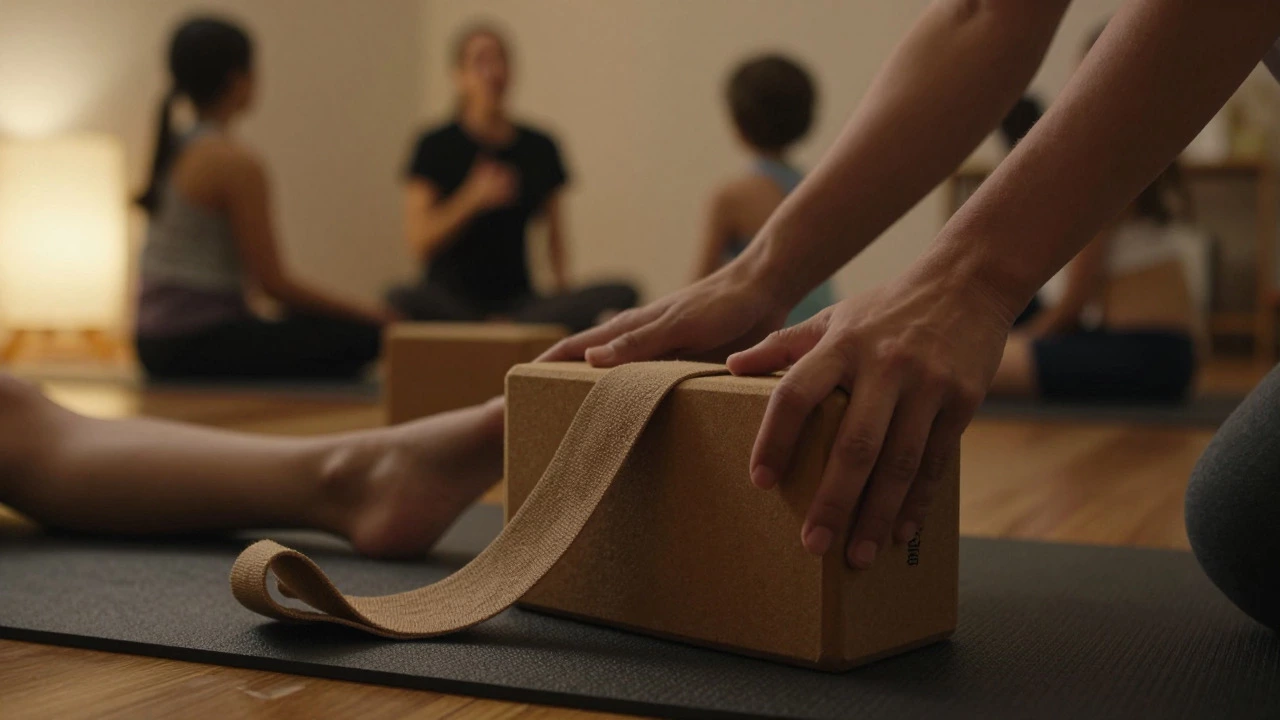
If you have limited mobility, look for classes that explicitly mention prop usage. Props like blocks, straps, and bolsters aren’t crutches-they’re tools that help you enter poses safely without forcing your range of motion.
The Importance of Instructor Style
You can have the perfect Hatha class on paper, but if the instructor talks too fast or skips cues, you’ll feel lost. Every teacher has a unique voice. Some are silent and let the music guide you. Others are chatty and give detailed anatomical explanations. Neither is better, but one will resonate with you more.
Here’s a pro tip: Watch a free YouTube video of the specific instructor if possible. If they teach at a local studio, check their social media. Listen to their tone. Do they sound encouraging? Do they explain *why* you’re doing a pose, or just *how*? For beginners, the "why" builds confidence. The "how" builds habit. You need both.
Also, consider the class size. A small group of 8-12 people allows the instructor to spot your form. A large class of 30+ people means you’re on your own. If you’re self-motivated, big classes are fine. If you need guidance, go small.
Practical Steps to Book Your First Class
Ready to take action? Follow these steps to minimize friction and maximize success.
- Choose a Studio Within Walking Distance or Easy Transit: Convenience is key. If the commute is annoying, you won’t go. Pick a place within 15 minutes of your home or office.
- Sign Up for a Drop-In or Intro Offer: Most studios offer a discounted first-class rate or a free trial. Use it. Don’t buy a monthly membership yet. Try once or twice.
- Arrive Early: Get there 10-15 minutes before start time. Settle your mat, say hi to the teacher, and ask, "I’m new-what should I expect?" They’ll appreciate the question and likely adjust their attention to you.
- Stay for the Savasana: The final relaxation pose (Savasana) is where the benefits consolidate. Leaving early feels rushed and disrespectful. Stay for the full duration.
- Reflect Afterwards: Did you feel energized or drained? Confused or clear? Write down one thing you liked and one thing you didn’t. This data helps you decide whether to return.
Common Mistakes Beginners Make
Even with the best intentions, beginners often trip up. Avoid these pitfalls:
- Comparing Yourself to Others: The person next to you might have been practicing for five years. Their flexibility isn’t a benchmark for you. Your only comparison is yesterday’s you.
- Skipping Warm-Ups: Cold muscles are injury magnets. Even if you think you’re warm, take the extra minute to move gently before jumping into poses.
- Forcing Poses: Yoga isn’t gymnastics. If a pose hurts sharply, back off. Discomfort is normal; pain is not. Use props to bridge the gap.
- Expecting Instant Results: Flexibility takes weeks. Stress relief can happen in one session, but structural changes take time. Be patient with your progress.
Frequently Asked Questions
Do I need special clothing for my first yoga class?
No, you don’t need expensive gear. Wear comfortable, stretchy clothing that allows you to move freely. Many studios provide mats, but bringing your own is cleaner and more hygienic. If you don’t have a mat, ask the front desk if they rent them (usually for $3-$5).
What is the difference between Hatha and Vinyasa for a beginner?
Hatha is slower and holds poses longer, making it ideal for learning alignment. Vinyasa flows continuously from one pose to the next, which requires more coordination. Start with Hatha to build the foundation, then transition to Vinyasa when you feel confident in your basic movements.
Is hot yoga good for beginners?
It depends. Heat can increase flexibility temporarily, but it also increases the risk of dehydration and slipping. If you tolerate heat well, a mild hot class (around 90°F/32°C) can be fine. However, traditional Hatha or Vinyasa in a cool room is generally safer and more focused for true beginners.
How often should a beginner attend yoga classes?
Aim for 2-3 times per week initially. This frequency is enough to build a habit without causing excessive soreness. Quality matters more than quantity. One focused hour is better than three distracted sessions.
What if I’m not flexible at all?
That’s perfectly normal. Yoga improves flexibility over time, not the other way around. Instructors always offer modifications. If you can’t touch your toes, use a strap. If you can’t get your hips low, use a block. The goal is to feel the stretch, not to force it.