Essential Track and Field Equipment Guide
 Sep, 6 2026
Track & Field Equipment Selector
Select your primary event and details below to get specific equipment recommendations regarding footwear, implements, and safety gear.
You step onto the oval, lacing up shoes that cost more than your first car, holding a pole that feels like it weighs nothing but can launch you six meters into the air. It’s easy to look at track and field and think it’s just people running fast or jumping high. But behind every personal best is a specific piece of track and field equipment designed with obsessive precision. Whether you are a beginner trying to figure out what to buy for school sports day, or a club athlete looking to upgrade your kit, knowing the difference between a generic sneaker and a proper sprint spike matters. It’s not just about performance; it’s about safety and compliance with World Athletics regulations.
Footwear: The Foundation of Speed
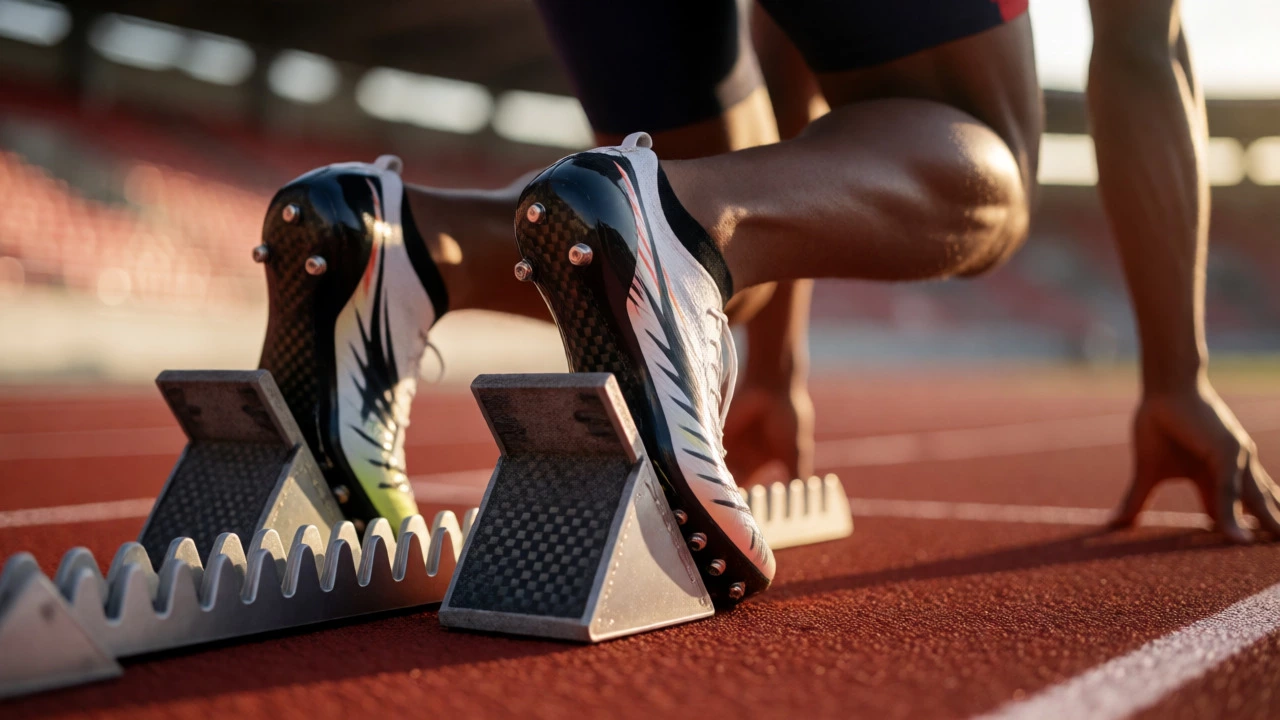
If there is one piece of gear that makes the biggest immediate difference, it’s your shoes. You cannot run a competitive 100m dash in standard gym trainers. The mechanics of sprinting require explosive force transfer from the foot to the ground, and soft foam soles absorb too much energy. This is where running spikes come in. These are lightweight shoes with rigid plates and metal pins on the sole to grip the synthetic track surface.
Sprints, middle distance, and long-distance events all require different spike configurations. Sprint spikes have stiff carbon-fiber plates and fewer, longer pins (usually 6mm) because you spend very little time on the ground per stride. Distance spikes, conversely, have more cushioning and shorter pins (4-5mm) to protect your feet over thousands of steps. A common mistake beginners make is buying a "versatile" spike. In reality, using a distance spike for sprints feels sluggish, while using a sprint spike for a 5000m race will leave your feet bruised by kilometer three.
Throwing Implements: Weight and Balance
Field events involving throws-shot put, discus, hammer, and javelin-are governed by strict weight and dimension rules set by World Athletics. Unlike running, where technique is paramount, the implement itself defines the event. If you pick up a shot put that is two kilograms too light, you aren’t training correctly. The center of gravity must be precise.
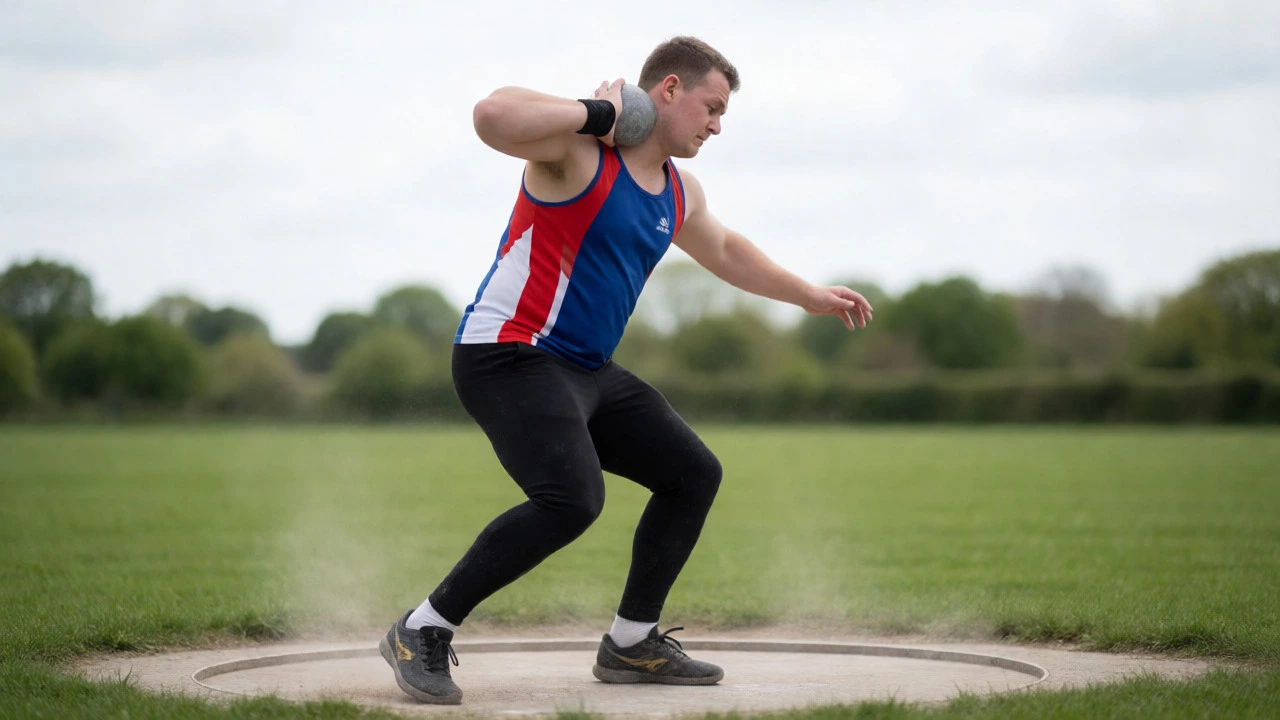
The shot put is a solid metal sphere. For men, it weighs 7.26kg; for women, 4kg. Junior categories use lighter weights, often 5kg or 3kg. The material varies; indoor shots might be filled with lead or steel, while outdoor ones are often solid iron or brass. Discuses are flat, circular discs made of wood or plastic with a metal rim. The key here isn't just weight, but aerodynamics. A poorly balanced discus wobbles in flight, losing distance. Hammer throws involve a wire handle attached to a metal head, requiring athletes to spin multiple times before release. Javelins are spear-like implements with a corded grip, designed to fly based on their angle of attack.
Jumping Gear: Poles and Landing Systems
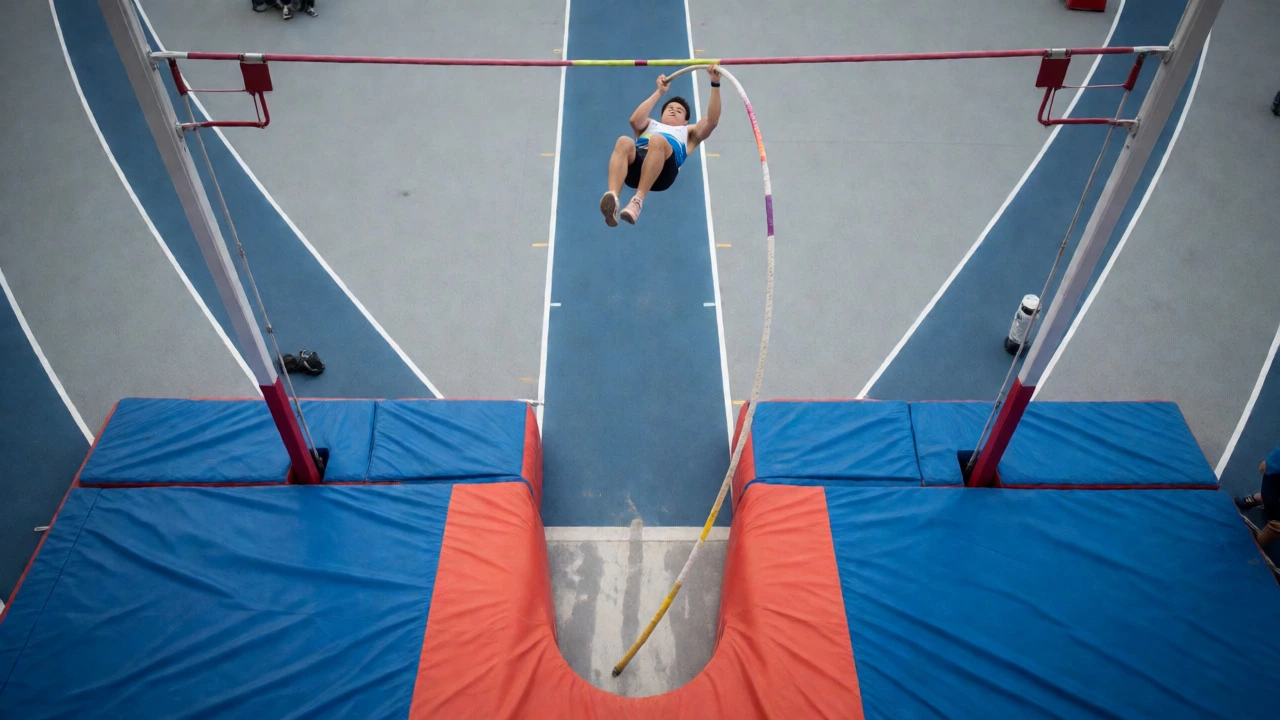
Pole vaulting looks dangerous because it is. The primary equipment here is the vaulting pole, which has evolved from bamboo to fiberglass and now mostly carbon fiber composites. These poles store kinetic energy when bent and release it to lift the vaulter. Choosing the right pole is an art form. It depends on the athlete's height, speed, and strength. A pole rated for 100kg will snap if a 90kg athlete plants it incorrectly, but it won't bend enough for a 60kg athlete to generate lift.
High jumpers don't carry much gear besides their shoes, but they rely heavily on the landing mat. Modern high jump mats are thick, rectangular foam blocks covered in vinyl. They need to be large enough to catch an athlete falling backward from heights exceeding two meters. Long jumpers and triple jumpers focus on their approach run and takeoff board. The takeoff board is a white strip embedded in the runway. Hitting it precisely is critical; stepping past means a foul. The sand pit behind it must be raked smooth after every jump to ensure consistent landing conditions.
Track Accessories: Blocks, Bibs, and Hydration
Sprinters start from a crouch, pushing off against starting blocks. These are adjustable metal or composite frames anchored into the track. Proper setup involves setting the front block at a 45-degree angle and the rear block at 75 degrees, though individual preference plays a huge role. Beginners often set them too far apart, making it hard to drive forward efficiently.
Beyond the big machinery, small accessories count. Race bibs are pinned to the chest and back. Using safety pins instead of magnets prevents tearing your jersey during intense movement. Hydration is non-negotiable. Athletes use handheld water bottles or wear hydration vests for long distances. During meets, cooling towels soaked in ice water help lower body temperature between events. Sunglasses are also vital for outdoor events, reducing glare from the sun which can disorient jumpers and throwers tracking their implements.
| Equipment Type | Primary Material | Key Feature | Best For |
|---|---|---|---|
| Sprint Spikes | Carbon Fiber Plate | Rigid sole, 6mm pins | 100m - 400m races |
| Distance Spikes | EVA Foam/Mesh | Cushioning, 4mm pins | 800m - Marathon |
| Vaulting Pole | Fiberglass/Carbon | Energy return rating | Pole Vault |
| Shot Put | Iron/Lead/Brass | Fixed weight/diameter | Throwing Events |
| Starting Blocks | Aluminum/Composite | Adjustable pedal angles | Sprint Starts |
Choosing the Right Gear for Your Level
Not everyone needs professional-grade equipment immediately. If you are new to the sport, start with entry-level spikes. Brands like Nike, Adidas, and Asics offer affordable options that provide the necessary structure without the price tag of elite models. For throwing, check if your local club has shared implements. Buying a full set of hammers and discs is expensive and heavy to transport. Most clubs own them, allowing you to practice technique before investing.
Consider the surface you train on. Running spikes with metal pins are designed for synthetic tracks. If you train on grass or dirt trails, you need trail spikes or cross-country shoes with deeper lugs. Using track spikes on concrete destroys the pins quickly and increases injury risk due to lack of shock absorption. Always replace worn-out equipment. A cracked pole or a shoe with detached soles can cause catastrophic failure mid-event.
Maintenance and Safety Checks
Taking care of your gear extends its life and ensures safety. Clean spikes after every session; mud and debris clog the pins, reducing traction. Store poles vertically in cool, dry places to prevent warping. Inspect throwing implements for cracks or rust, especially on the grip areas. A slippery javelin or a rough-edged discus can cause hand injuries. Regularly check the anchors on starting blocks; loose fittings can shift under pressure, ruining a start.
Do I really need special shoes for track and field?
Yes, specifically for racing. While general athletic shoes are fine for warm-ups, racing requires spikes. Sprint spikes maximize energy return and grip on synthetic surfaces, whereas regular sneakers absorb energy and slip on curved tracks, slowing you down and increasing injury risk.
What is the standard weight for a shot put?
For senior men, the standard weight is 7.26 kg (16 lbs). For senior women, it is 4 kg (8.8 lbs). Junior categories use lighter weights, such as 5 kg for boys and 3 kg for girls, depending on age group regulations.
How do I choose the right pole vault pole?
You select a pole based on your body weight and ability level. Each pole has a maximum weight rating. Coaches usually recommend a pole rated slightly above your current weight for safety, then gradually move to stiffer poles as your speed and technique improve. Never use a pole rated below your weight.
Can I use track spikes on roads?
It is not recommended. The thin metal pins on track spikes are designed for soft synthetic surfaces. On concrete or asphalt, the pins wear down rapidly, become blunt, and lose traction. Additionally, the hard impact on joints is significantly higher without the cushioning found in road-specific shoes.
Are starting blocks mandatory for all sprinters?
In official competitions, yes, for all races up to 400 meters. Starting blocks provide a stable platform for the explosive push-off required in short sprints. For casual training or fun runs, they are optional, but learning to use them improves acceleration mechanics significantly.