Can You Learn Yoga by Yourself? A Realistic Guide
 Sep, 7 2026
Self-Taught Yoga Readiness Quiz
Test your knowledge on how to practice yoga safely at home. Can you avoid common pitfalls and build a sustainable routine?
Loading question...
Your Yoga Readiness Score
0%
Calculating...
Key Takeaways from the Article:
- Start Slow: Begin with Hatha or Iyengar styles, not fast flows.
- Use Props: Blocks and straps are essential for alignment, not signs of weakness.
- Feedback Loop: Use mirrors or video recordings to check your own form.
- Listen to Pain: Sharp pain means stop; discomfort is normal.
You’ve probably scrolled through Instagram seeing people fold themselves into pretzel shapes and thought, "I could never do that." Or maybe you’ve tried a YouTube video in your living room, felt like an awkward giraffe on stilts, and wondered if you’re just not built for it. Here’s the truth: you can absolutely learn yoga by yourself, but there is a catch. It’s not as simple as hitting play and hoping for the best. If you go in blind, you risk injury or frustration. But if you treat it like any other skill-requiring structure, feedback, and patience-it becomes one of the most rewarding things you can teach yourself.
The question isn’t really whether you can do it. Millions of people practice yoga at home every day. The real question is how to do it safely without a teacher standing over you correcting your spine. This guide breaks down exactly what works, where people mess up, and how to build a practice that sticks when no one is watching.
The Reality Check: What Self-Taught Yoga Actually Looks Like
Let’s clear up a common myth right away. Learning yoga alone doesn’t mean you’re doing it wrong. In fact, many experienced practitioners spend years relying solely on books and videos. However, the learning curve is steeper than with a live class. When you’re in a studio, a teacher spots your hips sinking in Downward Dog or tells you to soften your shoulders. At home, you are your own teacher. That requires a different set of skills: body awareness, honesty about your limits, and the discipline to stop when something feels sharp rather than stretchy.
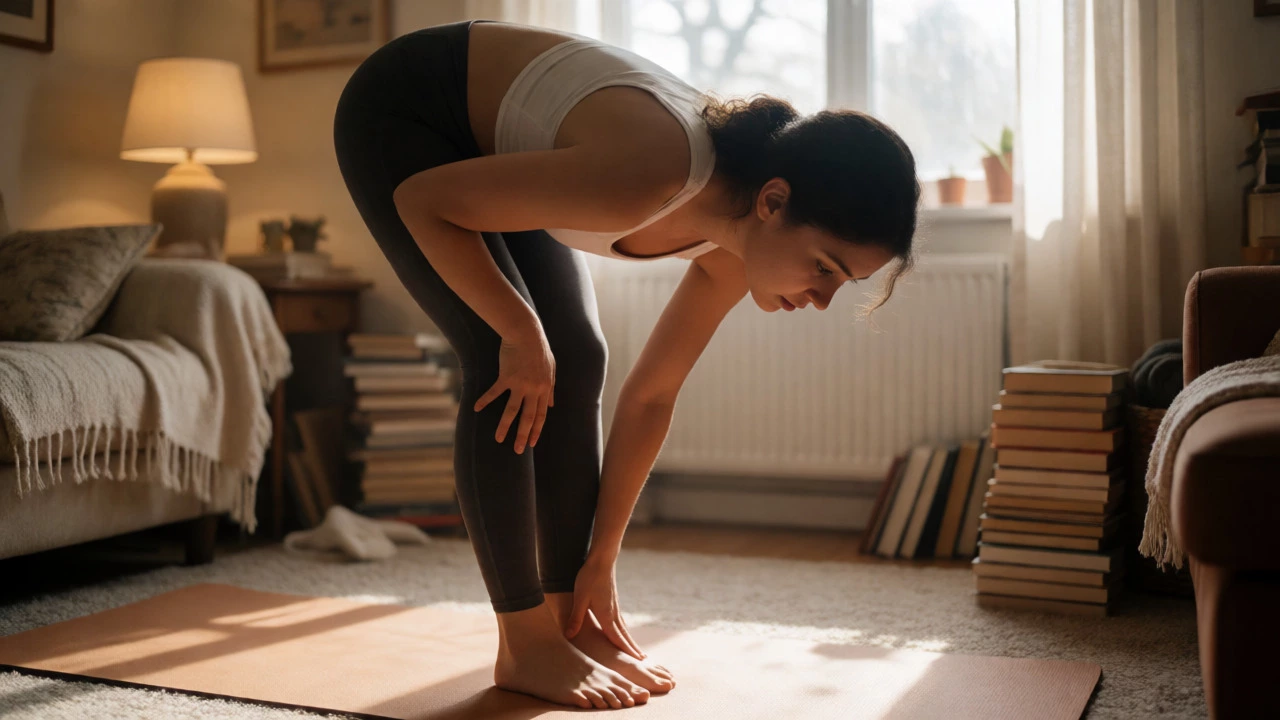
Self-practice is the act of performing yoga poses and sequences independently, without direct supervision from a certified instructor. Unlike guided classes, self-practice relies on internal cues and external resources like apps or videos to maintain form. The biggest hurdle isn’t flexibility; it’s alignment. Without eyes on you, it’s easy to compensate with stronger muscles, leaving weaker ones dormant. For example, if your hamstrings are tight, you might round your back in a forward fold instead of bending your knees. Over time, this reinforces bad patterns. The solution isn’t perfection-it’s education. You need to understand why a pose looks a certain way before you try to force your body into it.
Step 1: Build Your Foundation Before You Flow
Most beginners make the mistake of jumping straight into Vinyasa flows because they look dynamic and impressive. Bad idea. If you don’t know the basics, you’ll just be moving badly, quickly. Start with Hatha or Iyengar-inspired practices. These styles move slowly, giving you time to feel each position. Think of it like learning to cook: you don’t start by trying to plate a five-course meal; you learn to chop an onion first.
- Master the basics: Focus on Mountain Pose (Tadasana), Forward Fold (Uttanasana), and Child’s Pose (Balasana). These seem too simple to count as "yoga," but they teach grounding and breathing.
- Learn to breathe: Yoga is breath-led movement. Practice Ujjayi breath (ocean breath) while sitting still. If you can’t control your breath during a simple sit, you won’t control it during a complex twist.
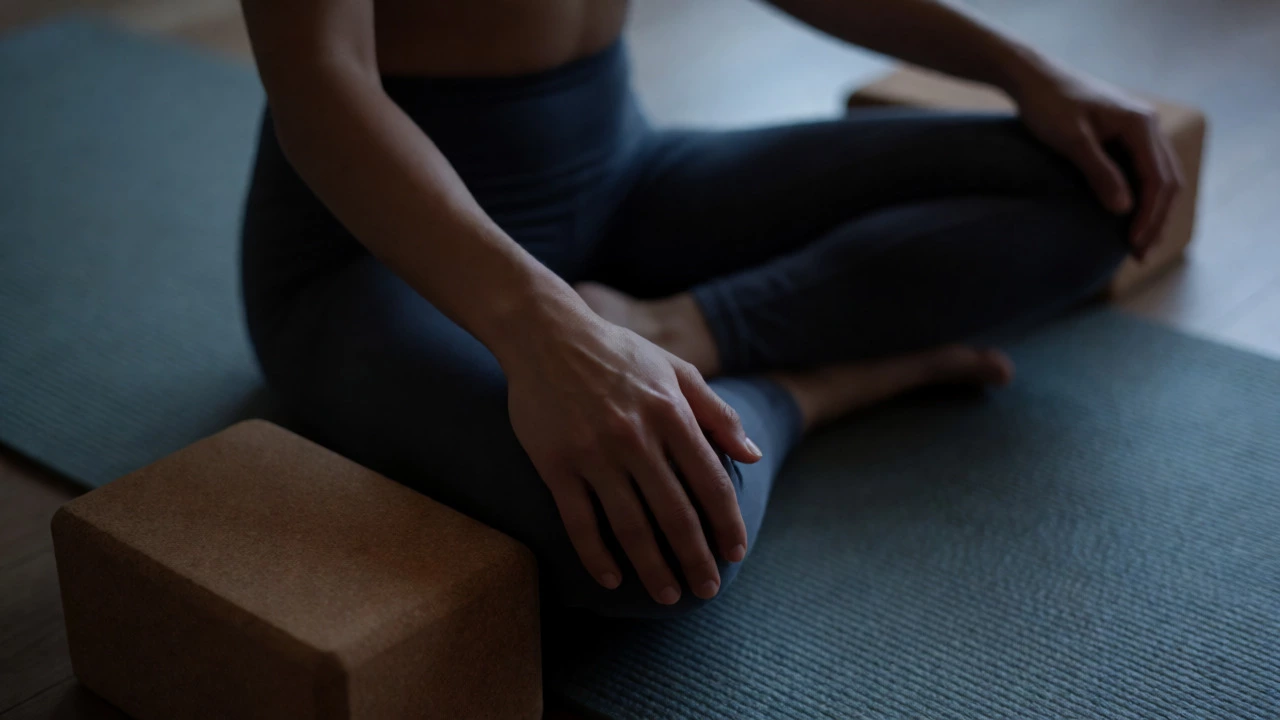
- Use props wisely: Blocks, straps, and bolsters aren’t crutches; they are tools for alignment. A block under your hand in a triangle pose prevents you from collapsing your chest.
A study published in the Journal of Bodywork and Movement Therapies suggests that novice practitioners who focus on static holds and alignment principles show better long-term retention of proper form compared to those who jump into fast-paced flows. Slow down. Speed is the enemy of safety when you’re learning alone.
Step 2: Curate Your Resources Carefully
The internet is flooded with yoga content, which sounds great until you realize half of it contradicts the other half. One influencer says to tuck your tailbone in Downward Dog; another says to lengthen your spine. Who do you listen to? You need consistent voices. Pick one or two reputable sources and stick with them for at least three months. Switching teachers every week confuses your muscle memory.
| Resource Type | Best For | Cost (Approx.) | Risk Factor |
|---|---|---|---|
| YouTube Channels | Visual learners, free access, variety | $0 | High (no feedback, varying quality) |
| Yoga Apps | Structured plans, progress tracking | $10-$15/month | Medium (guided but impersonal) |
| Books | Deep anatomy knowledge, reference | $15-$30 (one-time) | Low (requires self-discipline) |
| Live Online Classes | Real-time interaction, community | $15-$30/class | Low (instructor can see you) |
If you’re completely new, avoid random YouTube videos. Look for channels that offer structured beginner series, such as "30 Days of Yoga" or specific foundational courses. Apps like Down Dog or Glo allow you to customize duration and intensity, which is helpful if you have limited space or time. But remember: these tools provide information, not correction. You still need to check your own form.
Step 3: Create a Safe Environment
You don’t need a dedicated studio, but you do need a defined space. Clutter creates mental noise. Clear a 6x6 foot area where you can spread your arms without knocking over a lamp. Invest in a non-slip mat. Cheap mats slide around, causing you to tense your feet and legs unnecessarily, which defeats the purpose of relaxation.
Lighting matters more than you think. Dim lighting helps shift your nervous system from "fight or flight" to "rest and digest." If you’re practicing in the morning, natural light is ideal. At night, avoid harsh overhead LEDs. Also, consider your floor. Carpet provides cushion but can be unstable. Hardwood is stable but cold. A good mat bridges the gap.
One critical safety rule: never push into pain. Discomfort is normal; sharp, pinching, or electric sensations are not. If you feel pain in your joints (knees, wrists, lower back), stop immediately. Modify the pose. Use a block. Bend your knees. There is no prize for suffering through a pose incorrectly.
Step 4: Develop Your Own Feedback Loop
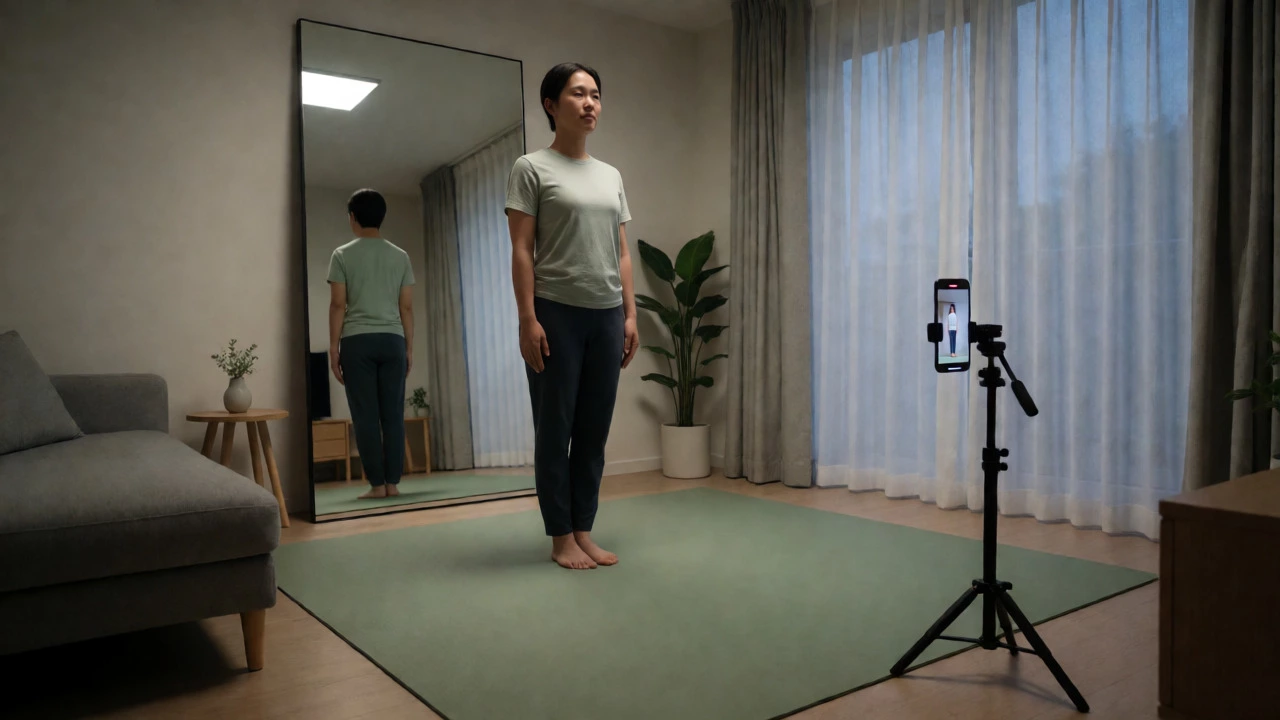
This is the secret weapon of successful self-taught yogis. Since no one is telling you what you’re doing wrong, you have to create your own feedback mechanisms. The most effective tool? A mirror. Not for vanity, but for verification. Set up a full-length mirror or use your phone camera to record short clips of your practice.
Watch the recording. Does your knee collapse inward in Warrior II? Is your neck strained in Bridge Pose? Comparing your video to the instructor’s demonstration highlights gaps instantly. Another technique is the "body scan." After holding a pose for 30 seconds, close your eyes and mentally scan from toes to head. Where are you gripping? Where are you holding tension? Release it. This builds proprioception-the sense of where your body is in space-which is the core skill of yoga.
Additionally, keep a simple journal. Note how you felt after each session. Did you feel energized or drained? Did your back hurt the next day? Patterns emerge quickly. If you consistently feel worse after twisting poses, you might be forcing rotation from the lower back instead of the thoracic spine. Adjust accordingly.
When to Seek Professional Help
Self-teaching has limits. If you have a history of disc herniation, severe scoliosis, or recent surgery, do not attempt advanced poses without consulting a physical therapist or a certified yoga therapist (CYT). Standard yoga teachers are great for general fitness, but therapeutic needs require specialized knowledge.
Even if you’re healthy, consider taking a few live workshops or private sessions once you’ve established a basic routine. Think of it as a tune-up. A teacher can spot subtle misalignments you’ve missed for months. Many studios offer drop-in rates or online private consultations via Zoom, making this accessible even if you prefer practicing at home.
Common Pitfalls to Avoid
- Ego lifting: Trying to touch your toes by rounding your back instead of bending your knees.
- Skipping Savasana: The final relaxation pose is where integration happens. Skipping it leaves your nervous system activated.
- Inconsistency: Ten minutes daily beats ninety minutes once a week. Frequency builds habit; intensity builds strength.
- Ignoring rest days: Yoga stresses connective tissue. Rest allows adaptation. Don’t skip recovery.
Learning yoga by yourself is entirely possible, but it demands respect for the process. Treat your body like a laboratory, not a project to be fixed. Be curious, stay humble, and prioritize alignment over aesthetics. With the right resources and a bit of self-awareness, your living room can become a sanctuary just as effective as any studio.
Is it safe to learn yoga without a teacher?
Yes, provided you start with beginner-level resources, focus on alignment, and listen to your body. Avoid advanced inversions or extreme twists until you understand basic mechanics. Using props like blocks and straps significantly reduces injury risk.
How long does it take to see results from self-taught yoga?
Most people notice improved flexibility and stress reduction within 2-4 weeks of consistent practice (3-4 times per week). Strength gains and deeper structural changes typically take 3-6 months. Consistency matters more than session length.
Do I need special equipment to start yoga at home?
A non-slip yoga mat is essential. Two foam blocks and a strap are highly recommended for beginners to assist with alignment and reach. Comfortable clothing that allows movement is sufficient; expensive branded gear is unnecessary.
What is the best style of yoga for beginners learning alone?
Hatha and Iyengar yoga are ideal because they emphasize slow movements, precise alignment, and longer holds. Yin yoga is also excellent for deep stretching and mindfulness. Avoid Ashtanga or Power Yoga initially due to their fast pace and complex sequencing.
Can I replace gym workouts with yoga?
It depends on your goals. Yoga improves mobility, balance, core strength, and mental health. However, it may not provide sufficient cardiovascular stimulus or heavy resistance for significant muscle hypertrophy compared to weightlifting. Many people combine both for optimal health.